
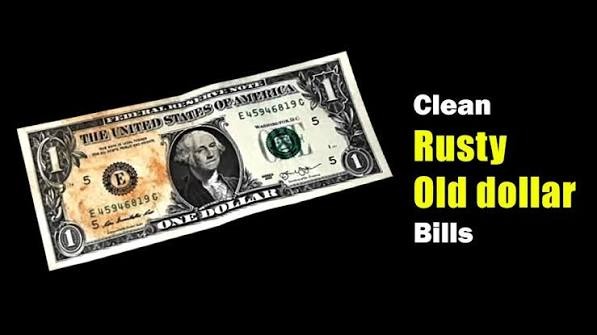
Cleaning old US currency may sound like a simple task, especially when an old dollar bill looks dirty, stained, faded, or worn. However, old U.S. banknotes are not ordinary pieces of paper. Some notes may have historical importance, collectible value, or unusual features that make their original condition important.
Many people find old dollar bills in drawers, boxes, books, wallets, or family collections. When these notes have been stored for many years, they may show signs of age. Dust, surface dirt, stains, folds, writing, discoloration, and other marks can make the note look less attractive.
The natural reaction may be to clean the bill. Unfortunately, cleaning an old banknote can sometimes cause more harm than good. Washing, rubbing, bleaching, applying household cleaners, or using excessive moisture may alter the paper and printed features.
For collectible currency, the original condition can be more important than appearance. A note that looks old but remains original may be more desirable to a collector than a note that has been heavily altered in an attempt to make it look cleaner.
This guide explains what you should know before cleaning old US currency. It covers preservation, common types of damage, cleaning risks, safe handling, storage, professional evaluation, collectible value, and official resources for damaged U.S. currency.
The main principle is simple: before trying to make an old banknote look cleaner, determine whether cleaning is actually necessary.
What Does Cleaning Old US Currency Mean?
The phrase cleaning old US currency can mean several different things.
Some people may simply want to remove loose dust from an old bill. Others may want to remove stains, discoloration, writing, or marks from a banknote.
These situations are very different.
A lightly dusty note may only need careful handling and proper storage. A stained collectible note may require professional evaluation before any treatment is considered.
It is also important to distinguish cleaning from preservation.
Cleaning generally means attempting to remove unwanted material from a banknote. Preservation focuses on protecting the existing condition and preventing additional deterioration.
For valuable or potentially collectible currency, preservation is often the safer priority.
Old banknotes may contain delicate paper, printed ink, seals, serial numbers, and other features. Aggressive cleaning can affect these characteristics.
Therefore, the goal should not always be to make an old banknote look new.
Instead, the goal should be to protect the note while maintaining its original characteristics as much as reasonably possible.
Should You Clean Old US Currency?
In many situations, cleaning an old U.S. banknote is not recommended.
This is especially important when the note may have collectible or historical value.
Collectors often evaluate currency based on its condition and originality. A note that has been washed, chemically treated, heavily rubbed, or otherwise altered may no longer have the same characteristics it had before treatment.
That means cleaning can potentially reduce the appeal of a collectible banknote.
A common misconception is that a cleaner-looking note must be worth more money. This is not necessarily true.
The value of old currency can depend on many factors, including rarity, age, series, condition, demand, authenticity, printing characteristics, and other features.
A dirty but original note can sometimes be more desirable than an artificially cleaned note.
For this reason, it is better to evaluate the note first.
If you believe an old bill could be collectible, consider getting professional advice before attempting any cleaning or restoration.
Why Original Condition Matters
Originality is an important consideration when dealing with collectible currency.
A banknote naturally changes as it ages and circulates. Folds, handling marks, and mild discoloration can become part of its condition history.
When someone attempts to remove these characteristics, the result may be considered an alteration.
For collectors, alterations can matter.
The paper may have a different texture after washing. The ink may appear different after chemical exposure. The surface may become damaged after rubbing.
Even if the note looks visually cleaner, its original characteristics may have been changed.
This is why experienced collectors usually approach cleaning with caution.
If a note has potential value, preserving its current state may be more sensible than trying to improve its appearance.
Cleaning Old US Currency vs. Preservation
Cleaning and preservation should not be treated as the same thing.
Cleaning attempts to remove something from a banknote.
Preservation aims to protect the banknote from additional damage.
For example, placing an old note into a suitable protective holder can be considered part of preservation.
Keeping it away from excessive humidity and direct sunlight is also a preservation measure.
Handling it carefully is another simple preservation step.
By contrast, washing or treating a note with a chemical product is an active alteration.
The difference is important because preservation usually focuses on maintaining the existing condition.
A simple comparison can help:
| Cleaning | Preservation |
|---|---|
| Attempts to remove dirt or stains | Focuses on protecting the note |
| May alter the paper | Helps maintain existing condition |
| May affect printed details | Reduces unnecessary handling |
| Can create unexpected damage | Focuses on safe storage |
| Often aims at appearance | Prioritizes long-term protection |
For collectible currency, preservation should generally be considered before cleaning.
Why Old U.S. Banknotes Require Care
Old U.S. banknotes can become fragile over time.
Age alone does not mean that every old bill is extremely delicate, but older paper can be affected by repeated folding, moisture, heat, sunlight, poor storage, and frequent handling.
Some notes may have already experienced years of circulation.
Others may have been stored in books, boxes, envelopes, wallets, or other places that were not designed for long-term preservation.
The condition of the paper matters.
The printed areas matter too.
Serial numbers, seals, signatures, design details, and other characteristics may be important when identifying or evaluating a banknote.
This is another reason to avoid unnecessary treatment.
If you are uncertain about the significance of a particular note, careful storage and professional evaluation are safer choices than experimenting with cleaning products.
Common Problems Found on Old US Currency
Old banknotes can show many different types of wear.
Some problems are simply cosmetic, while others may affect the physical condition of the note.
Surface Dirt
Surface dirt can accumulate through normal handling.
A note that has been carried in a wallet for years may naturally look darker or less bright.
This does not automatically mean that the note should be washed.
Stains
Stains can come from food, beverages, moisture, ink, or other sources.
Some stains become permanent because they interact with the paper or printed material.
Trying to remove an old stain can sometimes create additional damage.
Folds and Creases
Repeated folding can leave permanent creases.
Cleaning will not necessarily reverse this type of physical damage.
Tears
Tears are physical damage rather than simple dirt.
Attempting to clean a torn note may make the damage worse.
Writing and Ink Marks
Writing on currency can affect its appearance and potentially its collectible condition.
Trying to remove writing can be risky because the process may affect the original printing.
Water Damage
Moisture can weaken paper and create other problems.
Old notes exposed to water should be handled carefully.
Mould or Unusual Odours
Mould-related problems require particular caution.
If a note has signs of mould or contamination, avoid unnecessary handling and seek appropriate professional guidance.
Risks of Cleaning Old US Currency at Home
The biggest problem with DIY currency cleaning is that the person performing the treatment may not know how the paper and printing will react.
A cleaning method that appears harmless on ordinary paper may produce a completely different result on an old banknote.
Damage to Paper Fibres
Old banknotes can contain paper fibres that have already experienced years of wear.
Rubbing or scrubbing can weaken the surface.
The note may become rough, thin, or damaged.
Fading of Printed Features
Cleaning products may affect printed areas.
Colours can change, and some details may become less distinct.
This can be especially problematic if the note has collectible characteristics.
Changes to Texture
Moisture and chemicals can change the feel of paper.
An altered texture can be evidence that the note has been treated.
Additional Staining
A cleaning attempt can sometimes create new marks.
Uneven moisture can produce visible differences across the paper.
Loss of Collectible Appeal
A note that has been altered may not be viewed the same way by collectors.
This is why appearance should not be the only goal.
Why Chemical Cleaning Can Be Dangerous for Old Currency
One of the most important rules for cleaning old US currency is to avoid experimenting with household chemicals.
Products designed for clothing, household surfaces, paper, or other materials are not automatically appropriate for banknotes.
A chemical may interact with the paper or ink in an unexpected way.
Bleaching agents can change colour.
Strong cleaning products can damage fibres.
Solvents can affect inks or printed areas.
Even a product marketed as gentle may not be suitable for collectible currency.
For this reason, do not assume that a cleaning chemical is safe simply because it works well on another material.
When a banknote may have value, professional guidance is a much safer approach.
Why Washing Old Dollar Bills Can Be a Bad Idea
Washing a banknote may seem like an easy way to remove dirt.
However, water can affect paper, printing, and the overall structure of a note.
Excessive moisture can also create drying problems.
If a note is old or fragile, washing can make it weaker.
It may also change the note’s appearance.
A note that has been washed may no longer have the same original surface characteristics.
For collectible currency, this can be an important issue.
Instead of washing an old bill, consider whether the dirt actually needs to be removed.
If the note has potential historical or collectible value, professional evaluation should come first.
Avoid Scrubbing Old Currency
Scrubbing is another common mistake.
People sometimes believe that more physical effort will produce a cleaner result.
With old currency, the opposite may happen.
Rubbing can damage paper fibres.
It can also spread stains or affect printed details.
Even gentle-looking rubbing can create changes that are difficult to reverse.
If a banknote is important to you, unnecessary physical treatment should be avoided.
Safe Handling of Old US Currency
Safe handling is one of the easiest ways to protect old currency.
Before handling a potentially collectible note, make sure your hands are clean and dry.
Hold the note carefully.
Avoid unnecessary folding.
Do not repeatedly bend the corners.
Do not press heavily on weak areas.
If the note is already torn or fragile, extra care is necessary.
Try to avoid touching the note repeatedly simply to inspect it.
A stable environment and limited handling can help reduce the risk of accidental damage.
How to Store Old US Currency
Proper storage is one of the most important parts of currency preservation.
Old banknotes should generally be kept in suitable protective holders designed for paper collectibles.
The storage material should be appropriate for long-term preservation.
Avoid storing valuable notes loosely in places where they can be folded, crushed, exposed to moisture, or repeatedly handled.
Environmental conditions also matter.
Excessive humidity can create problems for paper.
High heat can also contribute to deterioration.
Direct sunlight can affect colour and appearance.
For long-term preservation, choose a stable, clean, and protected storage environment.
Protect Old Currency From Moisture
Moisture is one of the major concerns for paper collectibles.
An old banknote stored in a damp environment may develop problems over time.
Humidity can contribute to deterioration and may encourage mould under unsuitable conditions.
This is why bathrooms, damp basements, and other humid locations are generally poor storage choices for collectible paper materials.
A dry, stable environment is preferable.
If a note has already been exposed to water or significant humidity, avoid immediately applying heat or aggressive drying techniques.
Instead, seek appropriate preservation advice if the note is important.
Protect Old Currency From Direct Sunlight
Sunlight can affect the appearance of paper and printed materials.
Long-term exposure may cause fading.
If an old note has historical or collectible value, storing it away from direct sunlight can help protect its appearance.
A protective holder can also reduce unnecessary handling.
The objective is to create a stable environment rather than constantly moving the note between different storage locations.
Cleaning Old US Currency for Collectors
Collectors should be especially cautious when considering cleaning old US currency.
A collector may care about the note’s condition, originality, rarity, and other characteristics.
Cleaning can potentially change some of these characteristics.
For example, a note that has been washed may have a different texture.
A note that has been chemically treated may show changes that affect how it is evaluated.
A note that has been heavily rubbed may have surface damage.
These changes may be more significant than the original stain or dirt.
Therefore, collectors should consider professional evaluation before attempting any restoration.
Does Cleaning Old Currency Increase Its Value?
Cleaning does not automatically increase the value of an old banknote.
This is one of the most important points for anyone researching cleaning old US currency.
Currency value is influenced by many factors.
A note may be valuable because of its rarity.
Its series and date may matter.
Its condition can matter.
Demand among collectors can matter.
Printing varieties or unusual features may matter.
Authenticity is also essential.
Cleaning one of these notes does not automatically make it more valuable.
In some cases, alteration may reduce collector interest.
This is why it is better to evaluate the note before making changes.
What Determines the Value of Old US Currency?
There is no single factor that determines the value of an old U.S. banknote.
Collectors and dealers may consider several characteristics.
Age
Older currency can sometimes attract interest, but age alone does not guarantee high value.
Rarity
A scarce note may be more desirable than a common note.
Condition
Condition is often an important consideration.
Series
The series designation can help identify when and under what design a note was issued.
Demand
Collector demand can change over time.
Authenticity
An authentic note is essential for legitimate collectible value.
Special Characteristics
Certain printing varieties, errors, or unusual features may affect interest.
Because of these factors, it is not advisable to assume that cleaning will improve a note’s market value.
What If an Old Bill Is Extremely Dirty?
If an old bill is extremely dirty, first determine whether it has potential collectible value.
If it appears ordinary and heavily circulated, you may still want to avoid unnecessary treatment.
If it appears rare or unusual, professional evaluation should come first.
The best approach depends on the specific condition of the note.
There is no universal cleaning method that is appropriate for every old U.S. banknote.
If you are uncertain, preservation is usually safer than experimentation.
What If an Old Bill Is Torn?
A torn banknote should not be scrubbed or washed.
Physical damage requires careful handling.
If the note may have value or if you need to determine whether it qualifies for official redemption, consult the appropriate U.S. currency authority.
The U.S. Bureau of Engraving and Printing provides official information about mutilated currency redemption. U.S. Bureau of Engraving and Printing – Mutilated Currency Redemption
The official process is a better starting point than attempting home restoration.
What Is Mutilated Currency?
The term “mutilated currency” refers to U.S. currency that has been damaged to the point where its value or identifying features may require official examination.
Damage can occur through fire, water, chemicals, burial, or other circumstances.
If a note is severely damaged, official procedures may apply.
The Bureau of Engraving and Printing provides information about submitting certain damaged currency for examination and possible redemption. Bureau of Engraving and Printing Currency Services
This is important because severely damaged currency should not automatically be treated like an ordinary household cleaning project.
Cleaning Old US Currency and Authentication
Authentication can become more complicated when a note has been altered.
Currency professionals may examine paper characteristics, printing details, serial numbers, seals, and other features.
If someone has applied chemicals, washed the note, or heavily rubbed the surface, these characteristics may have been affected.
That is another reason to avoid unnecessary treatment.
If you suspect that an old bill may be rare, unusual, or valuable, preserve it in its current condition until it can be evaluated.
Common Mistakes When Cleaning Old Money
There are several mistakes that people should avoid.
Washing the Note
Water can alter paper and create additional damage.
Using Bleach
Bleaching can change colour and damage paper.
Using Household Cleaners
Household cleaners are not automatically suitable for currency.
Scrubbing
Scrubbing can weaken the surface.
Applying Heat
Excessive heat can damage paper.
Trying Multiple Products
Using several products can make the condition more difficult to assess.
Ignoring Collectible Value
A note that looks ordinary may have characteristics that make it interesting to collectors.
The safest option is to evaluate before altering.
Professional Currency Preservation
Professional preservation is different from ordinary household cleaning.
A qualified specialist can assess the condition of a note and determine whether any intervention is appropriate.
This is especially useful for potentially rare or valuable currency.
Professional advice can help prevent accidental damage.
It can also provide a more realistic understanding of the note’s condition.
Before paying for any restoration service, ask what process will be used and whether the treatment could alter the original condition.
A reputable professional should explain both potential benefits and risks.
When Should You Seek Professional Help?
Professional guidance is particularly useful when an old banknote:
- Appears rare or unusual.
- May have historical significance.
- Has severe damage.
- Has unusual stains.
- Has been exposed to chemicals.
- Has mould or contamination concerns.
- Has tears or missing sections.
- May be valuable to collectors.
- Has questionable authenticity.
If the note is potentially valuable, the cost of professional advice may be small compared with the potential loss caused by an inappropriate cleaning attempt.
Official Resources for US Currency
When researching cleaning old US currency, use reliable sources rather than relying only on social media posts or unverified cleaning tricks.
The U.S. Currency Education Program provides information about U.S. currency features, security features, and currency education. U.S. Currency Education Program
The U.S. Bureau of Engraving and Printing provides official information about U.S. currency production and services, including mutilated currency redemption. U.S. Bureau of Engraving and Printing
For historical and educational information, the Smithsonian Institution also provides resources related to American history and numismatic materials. Smithsonian Institution
Using authoritative sources can help you make better decisions about old banknotes.
Cleaning Old US Currency: DIY vs. Professional Evaluation
DIY cleaning may appear inexpensive and convenient.
However, the risk can be significant when the note is collectible.
Professional evaluation provides another option.
| DIY Cleaning | Professional Evaluation |
|---|---|
| Usually inexpensive | May involve a service fee |
| Easy to attempt | Requires finding a qualified specialist |
| Can produce unpredictable results | Provides expert assessment |
| May alter the note | Can help determine whether treatment is appropriate |
| Riskier for valuable currency | Better suited to potentially collectible notes |
The decision should depend on the importance and condition of the banknote.
How to Protect Old Currency Found at Home
Sometimes people discover old banknotes unexpectedly.
You may find one inside an old book, drawer, box, wallet, or family collection.
If this happens, resist the urge to clean it immediately.
First, inspect it carefully without unnecessary handling.
Record the visible information.
Look at the denomination, series, serial number, and other features.
Do not rub the surface to see whether a mark comes off.
Instead, place the note somewhere safe while you determine what it is.
If it appears unusual, consider professional evaluation.
How to Research an Old US Banknote
Research can help you understand what you have.
Start by identifying the denomination.
Then look for the series designation and other printed information.
You can compare the design with reliable currency references.
The U.S. Currency Education Program is a useful official source for information about U.S. currency and its features. U.S. Currency Education Program
For potentially collectible notes, a reputable numismatic specialist can provide more specific information.
Do not make decisions based only on online listings.
A listing price is not necessarily the same as an actual selling price.
Why Online Cleaning Tricks Can Be Misleading
The internet contains many videos and articles claiming to restore old money.
Some may show impressive visual changes.
However, a visually cleaner note is not necessarily a better-preserved note.
Online demonstrations may also fail to explain the long-term effects of treatment.
A process may remove a stain while simultaneously changing the paper.
It may make a note look brighter while reducing its originality.
Therefore, do not judge a cleaning method solely by before-and-after photographs.
For valuable currency, professional preservation advice is much more reliable.
How to Handle a Water-Damaged Old Bill
Water-damaged currency should be handled carefully.
Avoid aggressive rubbing.
Avoid applying household chemicals.
Avoid excessive heat.
If the note is potentially valuable, seek professional preservation advice.
If the currency is severely damaged, review official guidance from the Bureau of Engraving and Printing regarding mutilated currency. Mutilated Currency Redemption – BEP
The correct response depends on the severity of the damage and the condition of the note.
How to Handle a Stained Old Bill
A stain does not automatically mean that an old bill needs cleaning.
First, consider whether the note could be collectible.
If it could be valuable, avoid attempting to remove the stain yourself.
A professional may be able to assess whether any preservation or treatment is appropriate.
In some cases, leaving the stain alone may be safer than risking additional damage.
Can You Make Old Currency Look New?
Trying to make old currency look new is generally not the right objective.
Old banknotes are historical objects as well as financial instruments.
Their age and condition can be part of their identity.
A note that has been cleaned aggressively may look different, but that does not mean its condition has improved.
For collectors, an altered note may be less desirable.
The better goal is to preserve the note’s existing condition and prevent additional deterioration.
Long-Term Preservation Tips
If you have old U.S. currency that you want to keep for years, focus on preservation.
Keep the notes in appropriate protective holders.
Avoid unnecessary handling.
Protect them from moisture.
Keep them away from direct sunlight.
Avoid excessive heat.
Do not place heavy objects on top of them.
Do not fold them unnecessarily.
If the note is potentially valuable, consider professional evaluation.
These simple habits can help protect the banknote without introducing unnecessary risks.
FAQ:
Can you clean old US currency?
It is possible to physically treat old currency, but that does not mean it is advisable. Cleaning can potentially alter paper, ink, texture, and other characteristics. For collectible or potentially valuable notes, professional evaluation is usually safer than DIY cleaning.
How do you clean old dollar bills?
There is no universal cleaning method that is safe for every old dollar bill. Ordinary household cleaning products, water, rubbing, and aggressive treatment can potentially damage banknotes. If a note may have collectible value, preservation and professional evaluation should be considered before attempting any cleaning.
Does cleaning old money increase its value?
No. Cleaning does not automatically increase the value of old U.S. currency. Value can depend on rarity, condition, authenticity, demand, series, date, and other characteristics. In some cases, cleaning or alteration can reduce collector appeal.
Can water damage old US currency?
Yes. Excessive moisture can affect paper and printed features. Older or fragile notes can be particularly vulnerable to damage from improper handling after water exposure.
Can household cleaners be used on old dollar bills?
Household cleaning products should not automatically be considered safe for banknotes. Chemicals can affect paper and printed material. Potentially valuable currency should be evaluated before any chemical treatment is attempted.
Should I clean an old bill before selling it?
Not necessarily. If the bill may be collectible, cleaning it before selling could potentially reduce its appeal. It is generally better to determine its condition and potential value before making changes.
How should old US currency be stored?
Old currency should be protected from excessive moisture, heat, direct sunlight, and unnecessary handling. Appropriate protective storage materials designed for paper collectibles can help reduce physical damage.
What should I do with severely damaged US currency?
For severely damaged U.S. currency, consult official information from the Bureau of Engraving and Printing about mutilated currency redemption. Bureau of Engraving and Printing – Mutilated Currency
Can cleaning damage collectible currency?
Yes. Washing, rubbing, chemicals, and other treatments can potentially alter collectible currency. This is why professional evaluation is recommended before attempting restoration.
How can I tell if an old US bill is valuable?
Value depends on several factors, including rarity, date, series, condition, authenticity, demand, and special characteristics. A reputable numismatic professional can provide a more reliable evaluation.
Is old dirty money automatically valuable?
No. Dirt or age alone does not make a banknote valuable. Many old notes are common, while some ordinary-looking notes may have unusual characteristics that attract collector interest.
Can old currency be restored?
Some damaged paper collectibles may be candidates for professional conservation, but restoration is different from ordinary cleaning. Any treatment should be considered carefully because it can alter the original condition.
Should I remove writing from an old dollar bill?
Trying to remove writing can damage the paper or printed features. If the note may be collectible, it is better to leave it untreated until its potential value has been assessed.
Is sunlight bad for old paper money?
Long-term exposure to direct sunlight can affect the colour and appearance of paper and printed materials. Keeping collectible currency away from direct sunlight can help with preservation.
Conclusion:
Cleaning old US currency requires more caution than many people expect.
An old dollar bill may look dirty, stained, faded, or worn, but cleaning it is not always the best solution. If the note has collectible, historical, or sentimental importance, preserving its existing condition should usually come before improving its appearance.
Washing, scrubbing, bleaching, applying household cleaners, or using excessive moisture can potentially damage the paper and printed features.
A cleaner-looking banknote is not automatically a more valuable banknote.
The value of old U.S. currency can depend on rarity, series, date, condition, authenticity, demand, and other characteristics. Altering the note can sometimes reduce its collectible appeal.
For ordinary currency, careful handling and appropriate storage may be enough. For potentially valuable currency, professional evaluation is a safer approach.
If a banknote is severely damaged, official guidance should be considered. The U.S. Bureau of Engraving and Printing provides information about mutilated currency and redemption procedures. U.S. Bureau of Engraving and Printing
The most important lesson is simple: do not rush to clean an old U.S. banknote simply because it looks dirty.
First, determine what you have, consider its condition and potential value, and choose preservation over unnecessary treatment whenever possible.
When it comes to old currency, protecting the original condition can be much more important than making the note look new.

