
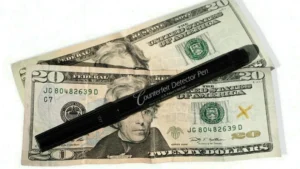
Counterfeit currency continues to pose a serious challenge for businesses, retailers, banks, and everyday consumers. Even with advanced security features built into modern banknotes, fake bills still circulate, leading to financial losses and unnecessary headaches. Whether you own a small retail store, manage a restaurant, or simply want to verify cash before accepting it, understanding how counterfeit detection tools work is essential.
How Does a Counterfeit Money Detector Pen Work? A Complete Guide
One of the most common questions people ask is, how does a counterfeit money detector pen work? These inexpensive pens have become a popular first line of defense because they offer a quick and simple way to screen suspicious bills. However, while they are widely used by cashiers and business owners, they are not foolproof. Knowing both their strengths and limitations can help you avoid relying on them alone.
In this guide, you’ll learn the science behind counterfeit detector pens, how to use them correctly, how accurate they really are, where they can fail, and what additional methods can help verify whether a bill is genuine. By the end, you’ll have a clear understanding of when a detector pen is useful and when additional verification is necessary.
What Is a Counterfeit Money Detector Pen?
A counterfeit money detector pen is a handheld tool designed to help identify potentially fake paper currency in just a few seconds. It contains a special iodine-based ink that reacts differently depending on the type of paper used to print a bill. Because authentic U.S. currency is printed on a unique blend of cotton and linen rather than ordinary wood-pulp paper, the pen can often distinguish genuine bills from simple counterfeits.
Retailers favor detector pens because they are affordable, portable, and require virtually no training. A quick mark on a bill provides an immediate visual indication, making the tool especially useful in busy environments such as convenience stores, grocery stores, restaurants, and gas stations.
Counterfeit detector pens gained popularity as counterfeit printing technology became more accessible. Today, several trusted brands manufacture these pens, including Dri Mark and other office and banking supply companies.
Although detector pens are convenient, they differ significantly from electronic money scanners. A detector pen performs a basic chemical test on the paper, while an electronic currency scanner examines multiple security features such as ultraviolet markings, magnetic ink, infrared patterns, and embedded security threads. For this reason, many businesses use detector pens as a quick screening tool while relying on electronic scanners for more comprehensive authentication.
How Does a Counterfeit Money Detector Pen Work?
If you’ve ever wondered, how does a counterfeit money detector pen work, the answer lies in a simple chemical reaction. These pens are designed to identify whether a bill is printed on genuine currency paper or ordinary paper commonly used by counterfeiters. While the test is quick and convenient, it’s important to understand what the pen is actually detecting—and what it isn’t.
The Science Behind the Ink
A counterfeit money detector pen contains an iodine-based solution. Iodine reacts with starch, a substance commonly found in standard wood-pulp paper used for everyday printing. When the pen touches paper containing starch, the mark typically turns dark brown or black.
Authentic U.S. currency is different. Genuine bills are printed on a specialized blend of approximately 75% cotton and 25% linen, which contains little to no starch. Because of this unique composition, the iodine does not produce the same dark reaction, allowing the mark to remain light in color.
Why Real Bills Stay Light
When you draw a line on a genuine bill, the mark usually appears pale yellow or light amber. This indicates that the paper lacks starch and is consistent with authentic U.S. currency. A light-colored mark is generally considered a positive sign, although it should not be the only method used to verify a bill’s authenticity.
Why Counterfeit Bills Turn Dark
Many counterfeit bills are printed on ordinary wood-pulp paper, which contains starch. As soon as the detector pen ink contacts this type of paper, the iodine reacts with the starch, causing the mark to turn brown or black. This darker mark suggests the bill may be counterfeit and deserves closer inspection using additional security features, such as the watermark, security thread, and color-shifting ink. Using multiple verification methods provides a more reliable way to identify suspicious currency.
Counterfeit Detector Pen: How to Use
Knowing counterfeit detector pen: how to use correctly can help you quickly screen suspicious bills and reduce the risk of accepting counterfeit currency. While the process takes only a few seconds, following the proper steps improves accuracy.
Step-by-Step Guide
- Choose a blank area of the bill where there is minimal printing.
- Draw a small mark using the detector pen.
- Wait a few seconds for the ink to react with the paper.
- Compare the ink color. A light yellow or amber mark generally indicates genuine currency paper, while a dark brown or black mark may suggest the bill is counterfeit.
- Verify additional security features such as the watermark, security thread, color-shifting ink, and raised printing before accepting the bill.
Best Practices and Common Mistakes
For the most reliable results, always use a fresh detector pen and test bills in good lighting. Remember that a detector pen is only a screening tool—it cannot detect every type of counterfeit, including altered genuine bills.
Avoid making large or repeated marks, testing damaged areas of the bill, or relying solely on the pen. Businesses that handle cash daily should train employees to combine pen tests with visual inspection and, when possible, electronic currency scanners. Using multiple verification methods provides the best protection against counterfeit money while keeping checkout lines moving efficiently.
How Accurate Are Counterfeit Detector Pens?
Counterfeit detector pens are effective for identifying many fake bills printed on ordinary wood-pulp paper, making them a useful first screening tool for businesses. However, they are not 100% accurate. They may fail to detect bleached genuine bills, where authentic currency paper is altered and reprinted with a higher denomination. Some modern counterfeiters also use paper that closely mimics genuine currency. For these reasons, banks and retailers rarely rely on a detector pen alone. Professionals combine pen tests with security features such as watermarks, security threads, color-shifting ink, and electronic currency scanners for more reliable counterfeit detection.
Best Counterfeit Money Detector Pen
Choosing the best counterfeit money detector pen depends on reliability, ease of use, and long-term value. Look for a pen with high-quality iodine-based ink that produces clear, consistent results and has a long shelf life to prevent the ink from drying out. Durability is also important, especially for businesses that handle cash throughout the day.
Trusted manufacturers, such as Dri Mark, are widely recognized for producing dependable detector pens used by retailers and financial institutions. While most detector pens are affordable, comparing price with ink lifespan and build quality offers better value than choosing the cheapest option. Remember, even the best counterfeit money detector pen should be used alongside security features like watermarks, security threads, and electronic currency scanners for more accurate counterfeit detection.
Dri Mark Counterfeit Detector Pen Review
The Dri Mark Counterfeit Detector Pen is one of the most recognized counterfeit detection tools on the market, trusted by retailers, restaurants, banks, and small businesses. Its popularity comes from its simple design, quick results, and affordable price. The pen uses iodine-based ink to help identify bills printed on ordinary paper, making it an effective first-line screening tool. However, like all detector pens, it cannot detect every type of counterfeit, including altered genuine bills. It’s an excellent choice for businesses that handle cash daily, but it should always be used alongside security feature checks or an electronic currency scanner for greater accuracy.
Money Tester Pen vs Electronic Currency Detector
Both money tester pens and electronic currency detectors help identify suspicious bills, but they serve different purposes. A money tester pen is ideal for quick, low-cost screening, while an electronic detector offers more advanced verification by checking multiple security features. Here’s how they compare:
| Feature | Money Tester Pen | Electronic Currency Detector |
|---|---|---|
| Cost | Low-cost and budget-friendly | Higher upfront investment |
| Speed | Tests a bill in seconds | Fast, with automatic scanning |
| Accuracy | Good for basic paper testing but limited | Higher accuracy by verifying UV features, security threads, magnetic ink, and more |
| Ease of Use | Extremely simple; just mark the bill | Easy to use with minimal training |
| Portability | Lightweight and pocket-sized | Portable models available, but generally larger |
| Best For | Small businesses, market vendors, and occasional cash handling | Banks, retail chains, casinos, and businesses processing large amounts of cash |
A money tester pen is an excellent first line of defense against common counterfeit bills, especially for small businesses. However, for maximum protection, professionals recommend pairing it with an electronic currency detector. Combining both methods helps reduce the risk of accepting sophisticated counterfeit notes while maintaining a fast and efficient checkout process.
How Long Does a Counterfeit Pen Mark Last on a Bill?
Many people ask, how long does a counterfeit pen mark last on a bill? In most cases, the answer depends on the type of detector pen used, the amount of ink applied, and how the bill is handled over time. A typical detector pen leaves a light yellow or amber mark on genuine currency that gradually fades with regular circulation. On counterfeit bills made from ordinary paper, the darker brown or black mark may remain more visible.
The ink used in counterfeit detector pens is designed for testing, not for permanently marking money. Under normal conditions, a small pen mark does not damage a genuine bill or affect its value. Banks, retailers, and financial institutions routinely accept authentic currency that has been tested with a detector pen, provided the bill is otherwise in good condition.
A common misconception is that you can clean or erase a dark detector pen mark to make a counterfeit bill appear genuine. This is not how the test works. The dark color is the result of a chemical reaction between the iodine-based ink and the starch in ordinary paper. Instead of trying to remove the mark, always inspect additional security features—such as the watermark, security thread, and color-shifting ink—to confirm whether a bill is authentic.
Money Tester Pen Buying Guide
Choosing the right Money Tester Pen can help protect your business from counterfeit currency without requiring a large investment. Whether you own a retail store, restaurant, or small business, selecting a quality detector pen is an easy way to improve your cash-handling process.
Where to Buy
Money tester pens are widely available from office supply stores, bank supply companies, major retail chains, and trusted online marketplaces. Purchasing from reputable sellers helps ensure you’re getting a genuine product with fresh ink and reliable performance.
Typical Price Range
Most money tester pens are affordable, typically costing $3 to $10 per pen, depending on the brand and quantity. Premium brands may cost slightly more but often offer better ink quality and a longer shelf life.
Bulk Purchases
Businesses that process cash daily can save money by purchasing detector pens in multi-packs or bulk quantities. Buying in bulk also ensures you always have replacement pens available when older ones begin to dry out.
Online vs. Local Stores
Online retailers usually provide a wider selection, competitive pricing, and customer reviews to help you compare products. Local office supply and business stores offer the advantage of immediate availability, making them a convenient option if you need a detector pen quickly.
Storage Tips and Replacement Schedule
To extend the life of your money tester pen, keep the cap tightly closed after each use and store it in a cool, dry place away from direct sunlight or excessive heat. Replace the pen whenever the ink becomes faint, dries out, or no longer produces consistent test results. Regular replacement helps maintain accurate screening.
Money Tester Pen Near Me
If you’re searching for a Money tester Pen near me, you’ll likely find several purchasing options in your area. Office supply stores often stock counterfeit detector pens alongside cash-handling supplies, while bank supply companies carry products designed for commercial use. Many big-box retailers and stationery shops also keep detector pens in their office or business sections.
If local stores don’t have the model you want, online marketplaces provide access to a broader range of brands, customer ratings, and bulk-buy discounts.
Before purchasing, look for a detector pen from a trusted manufacturer, check the product’s expiration or shelf-life information, and read customer reviews to evaluate reliability. Remember that a money tester pen works best as an initial screening tool. For businesses handling large volumes of cash, combining a detector pen with an electronic currency detector provides greater confidence and stronger protection against sophisticated counterfeit bills.
What Reddit Users Say About Counterfeit Detector Pens
Searches such as how does a counterfeit money detector pen work Reddit often reveal practical advice from cashiers, retail managers, and small business owners who use detector pens every day. A common theme in these discussions is that detector pens are effective for quickly identifying many counterfeit bills printed on ordinary paper. Many users share success stories of spotting suspicious notes before accepting payment.
However, Reddit users also frequently mention reported failures, particularly involving bleached genuine bills that can pass the pen test because they use authentic currency paper. As a result, experienced cash handlers and security professionals consistently recommend treating a detector pen as only the first step in the verification process.
The most widely shared recommendation is to check multiple security features, including the watermark, security thread, color-shifting ink, raised printing, and microprinting. Combining these visual checks with a detector pen—and, when possible, an electronic currency scanner—provides a much more reliable defense against modern counterfeit techniques than relying on any single method alone.
Popular YouTube Demonstrations
Many people search how does a counterfeit money detector pen work YouTube to watch real-time demonstrations before purchasing a detector pen. These videos typically show how to apply the pen to a genuine bill and a suspected counterfeit, then compare the color of the ink. Most creators explain that a light yellow or amber mark usually indicates authentic currency paper, while a dark brown or black mark may suggest the bill is counterfeit.
These demonstrations are helpful for learning the basics, but viewers should avoid a common misconception: a detector pen cannot identify every fake bill. Some sophisticated counterfeits, including altered genuine bills, may pass the pen test because they are printed on authentic currency paper. While YouTube videos offer practical examples, they should not replace official guidance from financial institutions or government agencies. The safest approach is to use a detector pen as one part of a broader counterfeit detection process.
Other Ways to Detect Counterfeit Money
A counterfeit detector pen is only a preliminary screening tool. To improve accuracy, always inspect the bill’s built-in security features. Genuine U.S. currency includes a security thread embedded within the paper and a watermark that becomes visible when held up to the light. Many bills also feature color-shifting ink, where the numeral changes color when viewed from different angles.
Additional signs of authenticity include raised printing, which gives genuine currency a distinctive texture, and microprinting, consisting of tiny text that is difficult for counterfeiters to reproduce accurately. A UV light inspection can reveal security threads that glow in specific colors depending on the bill’s denomination.
For businesses that regularly handle large amounts of cash, using magnification tools and electronic currency authentication devices provides an extra layer of protection. These devices verify multiple security features simultaneously, making them far more effective against advanced counterfeiting methods. Combining visual inspection with a detector pen and electronic verification offers the highest level of confidence when accepting cash.
Common Myths About Counterfeit Detector Pens
Counterfeit detector pens are useful tools, but several myths can lead to false confidence. One of the biggest misconceptions is that they detect every fake bill. In reality, some sophisticated counterfeits, including bleached genuine bills, can pass the pen test. Another myth is that one test is enough. Experts recommend checking additional security features such as the watermark, security thread, and color-shifting ink.
Many people also believe that a dark mark always means a bill is counterfeit. While a dark mark often indicates ordinary paper, damaged or contaminated bills can sometimes produce misleading results. Another common myth is that detector pens never expire. Over time, the iodine-based ink can dry out or lose effectiveness, making periodic replacement important.
Finally, banks do not rely only on detector pens. Financial institutions use trained staff, electronic currency authentication devices, and multiple security checks to verify the authenticity of cash. A detector pen is best used as a quick screening tool—not as the final decision.
FAQ
How does a counterfeit money detector pen work?
A counterfeit money detector pen uses an iodine-based solution that reacts with starch found in ordinary wood-pulp paper. Genuine U.S. currency is printed on a cotton-and-linen blend with little to no starch, so the mark usually remains light yellow or amber. A dark brown or black mark may indicate a suspicious bill.
Do counterfeit detector pens really work?
Yes, they work well as a first screening tool for many counterfeit bills. However, they are not foolproof and should always be used alongside other security checks.
Can fake bills pass the pen test?
Yes. Some sophisticated counterfeits, especially bleached genuine bills that have been altered, may pass because they use authentic currency paper.
Why do some real bills fail the pen test?
Although uncommon, dirt, contaminants, damaged paper, or improper use of an old detector pen may produce misleading results. Always inspect other security features before making a decision.
Is a UV light better than a detector pen?
A UV light generally provides more reliable verification because it checks built-in security features such as glowing security threads. Many businesses use both tools together for greater accuracy.
How long does the detector pen mark stay?
On genuine bills, the light-colored mark often fades with normal circulation. Dark marks on counterfeit paper may remain more noticeable.
Can you remove the pen mark?
The mark may fade over time, but it is not intended to be erased immediately. Small detector pen marks do not usually damage genuine currency or affect its acceptance by banks.
Are detector pens still worth buying in 2026?
Yes. Detector pens remain an affordable and convenient way to screen cash, especially for small businesses. However, for the best protection against modern counterfeiting, combine a detector pen with visual inspection and, when possible, an electronic currency authentication device.
Conclusion
Understanding how a counterfeit money detector pen works can help you make smarter decisions when accepting cash. By using an iodine-based chemical reaction, the pen quickly identifies whether a bill is printed on genuine currency paper or ordinary paper commonly used by counterfeiters. While this makes it a fast and affordable first screening tool, it is not a guarantee of authenticity.
For the most reliable results, always verify additional security features such as the watermark, security thread, color-shifting ink, raised printing, and microprinting. Businesses that handle cash regularly should also consider using an electronic currency authentication device to detect more sophisticated counterfeit bills.
Counterfeit detection methods continue to evolve, so staying informed about the latest security features and verification techniques is essential. Whether you’re a small business owner, cashier, or consumer, combining a detector pen with careful visual inspection and proper staff training is the best way to reduce the risk of accepting counterfeit money and protect your finances.

