

If you believe you have received counterfeit money, the safest thing to do is not to spend it, give it to someone else, exchange it, or attempt to alter it. Keep the suspected note or coin separate from your genuine money, write down where and when you received it, and follow the appropriate reporting process for your location.
For suspected counterfeit U.S. currency, individuals should follow current official reporting guidance from the U.S. Currency Education Program and the appropriate U.S. Secret Service process. Reporting procedures can vary depending on the situation, so it is important to check the latest official instructions.
The simple rule is this: If you think a banknote may be counterfeit, do not put it back into circulation. Preserve it, document how you received it, and follow official guidance.
What Is Counterfeit Money?
Counterfeit money is an unauthorized imitation of genuine currency. It is designed to resemble legitimate money but was not lawfully issued by the authorized government or monetary authority.
Counterfeit currency can enter circulation in many different ways. A person may unknowingly receive a suspicious banknote as change, during a private sale, at a retail store, from an ATM-related transaction, or through another cash payment. In many cases, the person who first receives a counterfeit note does not immediately realize that anything is wrong.
That is why knowing what to do if you have counterfeit money is important. The safest response is not to panic and not to try to recover your loss by passing the suspected note to someone else.
There is also an important difference between accidentally receiving suspicious currency and knowingly attempting to use or distribute counterfeit money. Laws vary by country and jurisdiction, but knowingly passing counterfeit currency can have serious legal consequences.
In the United States, federal law addresses certain conduct involving counterfeit obligations when there is an intent to defraud. Anyone concerned about a specific legal situation should consult a qualified attorney familiar with the laws that apply to their location.
How to Tell If Money May Be Counterfeit
Not every unusual-looking banknote is counterfeit. Genuine currency can become worn, dirty, faded, torn, or damaged. Older currency designs can also look different from newer notes.
For that reason, a single unusual feature does not automatically prove that a banknote is fake. A better approach is to compare the note with official information about genuine currency and look for multiple inconsistencies.
Common warning signs of a suspicious banknote
- The material feels noticeably different from a genuine note of the same denomination.
- The printing looks unusually blurry, flat, or low quality.
- Portraits, borders, text, or numbers appear poorly aligned.
- Important security features appear to be missing or incorrect.
- The design appears to combine features from different denominations.
- The size or overall appearance is noticeably different from legitimate currency.
- The note contains unusual wording such as “Replica” or “For Motion Picture Use Only.”
- The colors, printing quality, or details appear inconsistent with a genuine note.
These signs should be treated as reasons to examine the currency carefully, not as a substitute for official authentication.
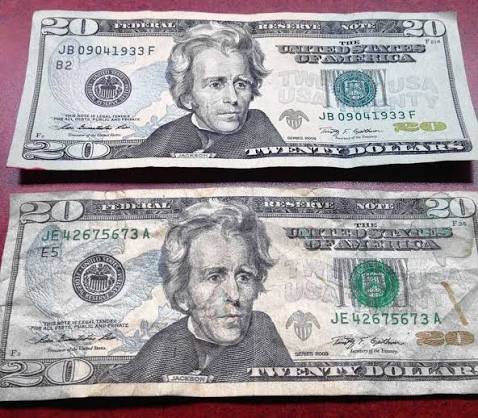
Use more than one method when checking currency
One of the most common mistakes people make is relying on a single quick test. A counterfeit detection marker, a visual inspection, or a comparison with a photograph may provide useful information, but no single method should automatically be treated as absolute proof in every situation.
For U.S. currency, official educational resources commonly encourage people to learn the security features of genuine notes and use a combination of appropriate checks.
Feel, tilt, and check
| Method | What to Examine | Purpose |
|---|---|---|
| Feel | Paper or material and raised printing | Genuine currency has distinctive physical characteristics. |
| Tilt | Relevant visual security features | Some features change appearance when viewed from different angles. |
| Check | Denomination-specific security features | Different denominations may use different security features. |
Always use official information for the specific currency and denomination you are examining.
What to Do If You Have Counterfeit Money: Step-by-Step
Step 1: Stop using the suspected money
The first step is simple: do not spend the suspected counterfeit currency.
Do not use it to make a small purchase. Do not give it to a friend. Do not exchange it privately. Do not use it to pay a debt or include it in another cash transaction.
Once you suspect that money may be counterfeit, attempting to pass it to someone else can create unnecessary legal and financial problems.
Step 2: Keep the suspected note separate
Place the suspected counterfeit note or coin somewhere safe and separate from your genuine money.
This helps prevent accidental use. It also helps you preserve the item in the condition in which you received it.
Avoid marking, cutting, altering, washing, modifying, or attempting to improve the appearance of the suspected currency.
Step 3: Record where and when you received it
Write down as many details as you can remember while the transaction is still fresh in your mind.
- Date of the transaction
- Approximate time
- Location or business
- Type of transaction
- Amount of money involved
- Whether the note was received as change
- Relevant details about how the money came into your possession
If you have a receipt, transaction record, or other documentation, keep it in a safe place.
Step 4: Avoid making accusations
If you believe that a specific person gave you the suspicious money, avoid immediately confronting or publicly accusing that person based only on your initial suspicion.
A banknote may look unusual because it is old, damaged, or from a different currency series. The appropriate authority should determine whether it is counterfeit.
Step 5: Follow the correct official reporting process
The appropriate reporting process depends on your country and circumstances.
For suspected counterfeit U.S. currency, current reporting guidance is available through the U.S. Currency Education Program. Individuals should follow the current instructions for reporting suspected counterfeit notes and contact the appropriate official agency as directed.
Businesses, financial institutions, and other organizations may have different procedures. Always check the current official instructions rather than relying on outdated information from an old article or social media post.
Step 6: Keep records of your report
If you report suspected counterfeit money, keep a record of the information you submitted and any instructions you received.
- Date of the report
- Agency or office contacted
- Reference number, if provided
- Details submitted
- Instructions received
Do not assume that you will automatically receive the face value of a suspected counterfeit note. Counterfeit currency is not generally treated the same way as genuine currency simply because someone unknowingly received it.
What You Should Not Do With Suspected Counterfeit Money
Do not spend it
This is the most important rule. Once you suspect that money may be counterfeit, do not attempt to use it in another transaction.
Do not give it to another person
Passing the note to a friend, family member, customer, or stranger does not solve the problem. It simply puts the suspected currency back into circulation.
Do not attempt to alter it
Do not try to change the appearance of the note or modify its features. Preserve it as much as reasonably possible and follow official instructions.
Do not destroy it immediately
Destroying a suspicious note may remove information that could be useful for determining its origin or handling the situation properly.
Do not rely on one internet photograph
Online images can be useful for general education, but photographs may be affected by lighting, camera quality, compression, and differences between currency series.
Do not assume that every unusual note is counterfeit
Genuine currency can be old, worn, dirty, damaged, or unfamiliar. If you are uncertain, use official resources and appropriate professional guidance.
What If You Accidentally Used Counterfeit Money?
Many people do not realize that a banknote may be counterfeit until after they have already spent it. If you genuinely did not know the money was suspicious at the time, the best response is to act responsibly once you discover the problem.
What you should do
- Stop using any other suspected counterfeit notes.
- Write down where you originally received the money.
- Record where and when you used the suspicious note if you remember.
- Keep receipts and transaction records where available.
- Follow the appropriate official reporting process.
- Be honest about what happened.
Do not attempt to replace the suspicious note by secretly passing another suspected counterfeit note. If you are concerned about possible legal consequences, seek advice from a qualified attorney in your jurisdiction.
What Businesses Should Do With Suspected Counterfeit Currency
Businesses that accept cash should have a clear procedure for handling suspicious banknotes.
Retail stores, restaurants, event vendors, clothing businesses, markets, and other cash-handling organizations can benefit from simple employee training and written procedures.
A practical business procedure
- Remain calm and professional.
- Do not accuse the customer without evidence.
- Follow company policy.
- Notify the appropriate manager or responsible employee.
- Document the transaction according to company procedures.
- Follow the appropriate reporting requirements.
Employee training checklist
- Learn the security features of commonly accepted currency.
- Understand the business’s counterfeit-money procedure.
- Know who to contact when a suspicious note is discovered.
- Understand how to document a transaction.
- Know how to remain professional during a difficult situation.
- Review procedures periodically.
Training should focus on the currency itself and proper procedures. Employees should not rely on stereotypes or assumptions about a customer’s appearance, background, accent, or identity.
How to Check Currency Safely
The goal of checking currency is not to conduct your own forensic investigation. The goal is to identify possible inconsistencies and avoid accepting or passing suspicious money.
Compare with a known genuine note
If available, compare the suspicious note with a genuine note of the same denomination. Look for differences in physical feel, printing, design, and recognized security features.
Check the correct denomination
Different denominations and currency series can use different security features. A feature found on one denomination may not be expected on another.
Use official educational resources
Official currency education resources can help consumers and businesses understand the security features of genuine notes.
Use detection tools carefully
Detection tools may be useful in businesses that handle cash, but tools should be treated as part of a broader process rather than the only source of certainty.
If a note appears suspicious, do not try to make it look more genuine. Stop the transaction if appropriate and follow your reporting procedure.
Common Counterfeit Money Situations and What to Do
Scenario 1: You receive a suspicious bill as change
Keep the bill separate from your genuine cash. Record where you received it and follow the appropriate reporting process.
Scenario 2: You discover a suspicious bill at home
Do not spend it. Write down when and where you believe you received it. Preserve it and follow official guidance.
Scenario 3: A customer gives your business a suspicious note
Follow your business policy. Remain professional, avoid unnecessary confrontation, document the transaction, and follow appropriate reporting procedures.
Scenario 4: You received the money during a private sale
Keep records of the transaction, including messages, receipts, and other relevant information. Do not pass the suspicious money to another person.
Scenario 5: You find suspected counterfeit money
Do not spend or distribute it. Keep it secure and contact the appropriate authority for instructions.
Scenario 6: You are unsure whether the note is genuine
Do not panic. Compare the note with official information for the correct denomination and currency series. If you remain uncertain, seek appropriate guidance.
Why Counterfeit Money Is a Serious Problem
Counterfeit money can create financial losses for individuals, retailers, small businesses, and financial institutions.
When a counterfeit note enters circulation, the person or business that ultimately discovers it may be unable to treat it as genuine money. A small business may accept a suspicious note during a busy transaction and discover the problem later.
For businesses that handle cash regularly, basic employee education and clear procedures can help reduce confusion. For individuals, knowing what to do if you have counterfeit money can prevent an accidental mistake from becoming a larger problem.
The most responsible response is to stop circulation, preserve relevant information, and follow official guidance.
How to Reduce the Risk of Receiving Counterfeit Money
Pay attention during cash transactions
Take a moment to examine cash when you receive it, particularly when handling higher denominations or large cash transactions.
Keep transaction records
When purchasing expensive items from private sellers, keep receipts, messages, and other transaction records where appropriate.
Train cash-handling employees
Businesses should teach employees how to recognize relevant currency security features and what to do when a note appears suspicious.
Use consistent procedures
A written procedure helps employees respond consistently instead of making decisions under pressure.
Do not rely on stereotypes
Counterfeit detection should focus on the currency, transaction, and established procedures—not assumptions about people.
What Happens After You Report Suspected Counterfeit Currency?
The process depends on the country, agency, and circumstances.
Authorities may ask questions about where the currency came from, when you received it, and how it entered your possession. Businesses and financial institutions may have separate procedures for submitting suspected counterfeit currency.
For U.S. currency, current official reporting information should be checked through the U.S. Currency Education Program and the appropriate U.S. Secret Service process.
Follow the instructions provided by the relevant authority and keep records of any reference information you receive.
Legal Considerations When You Have Suspected Counterfeit Money
People often wonder whether they can get into trouble simply because they unknowingly received counterfeit money.
The legal answer depends on the facts, the jurisdiction, and the person’s knowledge and intent. Laws often distinguish between unknowingly receiving suspicious currency and knowingly attempting to use or distribute counterfeit money.
In the United States, federal law addresses certain counterfeit-related conduct involving intent to defraud.
Because legal rules can be complex and vary by situation, anyone concerned about a specific legal matter should consult a qualified attorney.
The safest practical rule remains the same: once you suspect that money may be counterfeit, do not knowingly pass it on.
Counterfeit Money Response Comparison Table
| Action | Recommended? | Reason |
|---|---|---|
| Keep the suspected note separate | Yes | Reduces the risk of accidental use. |
| Record where you received it | Yes | Preserves useful transaction information. |
| Check official currency guidance | Yes | Helps you understand relevant security features. |
| Spend it somewhere else | No | May create serious legal and financial problems. |
| Give it to a friend | No | Returns suspected counterfeit money to circulation. |
| Alter the note | No | May interfere with proper handling and examination. |
| Destroy it immediately | Generally no | May remove useful information. |
| Follow official reporting guidance | Yes | Provides a responsible way to handle the situation. |
Pros and Cons of Different Responses
Reporting suspected counterfeit money
Pros
- Creates a responsible record of the situation.
- Helps prevent the suspected note from continuing to circulate.
- Allows the appropriate authority to handle the matter.
- Provides a clear next step for individuals and businesses.
Cons
- You may not recover the face value of the suspected counterfeit.
- The process may require time and documentation.
- You may need to answer questions about the transaction.
Trying to exchange the suspected note privately
Possible perceived advantage
Someone may believe that privately exchanging the note will recover their money.
Major risks
- It puts suspected counterfeit money back into circulation.
- It may create legal exposure if the person knowingly transfers suspected counterfeit currency.
- It prevents the issue from being handled through the appropriate process.
Bottom line: Reporting and following official guidance is the responsible option.
Counterfeit Money Action Checklist
If you believe you have counterfeit money, use this quick checklist:
- ☐ Stop using the suspected money.
- ☐ Keep it separate from genuine currency.
- ☐ Do not alter or destroy it.
- ☐ Record where and when you received it.
- ☐ Keep relevant receipts or transaction records.
- ☐ Avoid making unsupported accusations.
- ☐ Review official currency information.
- ☐ Follow the appropriate reporting process.
- ☐ Keep any report details for your records.
Featured Snippet Quick Answers
Definition: What is counterfeit money?
Counterfeit money is an unauthorized imitation of genuine currency that is designed to resemble legitimate money but was not lawfully issued by the authorized monetary authority.
Quick answer: What should you do if you have counterfeit money?
Do not spend or transfer it. Keep it separate, record where you received it, and follow the appropriate official reporting process for your location.
Quick list: What should you not do?
- Do not spend it.
- Do not give it to another person.
- Do not alter it.
- Do not destroy it immediately.
- Do not make unsupported accusations.
Frequently Asked Questions
What is the first thing to do if you think you have counterfeit money?
Stop using the money. Keep it separate from genuine currency and record where you received it.
Should I try to use a counterfeit bill to recover my money?
No. Do not knowingly pass suspected counterfeit money to another person. Follow the appropriate official reporting process instead.
Can I throw away counterfeit money?
It is generally better to preserve the suspected note and follow official instructions rather than immediately destroying it.
What if I am not completely sure the money is counterfeit?
Do not panic or make accusations. Compare the note with official currency information and seek appropriate guidance if you remain uncertain.
Can counterfeit money be exchanged for genuine money?
Do not assume that it can. Suspected counterfeit currency is not automatically entitled to replacement at face value.
What should a cashier do when a bill seems fake?
The cashier should follow the employer’s procedures, remain professional, avoid unnecessary confrontation, and follow applicable reporting requirements.
Is it illegal to keep a counterfeit bill that I received unknowingly?
Legal rules depend on the facts and jurisdiction. Once you suspect the note may be counterfeit, do not knowingly pass it on.
Can counterfeit money be identified with one test?
No single quick test should automatically be treated as absolute proof. Use multiple relevant security features and official guidance.
Where should I report suspected counterfeit U.S. currency?
Check the current reporting instructions provided by the U.S. Currency Education Program and follow the appropriate official process.
What information should I record after receiving suspected counterfeit money?
Record the date, approximate time, location, transaction details, and any relevant information about how you received the money.
Conclusion: The Safest Answer to What to Do If You Have Counterfeit Money
If you have counterfeit money—or simply suspect that a banknote may be counterfeit—the safest response is to stop and avoid putting it back into circulation.
Keep the suspected currency separate, record where you received it, avoid altering or destroying it, and follow the current official reporting instructions for your location.
For U.S. currency, official resources from the U.S. Currency Education Program provide educational information and current guidance about suspected counterfeit currency.
Understanding what to do if you have counterfeit money can protect you, your business, your customers, and other people who might otherwise receive the same suspicious note.
Want to learn more about counterfeit detection, currency security features, and responsible identification practices? Explore related educational resources from Counterfeit Print Lab and always rely on appropriate official authorities for reporting and legal guidance.

