
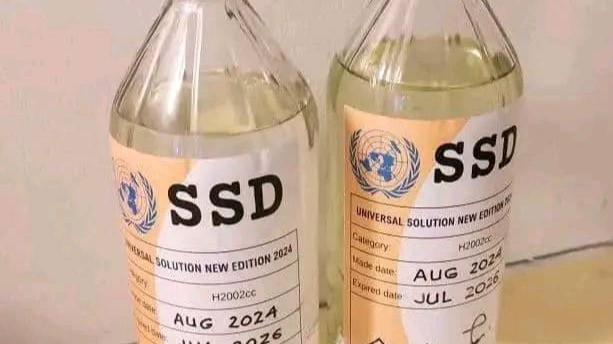
Defaced or stained currency can be confusing, especially when a banknote has ink marks, security-dye stains, water damage, dirt, or other unusual discoloration. When people search online for ways to restore such notes, they may come across the phrase “SSD solution for cleaning defaced currency.” This term is often used in online advertisements and claims about restoring stained banknotes.
However, not every product promoted as an “SSD solution” is a legitimate or approved currency-cleaning product. Some online claims may involve unknown chemical mixtures, expensive services, or promises that a damaged banknote can be restored to its original condition. These claims should be treated with caution.
Banknotes are not ordinary pieces of paper. Modern currency can contain security threads, watermarks, special inks, serial numbers, color-shifting features, microprinting, and other security elements. Applying an unknown chemical to a banknote can damage these features and may make the note harder for a bank to authenticate.
For this reason, attempting to clean a defaced banknote at home is usually not the best approach. If a note is damaged, stained, or contaminated, the safer option is to keep it in its current condition and contact an authorized bank or the relevant central-bank service. Financial institutions can assess the note and explain whether it can be exchanged or replaced under local rules.
This guide explains what people mean when they search for an SSD solution for cleaning defaced currency, why chemical-cleaning claims can be risky, and what you should do instead.
What Is SSD Solution for Cleaning Defaced Currency?
The phrase “SSD solution for cleaning defaced currency” appears frequently in online searches and advertisements related to stained or discolored banknotes. In many cases, “SSD solution” is presented as a special chemical or chemical-based service that supposedly removes stains from currency.
The problem is that the term does not, by itself, prove that a product is approved by a central bank, financial regulator, or banknote manufacturer. Online sellers may use technical-sounding names to make a product appear official or specialized.
Some claims suggest that a particular solution can restore banknotes affected by ink or other stains. However, consumers should not assume that such claims are genuine simply because a seller provides photographs, testimonials, videos, or technical-looking explanations.
A legitimate currency-handling process is different from an unverified chemical-cleaning service. Banks and central banks have established procedures for examining damaged, contaminated, or suspicious banknotes. These procedures can include checking the note’s authenticity, condition, serial number, and security features.
If a banknote has been damaged, the goal should not simply be to make it look clean. The more important issue is whether the note remains genuine and whether it can be accepted or exchanged under the applicable rules.
This is why anyone searching for an SSD solution for cleaning defaced currency should first understand the risks involved.
Why Does the Term Appear Online?
Search engines and social media platforms contain many advertisements for currency-cleaning products and services. Some may claim to specialize in removing ink, stains, or other marks from banknotes.
The use of phrases such as “special solution,” “money cleaning chemical,” or “SSD solution” can make these offers sound more credible than they actually are.
A professional-looking website or social-media page does not automatically mean that a chemical is safe for banknotes. Likewise, customer testimonials do not replace independent verification from a recognized financial institution.
Before using any chemical product on currency, consider whether the product has been officially approved for that purpose by the appropriate authority in your country. If you cannot verify that information, it is safer not to use the product.
Why Does Currency Become Defaced or Stained?
Banknotes can become damaged for many ordinary reasons. Understanding the cause of the damage can help you decide what to do next.
Ink Stains and Security-Dye Contamination
Ink marks are one of the most noticeable forms of currency damage. A banknote may accidentally come into contact with ink from a pen, printer, stamp, or another source.
Security-dye contamination is different. Some banknotes may become stained when they are exposed to security systems designed to mark currency during certain theft-prevention situations. The resulting stains may be difficult to remove without affecting the note’s security features.
Trying to remove such stains with an unknown chemical can make the situation worse.
Water and Dirt
Water damage can occur when banknotes are exposed to rain, flooding, washing, or accidental spills. Dirt and dust can also build up when notes are stored or handled frequently.
A slightly dirty banknote does not necessarily require chemical treatment. Banks and other authorized institutions can determine whether the note is still usable.
Fire and Heat Damage
Currency may also be affected by fire, smoke, or excessive heat. In these situations, the physical structure of the banknote may be weakened.
Applying chemicals to a note that has already suffered heat or fire damage can create additional problems. A damaged note should generally be handled carefully and assessed by an appropriate financial institution.
Chemical Damage
A banknote can also be damaged if it comes into contact with household cleaners, industrial chemicals, solvents, or other substances.
The fact that a chemical removes a visible stain does not mean that it has restored the banknote. The chemical may also remove ink, weaken the paper or polymer material, or affect security features.
Accidental Damage vs. Deliberate Alteration
There is also an important difference between accidental damage and deliberate alteration.
An accidentally stained banknote may simply need assessment by a bank. A deliberately altered note may be subject to different rules, depending on the country and circumstances.
Because regulations differ between countries, it is better to ask an authorized financial institution rather than relying on advice from an online chemical seller.
Can SSD Solution Really Clean Defaced Currency?
This is one of the most important questions behind the keyword “SSD solution for cleaning defaced currency.”
Online claims should be approached carefully. A product may be advertised as capable of removing stains, but that does not establish that it is safe, legitimate, or approved for use on banknotes.
Banknotes contain more than a visible printed design. They may contain security threads, watermarks, special inks, serial numbers, tactile features, holographic elements, and other anti-counterfeiting features.
An unknown chemical can affect these elements.
Chemical Cleaning Can Cause Additional Damage
A cleaning chemical may change the color or texture of a banknote. It may also cause printed areas to fade or bleed.
Even if the note looks cleaner afterward, the chemical may have damaged features used to verify its authenticity.
This is especially important because banks do not assess a note based only on its appearance. They may examine several security characteristics before deciding whether it is genuine and eligible for exchange.
Do Not Trust Unverified Chemical Formulas
People searching for SSD solution for cleaning defaced currency may encounter instructions, formulas, or chemical combinations online.
It is not advisable to treat these formulas as official currency-restoration procedures unless they come from a recognized financial authority.
Unknown chemical mixtures can create safety risks as well as damage banknotes. Mixing chemicals can also produce harmful fumes or reactions.
For that reason, this guide does not provide chemical formulas or step-by-step instructions for treating stained currency.
A Clean-Looking Note Is Not Necessarily a Restored Note
This distinction is important.
Cleaning a stain from the surface of a banknote is not the same as restoring the note to an acceptable condition.
A bank may need to determine:
- Whether the note is genuine
- Whether its security features remain intact
- Whether the serial number can be identified
- How much of the note remains
- Whether the damage appears accidental
- Whether local exchange rules apply
An online chemical treatment cannot guarantee these outcomes.
Risks of Using Chemical Solutions on Currency
Using an unknown chemical on a banknote can create several risks.
Skin and Eye Irritation
Some cleaning chemicals can irritate the skin or eyes. Others may produce unpleasant or harmful vapors.
A person may assume that a product is safe because it is marketed as a “currency cleaning solution.” Marketing language is not a substitute for reliable safety information.
If a chemical product does not have clear, trustworthy safety information and a legitimate purpose, avoid experimenting with it.
Damage to Banknotes
Chemical treatment can damage:
- Printed designs
- Serial numbers
- Security threads
- Watermarks
- Special inks
- Protective coatings
- Paper or polymer material
Once these features are damaged, the note may become more difficult to authenticate.
Possible Financial Consequences
A person may spend significant money purchasing an unverified cleaning product or paying for a supposed currency-cleaning service.
There is also a risk that the treatment may make the banknote unacceptable for normal use.
Instead of paying for an uncertain chemical treatment, contacting an authorized bank is generally the more sensible first step.
Possible Legal Issues
Currency rules differ between countries. Some types of currency alteration, counterfeit-related activity, or suspicious transactions can have legal consequences.
This does not mean that an accidentally stained banknote is automatically illegal. It means that people should avoid attempting to alter currency in ways they do not understand.
If you are unsure, ask an authorized financial institution about the proper process.
Currency-Cleaning Scams
One of the biggest risks associated with online currency-cleaning claims is fraud.
A scammer may claim that a large amount of money is covered in a special substance and that an expensive chemical is required to restore it.
The scam may involve requests for upfront payments, shipping fees, special equipment charges, or repeated purchases of additional products.
Be especially careful when someone promises guaranteed results or asks you to send money before providing verifiable information.
What Should You Do With Defaced Currency?
If you have a stained or damaged banknote, the safest first step is usually to avoid aggressive cleaning.
Keep the note in its current condition and protect it from further damage.
Do Not Cut or Tear the Note
Cutting a damaged banknote can make it harder to assess. If a note is already torn, keep the pieces together and take them to an authorized financial institution for guidance.
Avoid Bleaching
Bleaching may change the appearance of the banknote and can damage important features.
A note that looks brighter after treatment may still be damaged internally or from a security-feature perspective.
Avoid Burning or Applying Heat
Heat can further damage a banknote. Do not attempt to burn, melt, or aggressively heat a stained note.
Avoid Unknown Chemicals
This is especially important for anyone searching for SSD solution for cleaning defaced currency.
Do not apply an unknown chemical simply because an online seller says it will restore the note.
Instead, ask a bank or relevant central-bank service what process applies in your country.
Take the Note to an Authorized Bank
An authorized bank can provide guidance on whether the damaged note can be accepted, exchanged, or referred for further assessment.
The exact rules vary by country and currency.
When visiting a bank, explain how the damage occurred if you know. Keep any relevant information or documentation that may help explain the situation.
SSD Solution vs. Official Currency Replacement
There is a major difference between an unofficial chemical-cleaning claim and an official currency-replacement process.
| Unofficial Chemical Cleaning | Official Currency Assessment |
|---|---|
| Often promoted online | Provided through recognized financial institutions |
| May involve unknown chemicals | Uses established procedures |
| Results may not be guaranteed | Assessment is based on applicable rules |
| Can damage security features | Focuses on authenticity and condition |
| May involve scam risks | Provides an official route for assistance |
| May cost money without a clear outcome | Exchange or replacement depends on local policy |
The official process is usually the better starting point because the institution can determine what should happen to the damaged note.
Why Official Assessment Is Safer
Financial institutions understand that banknotes can become damaged through normal use, accidents, water exposure, fire, or other events.
Their procedures are designed to deal with damaged currency without requiring members of the public to experiment with chemicals.
If the note qualifies for exchange or replacement, the institution can explain the requirements.
When Can a Banknote Be Replaced?
The answer depends on the country and the currency.
Some central banks have rules for damaged, mutilated, contaminated, or heavily worn banknotes. Eligibility can depend on the remaining portion of the note, its authenticity, and the nature of the damage.
Therefore, do not assume that a banknote must be cleaned before you can request an exchange.
In many cases, the better approach is to present the note exactly as it is.
How to Avoid Currency-Cleaning Scams
Online currency-cleaning offers can look convincing. Use caution before spending money.
Be Careful With Guaranteed Results
A seller who promises that every damaged note can be restored should be treated cautiously.
Banknotes differ in material, printing technology, security features, and condition. No generic online promise can guarantee the same result for every note.
Do Not Rely Only on Testimonials
Photos and testimonials can be edited, misleading, or taken out of context.
Look for information from recognized banks, central banks, or financial authorities instead.
Avoid Paying Large Upfront Fees
If someone claims that you need to pay a large amount before your currency can be “activated,” “cleaned,” or “released,” stop and verify the claim independently.
Do not send money simply because the person says the opportunity is urgent.
Protect Personal Information
Do not provide passwords, banking login details, card information, PINs, or unnecessary personal information to an unknown currency-cleaning operator.
A legitimate bank will have established channels for handling customer information.
Verify Through an Official Financial Institution
If you are unsure about a damaged banknote, contact your bank or the relevant central bank.
An official institution is a much better source of information than an anonymous social-media account or an online seller.
FAQ
What is an SSD solution for cleaning defaced currency?
“SSD solution” is a term commonly used online in connection with claims about cleaning or restoring stained or defaced banknotes. The name itself does not prove that a product is officially approved or safe for currency. People should verify such claims through an authorized financial institution before using any chemical.
Can defaced currency be cleaned at home?
It is generally better not to attempt aggressive chemical cleaning at home. Cleaning may damage the note’s printing, security features, serial number, or material. Take the note to an authorized bank or relevant currency authority for assessment.
Is it safe to use chemicals on banknotes?
Not necessarily. Unknown chemicals can damage banknotes and may also create health or safety risks. Unless a chemical is specifically verified as appropriate for the particular currency and purpose by a reliable authority, avoid experimenting with it.
Can a bank replace damaged currency?
In many countries, banks or central-bank services have procedures for damaged currency. However, the rules and eligibility requirements vary. An authorized financial institution can tell you whether your specific note qualifies for exchange or replacement.
What should I do if my banknote has ink or other stains?
Keep the banknote as it is and avoid applying bleach, solvents, or unknown cleaning products. Take it to an authorized bank and ask about the official procedure for damaged or stained currency.
Conclusion
Searching for “SSD solution for cleaning defaced currency” may lead to many online products, advertisements, and claims. However, consumers should not assume that these products are official, safe, or capable of restoring damaged banknotes.
Currency contains important security features that can be affected by chemicals. Attempting to clean a note may remove or damage printing, serial numbers, security threads, watermarks, or other features needed for authentication.
There is also a financial risk. Some online currency-cleaning offers may be misleading or fraudulent, especially when sellers promise guaranteed results or demand large upfront payments.
The safer approach is simple: do not experiment with unknown chemicals on damaged currency. Avoid cutting, bleaching, burning, or aggressively treating the note. Keep the banknote in its current condition and contact an authorized bank or relevant central-bank service.
The official assessment process may provide a legitimate path to exchange or replacement if the note meets the applicable requirements.
When it comes to damaged currency, protecting the note and seeking official guidance is generally much safer than trusting an unverified SSD solution for cleaning defaced currency claim.

