
Knowing how to tell a fake $10 dollar bill is an important skill for anyone who handles cash. Counterfeit currency is a real concern for retailers, small businesses, and consumers. Criminals often target commonly used denominations like the $10 bill because they circulate frequently and may receive less scrutiny than larger bills.
Fortunately, genuine U.S. currency includes several built-in security features designed to prevent counterfeiting. By learning a few quick checks, you can easily identify a fake $10 bill and avoid accepting counterfeit money.
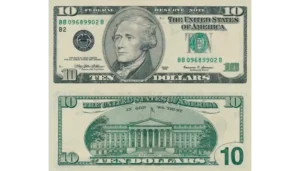
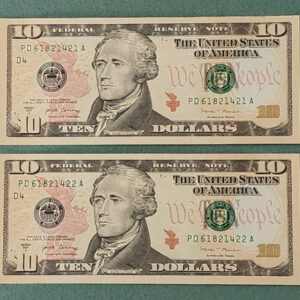
1. Feel the Unique Texture of the Bill
One of the easiest ways to begin spotting a fake $10 bill is by touching it.
Real U.S. currency is printed on a special blend of 75% cotton and 25% linen, which gives the paper a distinct texture. Authentic bills feel slightly rough and durable rather than smooth like standard paper.
What to look for
- A genuine $10 bill feels firm and textured
- The ink is slightly raised, especially on the portrait of Alexander Hamilton
- Fake bills often feel thin, smooth, or overly stiff
If the bill feels like ordinary printer paper, it could be counterfeit currency
2. Check the Security Thread
Another key step in learning how to identify a fake $10 dollar bill is checking the embedded security thread.
Every authentic $10 bill includes a vertical security strip embedded inside the paper. When you hold the bill up to a light source, the thread becomes visible.
Security thread features
- The thread reads “USA TEN” repeatedly
- It runs vertically through the bill
- Under ultraviolet (UV) light, the strip glows orange
If the strip is missing or simply printed on the surface, the bill is likely a fake $10 bill.
3. Look for the Watermark
Modern $10 bills contain a watermark image of Alexander Hamilton that appears when the bill is held up to light.(How to Tell a Fake $10 Dollar Bill)
The watermark is located to the right of the main portrait and should be visible from both sides of the bill.
Authentic watermark traits
- It is built into the paper, not printed
- The image is soft but clearly visible
- It matches the portrait on the bill
Counterfeit bills may have no watermark at all or a poorly printed imitation.
4. Examine the Color-Shifting Ink
A major anti-counterfeiting feature on U.S. currency is color-shifting ink.
On genuine $10 bills, the number “10” in the lower right corner changes color when the bill is tilted.
What you should notice
- The number shifts from copper to green
- The color change happens smoothly when the bill moves
If the color remains static or looks dull, it may indicate counterfeit money.
5. Inspect the Fine Printing and Microprinting
Real U.S. currency contains microprinting, which consists of extremely small text that is difficult for counterfeiters to replicate accurately.
You may need a magnifying glass to see it clearly.
Common locations of microprinting
- Around the portrait frame
- Along the edges of the bill
- Near the words “United States of America”
On genuine bills, the microprinting appears sharp and readable. Fake bills often show blurred or smudged text.
6. Verify the Serial Numbers
Every real $10 bill has two matching serial numbers printed on the front.
Check for these details
- Both serial numbers should match perfectly
- The numbers should be evenly spaced
- The ink color should match the Treasury seal
Counterfeit notes often have uneven spacing, mismatched numbers, or inconsistent fonts.
Stay Alert to Counterfeit $10 Bills
Understanding how to spot a fake $10 dollar bill can help protect you from financial loss and prevent counterfeit currency from spreading. A quick inspection of the paper texture, security thread, watermark, color-shifting ink, microprinting, and serial numbers can reveal whether a bill is genuine.
If you ever suspect a counterfeit $10 bill, avoid using it and report it to your bank or local authorities. Staying aware of these U.S. currency security features ensures you can confidently handle cash and avoid falling victim to counterfeit scams.
How can you tell if a $10 dollar bill is fake?
Check several security features instead of relying on just one. Genuine U.S. $10 bills include features such as raised printing, a security thread, color-shifting ink (on newer designs), a watermark, and microprinting. If any of these features are missing or appear poorly reproduced, the bill may not be genuine.
What security features are on a real $10 bill?
Depending on the series, authentic $10 bills may include:
- A portrait watermark visible when held to the light
- An embedded security thread that glows under UV light
- Raised intaglio printing
- Microprinted text
- Fine-line background patterns
- Color-shifting ink on newer notes
Always compare a suspicious bill with one you know is genuine.
Does every $10 bill have the same security features?
No. U.S. currency designs have changed over time, so older and newer series may include different security features. Before judging a bill, check which series year it belongs to and compare it with official information for that design.
Can counterfeit $10 bills pass a quick inspection?
Some counterfeit bills may appear convincing at first glance, especially in busy environments. That’s why it’s important to examine multiple security features rather than relying only on the paper, color, or overall appearance.
What should I do if I receive a fake $10 bill?
Do not try to spend or pass it to someone else. If you suspect a bill is counterfeit, set it aside if it is safe to do so and contact your local law enforcement agency or bank for guidance. They can advise you on the appropriate next steps.
Can I detect a fake $10 bill without special equipment?
Yes. Many security features—such as the watermark, raised printing, portrait quality, and microprinting (with a magnifier)—can be checked without specialized tools. A UV light can help verify the embedded security thread, but it is not the only method.
Are counterfeit detector pens always accurate?
No. Detector pens can be useful, but they are not foolproof. Some counterfeit bills printed on genuine paper may pass the pen test. For better accuracy, verify several built-in security features together.
Why do counterfeit $10 bills still circulate?
Counterfeiters often target fast-paced transactions where bills are less likely to be closely inspected. Staying familiar with genuine security features can help reduce the chance of accepting a counterfeit note.
Where can I learn about official U.S. currency security features?
The best source is the official information provided by the U.S. Currency Education Program, which explains the security features of every denomination and offers guidance on checking banknotes.
What is the fastest way to check a suspicious $10 bill?
Remember the “Feel, Look, Tilt” method:
- Feel for raised printing and the paper quality.
- Look for the watermark, security thread, and microprinting.
- Tilt the bill to check for color-shifting features (where applicable).
Conclusion
Knowing how to tell a fake $10 dollar bill is a valuable skill that can help protect you from financial loss and reduce the risk of accepting counterfeit currency. Instead of relying on a single clue, always examine multiple security features, including the watermark, security thread, raised printing, microprinting, and overall print quality. Taking a few extra seconds to inspect a bill can make a significant difference in identifying suspicious notes.
Keep in mind that genuine U.S. currency has advanced security features that are difficult to replicate accurately. If you ever have doubts about a $10 bill, avoid trying to spend it or pass it to someone else. Compare it with a bill you know is genuine or seek assistance from your bank or the appropriate authorities. By staying informed and paying attention to the details, you can confidently recognize authentic currency and better protect yourself, your business, and your everyday transactions.
Read More: counterfeit 20 bills

