
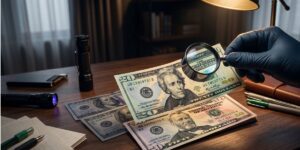
Many people search for how to make counterfeit money look real, but this is not a harmless topic. Trying to make fake money look genuine is illegal, dangerous, and can lead to very serious problems. It is not just a bad idea. It can become a criminal matter that affects your finances, your reputation, your future, and even your freedom.
Counterfeiting is more than printing a fake bill. It includes changing, copying, passing, selling, or helping distribute fake currency that is meant to fool someone. Even talking about ways to improve fake money so it appears more real can cross into risky territory. A person may think it is a shortcut, a prank, or just a curiosity. In reality, it can lead to lasting consequences.
The risks are wide. There are legal risks, because law enforcement treats counterfeiting as a serious offense. There are financial risks, because businesses and individuals lose real money when fake notes enter circulation. There are personal risks too. A person tied to counterfeit money can lose trust, damage relationships, face an investigation, and struggle with long-term problems related to employment, travel, and reputation.
This article does not explain how to make counterfeit money look real. Instead, it explains why that idea is illegal and unsafe. It also shows how counterfeit money is usually detected, the common myths people believe about fake bills, the warning signs to watch for, and the safe steps to take if you receive suspicious currency. The goal is simple: help readers understand the issue clearly, avoid harmful mistakes, and respond responsibly.
What Is Counterfeit Money?
Counterfeit money is fake currency made to look like real money so that another person accepts it as genuine. The key issue is deception. If a bill is created or changed to trick someone into thinking it is real legal tender, it falls into dangerous territory.
It helps to separate counterfeit money from other types of currency-like items. A counterfeit bill is made or altered to imitate real currency and fool others. A replica bill may be created for display, training, theater, or collecting, but it must follow strict rules and should not be usable as real money. A novelty note is usually made for entertainment, gifts, or jokes and is often marked clearly so people do not confuse it with real currency. Damaged genuine currency is real money that has been torn, stained, worn out, or partly destroyed, but it is still genuine money, not fake money.
This difference matters. Some people assume that if a note is poor quality, small in size, missing features, or used as a joke, it is not a real issue. That is not a safe assumption. Even low-quality fake notes can create serious problems. A rushed cashier, a busy market, low lighting, or a quick exchange can allow poor counterfeit bills to slip through. Once that happens, someone loses money. That person could be a small business owner, a customer, an employee, or the next person who receives the bill.
Poor-quality counterfeit money can also trigger the same chain of trouble as high-quality fake notes. It may cause a police report, a financial loss, and an investigation into where the note came from. The fact that a fake bill looks weak or obvious does not make it harmless. In many cases, even a badly made fake note is enough to create legal exposure if it was made, kept, or passed with the wrong intent.
That is why understanding counterfeit money is important. It is not only about spotting fake cash. It is about recognizing that anything designed to imitate real money can become a serious issue very quickly.
Why People Search “How to Make Counterfeit Money Look Real”
Not every person who searches this phrase has the same motive. Some people are simply curious. They may have seen a video, heard a rumor, or found a strange note and started searching online. Others may be confused about replica money, novelty notes, or props used in films and photo shoots. Some may even be looking for illegal ways to improve fake currency.
Curiosity does not remove the danger. A person may start with a casual question and move into harmful territory without realizing it. Once someone begins looking for ways to make fake money more convincing, the issue becomes more serious. Searches, downloads, messages, design files, printer records, and purchases can all become part of a broader pattern. What feels like “just looking” can appear very different if authorities examine it later.
Misinformation is another reason people search this topic. Online forums, short videos, and misleading posts often suggest that counterfeiting is easy, low risk, or hard to trace. That is false. Real currency includes multiple features meant to protect against copying. Businesses also use better tools, staff training, and safer reporting methods than many people realize. What looks clever online is often obvious in real life.
There is also the issue of harmful intent. Some people do search for ways to deceive stores, banks, or other individuals. This is exactly why the topic is treated seriously. Publishing, sharing, or following advice on how to make counterfeit money look real can contribute to fraud and criminal activity. It does not only put the user at risk. It can also expose others to loss and harm.
Searchers should understand the risks before going any further. Counterfeiting is not a creative trick. It is a crime that can affect innocent people. A fake note may seem small, but the damage spreads. A business may lose inventory and revenue. A worker may be how to check for counterfeit money blamed for accepting it. A customer may later be questioned. A person who thought they were only experimenting may find themselves facing consequences they never expected.
That is why responsible content on this subject should focus on awareness, detection, and prevention instead of instruction. The safest path is to understand the law, know the warning signs, and avoid any activity that makes fake currency look more convincing.
Is It Illegal to Make Counterfeit Money Look Real?
Yes. Making counterfeit money look real is illegal because the purpose is deception. The law does not look only at the final bill. It also looks at the intent behind creating, changing, using, or sharing it.
Creating fake currency with the intention to deceive is one of the clearest forms of counterfeiting. This includes designing, printing, altering, copying, or finishing a note so it resembles real money closely enough to fool someone. Even if a person never succeeds in spending it, the act itself can still create serious legal risk.
Possessing counterfeit money knowingly is another major issue. If someone keeps fake notes while understanding what they are, that can be treated very differently from a person who receives one by accident and reports it properly. Knowledge and intent matter. Once a person realizes a note may be fake, trying to hide it, save it for later, or pass it to someone else only makes the situation worse.
Passing fake money to another person is especially serious. This means using suspicious notes in shops, markets, private sales, or other transactions. Some How to Make Prop Money people tell themselves that if they received a fake bill by mistake, they should try to “get rid of it” by spending it somewhere else. That is not a safe solution. Once you know or suspect it is fake, trying to pass it on can become a new offense.
Selling, advertising, or distributing counterfeit notes is also illegal. This includes offering fake money directly, promoting services related to it, or helping move it from one person to another. The law does not only focus on the final user. It can also target the people who design, print, store, transport, advertise, or assist in any part of the process.
Another important point is that evidence is not limited to the fake note itself. Printers, computers, phones, design files, image edits, chats, payment records, and shipping details can all become relevant in an investigation. That means even early steps can carry risk.
A person does not need to be part of a large criminal group for the issue to become serious. Small-scale activity can still lead to major legal trouble. That is why the right response is not to test limits. The right response is to stay away from anything that involves improving fake currency, handling it carelessly, or moving it into circulation.
Why Counterfeiting Is a Serious Crime
Counterfeiting is treated seriously because the harm goes far beyond one fake bill. It affects people, businesses, and public trust.
The most direct harm falls on businesses and consumers. When a store accepts counterfeit money, it usually loses both the goods and the cash value of the transaction. Small businesses are hit especially hard because they operate on tight margins. A single fake note may not seem large, but repeated incidents can hurt daily operations. Consumers are harmed too. If a person unknowingly receives a counterfeit bill, they may not be able to recover that value later.
Counterfeiting also undermines trust in the financial system. Money works because people believe it is genuine and accepted. When fake notes circulate, that confidence is damaged. Businesses become more suspicious. Transactions slow down. Extra checks become necessary. Honest people face inconvenience because others introduced fraud into the system.
The crime can also lead to very severe penalties. Depending on the laws involved, counterfeiting can result in fines, prison time, confiscation of equipment, seized funds, criminal records, and long-term restrictions. These penalties can affect education, career growth, immigration matters, travel, and professional reputation. A person may think only about the short-term result and ignore the lasting damage.
There is another reason the crime is taken seriously: it often leaves a digital trail. Digital files, printers, ink patterns, chats, searches, transfers, and attempted transactions can all be examined. A person may think that deleting a file or using informal messages makes the risk low. That belief is dangerous. Investigators can build a picture from many sources.
Counterfeiting is not a victimless act. It can cause stress for cashiers, managers, families, and innocent people who become linked to suspicious transactions. It can also pull individuals into deeper criminal behavior. What starts as “just one note” can become repeated conduct, pressure from others, or a bigger case than expected.
That is why prevention matters. The safest and smartest path is to reject the idea that fake money can be made acceptable if it just looks real enough. It cannot. The damage begins long before a fake bill is accepted.
How Real Currency Is Usually Verified
Real currency is designed with features that help people and businesses check whether a note is genuine. These features are not random. They are layered on purpose so that a note can be checked in different ways.
One of the first checks is the feel of the paper. Genuine currency often has a distinct texture. It may feel firm, crisp, slightly rough, or otherwise different from ordinary paper. Many fake notes feel too smooth, too soft, too waxy, or too flat. People who handle cash often notice this quickly.
The next check is print clarity. Real notes are usually printed with very sharp detail. Fine lines, borders, numbers, and portraits tend to look clean and precise. Counterfeit notes may show blurry edges, uneven ink, weak detail, or smudged sections. Even when the design looks close from a distance, problems often appear under better lighting or closer inspection.
Another major protection comes from security features. Real currency may include security threads, watermarks, holographic elements, color-shifting details, microprinting, transparent areas, raised ink, or other protective features depending on the country and denomination. These are built into the note and are difficult for ordinary copying methods to reproduce accurately.
Many businesses and banks also use UV tools and verification devices. These tools help show hidden features or reveal when something is missing. A bill that seems acceptable at first glance may fail quickly under a proper check.
Counterfeit money often fails because copying appearance is not the same as copying security. A fake note may copy the color and general layout, but it can still miss the texture, depth, layering, alignment, and built-in features of real currency. That is why close inspection matters.
It is also why the idea of making counterfeit money look real is misleading from the start. Real money is not protected by one visible trick. It is protected by a system of details. That system makes fake notes harder to create and easier to catch.
Common Myths About Making Fake Money Look Real
Many people believe myths about counterfeit money. These myths can make the issue seem easier, safer, or less serious than it really is.
One common myth is that home printers can make convincing money. This belief comes from seeing high-resolution images and assuming they are enough. But real currency includes more than a printed picture. Genuine notes use special materials, layered design choices, and security features that normal home equipment cannot truly reproduce. A bill may look acceptable in a low-quality image online, but real-world inspection is much harder to pass.
Another myth is if it passes once, it is safe to use. This is false. A fake note getting accepted one time does not make it safe or legal. It only means the bill was not caught at that moment. It may still be traced back later. Cameras, receipts, witnesses, and later discoveries can all raise questions.
A third myth is that low-quality fakes are not a serious crime. Some people think only highly sophisticated counterfeit operations matter. That is wrong. Poor counterfeit notes can still cause fraud, loss, and investigation. The law does not ignore a fake bill simply because it is badly made.
There is also the myth that replica money is always legal. Not all imitation currency is allowed, and even legal props or novelty notes must follow strict limits so they cannot be mistaken for real money. If a note can confuse people or is used deceptively, the risk becomes much greater.
These myths are dangerous because they lower caution. They make people think the line is unclear when, in reality, the safest line is simple: do not create, improve, keep, or pass anything meant to look like real currency for deception.
Warning Signs of Counterfeit Money
Spotting fake money often starts with simple observation. You do not need to be a specialist to notice when something seems wrong.
A common warning sign is a strange texture or thickness. A note may feel unusually smooth, limp, thick, glossy, or slippery. Genuine currency usually feels more consistent and intentional.
Another warning sign is blurry print or uneven ink. Look at fine lines, portraits, numbers, borders, and text. If edges look fuzzy, colors appear off, or ink seems smeared, the bill deserves closer attention.
Missing or weak security features are also important. If a note should contain a watermark, thread, shifting detail, or other visible protection and it does not appear right, that is a major concern.
You should also watch for incorrect colors, borders, or serial details. Fake notes may have colors that seem dull, bright, or slightly wrong. Borders may be uneven. Numbers may not align well. Repeating serial patterns can also be suspicious.
Another clue is when notes look too identical. Real bills can share design standards, but suspicious notes that look unnaturally similar in print flaws, wear pattern, or appearance may point to copying.
No single sign proves a bill is fake, but several signs together should never be ignored.
What to Do If You Receive Suspicious Currency
If you receive a note that seems suspicious, do not panic, but do act carefully.
First, do not try to spend it. Passing it to someone else can create more risk for you and harm another person.
Second, limit handling and keep it separate. Avoid folding it into other cash or using it in another transaction. The goal is to preserve its condition and avoid confusion.
Third, note when and where you received it. If possible, remember the time, location, and context of the exchange. This information may help later.
Next, contact the proper authority, such as local law enforcement, your bank, or the relevant reporting agency in your area. Follow their instructions. They may ask you to submit the note or provide details.
Finally, cooperate with any investigation. If you received the note by mistake, honest and prompt reporting is the safest approach.
How Businesses Can Reduce Counterfeit Risk
Businesses can lower counterfeit risk with a few consistent habits.
They should train cash handlers to notice texture, print quality, and missing features. Even basic awareness can prevent many losses.
They should also use counterfeit detection tools where appropriate. Quick screening tools add another layer of protection, especially for higher-value notes.
It helps to check large bills carefully, especially during busy times, late hours, or rushed exchanges. Fraud often succeeds when attention is low.
Every business should have a clear reporting process. Staff should know what to do, who to tell, and how to handle suspicious notes safely.
It is also smart to keep records when incidents happen. Good records support internal review and make reporting easier if a problem appears again.
Final Thoughts
The idea behind how to make counterfeit money look real may attract attention, but the truth is simple: trying to make fake money appear genuine is illegal, risky, and harmful. It is not a shortcut. It is a serious mistake with legal, financial, and personal consequences.
The better path is awareness. Learn how counterfeit money is detected. Understand the myths that mislead people. Know the warning signs. And if you ever receive suspicious currency, respond responsibly by separating it, reporting it, and refusing to pass it on.
Staying informed protects you, protects businesses, and helps protect trust in everyday transactions. Responsible action matters more than curiosity, and prevention is always better than regret.

