
Knowing how to check 100 dollar note authenticity is important for anyone who handles U.S. currency, especially businesses, cashiers, currency exchangers, collectors, and travelers. A genuine $100 Federal Reserve Note contains several publicly documented security features designed to help people distinguish authentic currency from suspicious or counterfeit notes.
The good news is that learning how to check 100 dollar note authenticity does not necessarily require expensive equipment. The U.S. Currency Education Program recommends a simple approach: feel the note, tilt it, and check it with light. These basic checks can help you examine the paper, raised printing, 3-D Security Ribbon, color-shifting features, watermark, and security thread.
However, no single visual test should be treated as absolute proof. A suspicious note should be compared carefully with known genuine currency and, when necessary, referred to an appropriate financial institution or relevant authority for verification.
In this guide, we explain how to check 100 dollar note authenticity step by step, what security features to look for, what common warning signs may indicate a suspicious banknote, and what to do if you believe a $100 note may be counterfeit.
Quick Answer: How to Check 100 Dollar Note
If you want to know how to check 100 dollar note quickly, use the following basic process:
- Feel the paper and look for the distinctive texture and raised printing.
- Tilt the note and examine the blue 3-D Security Ribbon.
- Check whether the Bell in the Inkwell changes color when tilted.
- Check the color-shifting “100” in the lower-right area of the front.
- Hold the note against light to inspect the Benjamin Franklin watermark.
- Check the embedded security thread for the correct markings.
- Examine the printing quality, fine details, serial numbers, and overall appearance.
- Compare suspicious characteristics with official U.S. currency references.
- If you remain uncertain, have the note assessed by an appropriate financial institution or authority.
The current-design $100 note has five major security features highlighted by the U.S. Currency Education Program: the 3-D Security Ribbon, Bell in the Inkwell, color-shifting numeral, watermark, and security thread.
Why Learn How to Check 100 Dollar Note Authenticity?
A $100 bill has a higher face value than most commonly handled U.S. denominations, so receiving a suspicious note can result in a significant financial loss.
Learning how to check 100 dollar note authenticity can help businesses and individuals identify warning signs before accepting questionable currency.
For retailers and cash-handling businesses, a simple authentication routine can also reduce the risk of accidentally accepting a counterfeit. Employees who regularly handle cash should understand which security features to inspect and should follow their organization’s counterfeit-reporting procedures.
It is also important to remember that U.S. currency designs can vary by issue date. Older-design $100 notes remain legal tender, so an older appearance alone does not mean that a note is counterfeit. The U.S. Currency Education Program specifically notes that all U.S. currency remains legal tender regardless of when it was issued.
Therefore, how to check 100 dollar note should not simply mean comparing its appearance with the newest $100 bill. Instead, the note should be evaluated according to the security features appropriate to its design.
How to Check 100 Dollar Note Using the Feel, Tilt, and Check Method
One of the easiest ways to understand how to check 100 dollar note authenticity is to follow the official “Feel, Tilt, Check” approach.
1. Feel the $100 Note
Start by touching the note.
Genuine U.S. currency has a distinctive feel because of its paper composition and raised printing. The U.S. Currency Education Program describes the paper as a blend of 75% cotton and 25% linen, and genuine notes have a slightly rough texture caused partly by raised printing.
Run your fingers gently over the surface, especially around the portrait and other areas containing raised printing.
A suspicious note may feel unusually smooth, excessively soft, too thick, too thin, or noticeably different from other genuine Federal Reserve Notes.
However, texture alone should never be used as the only authentication test. Circulated notes can become worn, dirty, folded, or damaged over time.
2. Tilt the Note
The next important step in how to check 100 dollar note authenticity is tilting the note.
Several security features on the current-design $100 note are designed to change appearance or movement when the note is tilted.
Pay particular attention to:
- The blue 3-D Security Ribbon
- The Bell in the Inkwell
- The color-shifting numeral 100
These features provide visual effects that are difficult to reproduce accurately with ordinary printing methods.
3. Check the Note With Light
The final major part of how to check 100 dollar note is examining the note with transmitted light.
Hold the $100 note toward a suitable light source and inspect the:
- Portrait watermark
- Security thread
- Relationship between the printed elements and embedded features
The watermark and security thread are visible when the note is held to light.
How to Check 100 Dollar Note: 3-D Security Ribbon
The blue 3-D Security Ribbon is one of the most recognizable security features of the current $100 note.
When learning how to check 100 dollar note, this is one of the first features you should inspect.
The ribbon contains images of bells and the number 100. When you tilt the note back and forth, the bells and 100s appear to move. Depending on how you tilt the note, the visual movement changes direction. The ribbon is woven into the paper rather than simply printed onto its surface.
What Should You Look For?
Look for:
- A blue vertical ribbon
- Bell and “100” imagery
- Apparent movement when the note is tilted
- A ribbon integrated into the paper
A suspicious note may have a ribbon-like image that looks flat or printed rather than exhibiting the expected movement.
The important point is that how to check 100 dollar note should involve observing the behavior of the feature, not simply checking whether something blue appears on the bill.
How to Check 100 Dollar Note: Bell in the Inkwell
Another distinctive security feature is the Bell in the Inkwell.
On the front of the current-design $100 note, the bell inside the copper-colored inkwell changes appearance when the note is tilted.
According to the U.S. Currency Education Program, the bell changes from copper to green. The effect can make the bell appear to move in and out of the inkwell.
When considering how to check 100 dollar note, this feature should be examined together with the other security elements.
Do not rely on color alone. A note that appears to have a copper or green feature does not automatically prove authenticity. The expected color change and other security characteristics should be considered together.
How to Check 100 Dollar Note: Color-Shifting “100”
The large 100 in the lower-right area on the front of the current-design note uses color-shifting ink.
When you tilt the note, the numeral changes from copper to green.
This is an important part of how to check 100 dollar note because the feature is easy to inspect without specialized equipment.
What If the Color Does Not Change?
If the color-shifting effect appears absent or does not behave as expected, treat the note as suspicious and perform additional checks.
Remember that older $100 designs can have different security characteristics. The U.S. Currency Education Program provides information for older designs as well as the current design.
Therefore, when researching how to check 100 dollar note, always consider the design and approximate issue period instead of assuming every $100 bill must look exactly like the newest version.
How to Check 100 Dollar Note With the Portrait Watermark
The portrait watermark is another important feature to examine when learning how to check 100 dollar note.
Hold the note up to a light source.
A faint image of Benjamin Franklin should appear in the blank area to the right of the portrait. The watermark can be seen from both sides of the note when held to light.
Why Is the Watermark Important?
A watermark is integrated into the paper rather than simply being a normal surface image.
When checking a $100 note, look for the correct portrait and its position.
A suspicious note may:
- Have no watermark
- Have an incorrectly positioned image
- Show a watermark that looks printed on the surface
- Display an image that does not correspond to the denomination
Again, a missing or incorrect watermark can be a strong warning sign, but authentication should consider the complete set of security features.
How to Check 100 Dollar Note Using the Security Thread
The security thread is embedded vertically in the $100 note.
When held to light, the thread can be seen to the left of Benjamin Franklin’s portrait. It contains the markings USA 100 and is visible from both sides. Under ultraviolet light, the thread glows pink.
This makes the security thread particularly useful when learning how to check 100 dollar note.
What Should You Check?
Look for:
- The embedded vertical thread
- Its correct position
- The “USA 100” markings
- Visibility from both sides
- The expected UV response when appropriate equipment is available
A thread that looks merely printed onto the surface rather than embedded should be treated as suspicious.
How to Check 100 Dollar Note Using UV Light
UV examination can provide another useful check.
The security thread in the current-design $100 note glows pink under ultraviolet light.
If your business uses an appropriate currency-authentication device, UV inspection can be included in the verification process.
However, how to check 100 dollar note should never be reduced to “use a UV lamp.”
Different denominations and designs can have different UV responses. The U.S. Currency Education Program identifies specific security-thread characteristics for different denominations.
Therefore, UV inspection should be treated as one component of a broader authentication process.
How to Check 100 Dollar Note by Examining Raised Printing
Raised printing is another useful physical characteristic.
Genuine Federal Reserve Notes use intaglio printing that creates a distinctive raised texture. The U.S. Currency Education Program recommends feeling the printing, including the area around Benjamin Franklin’s shoulder.
When learning how to check 100 dollar note, gently run your finger across the relevant printed areas.
You may notice that genuine currency has a tactile quality that is different from ordinary flat commercial printing.
What Can Be a Warning Sign?
Be cautious if a note feels:
- Completely flat
- Unusually smooth
- Like ordinary office paper
- Very different from a known genuine note
But remember that heavily circulated currency can lose some of its original tactile characteristics.
How to Check 100 Dollar Note by Examining Print Quality
Print quality is another useful visual clue.
When learning how to check 100 dollar note, inspect the overall sharpness and clarity of the design.
Pay attention to:
- Benjamin Franklin’s portrait
- Fine lines
- Borders
- Small lettering
- Seals
- Serial numbers
- Decorative details
- Overall alignment
Genuine banknotes contain highly detailed printing. Blurry, unusually light, poorly aligned, or inconsistent printing can be a warning sign.
Microprinting
Microprinting is another publicly documented security feature found on U.S. currency.
The $100 note contains small printed text in several locations. The U.S. Currency Education Program notes that magnification may be useful for viewing these details.
Microprinting should be used as a supporting check rather than the only basis for deciding whether a note is genuine.
How to Check 100 Dollar Note by Examining the Paper
The physical paper is an important part of how to check 100 dollar note authenticity.
Genuine U.S. currency is not ordinary printer paper. Its distinctive cotton-and-linen composition contributes to the way the note feels.
When checking the paper, compare the suspicious note with a known genuine U.S. note if one is available.
Look for differences in:
- Thickness
- Texture
- Flexibility
- Surface feel
- Overall construction
A difference does not automatically prove counterfeiting because genuine notes can vary in condition.
For example, an old and heavily circulated note may feel significantly different from a newer one.
How to Check 100 Dollar Note by Looking at the Serial Numbers
Serial numbers are another part of the overall visual examination.
When learning how to check 100 dollar note, inspect whether the serial numbers appear:
- Clearly printed
- Properly positioned
- Consistent in appearance
- Free from obvious printing defects
The Federal Reserve seal, Treasury-related elements, serial numbers, and other design details form part of the overall appearance of a genuine Federal Reserve Note.
However, serial-number inspection alone cannot establish authenticity. It should be combined with physical and security-feature checks.
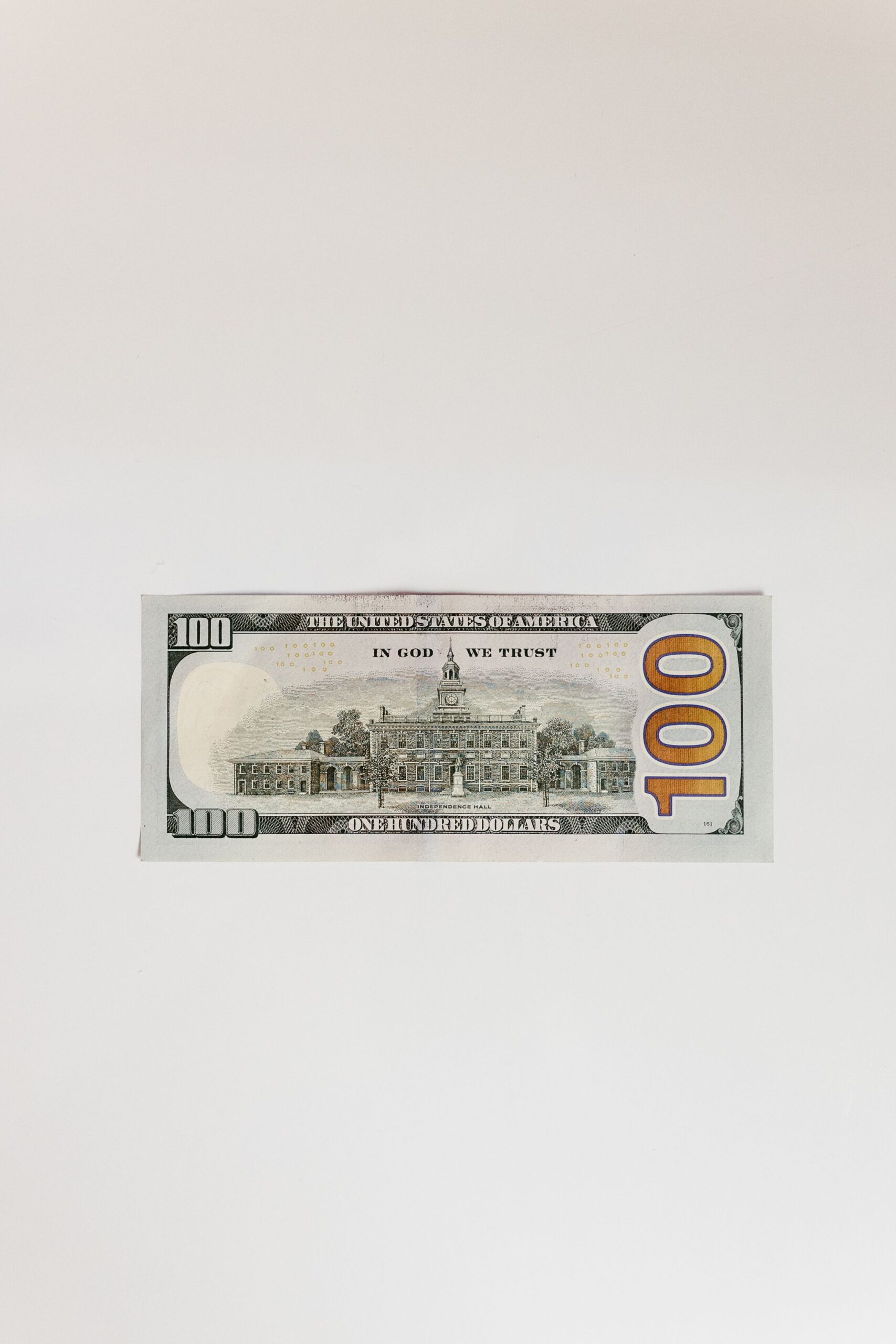
How to Check 100 Dollar Note: Compare It With a Genuine Note
One of the most practical approaches to how to check 100 dollar note is comparison.
If you have a known genuine $100 note of the same or similar design, compare the two carefully.
Look at:
- Portrait quality
- Paper texture
- Color
- Printing sharpness
- Security features
- Serial numbers
- Seals
- Watermark
- Security thread
Side-by-side comparison can make unusual differences easier to notice.
However, avoid assuming that two genuine notes must look completely identical if they belong to different design periods.
The U.S. Currency Education Program provides information on multiple $100 note designs, including older designs.
Common Signs That a $100 Note May Be Suspicious
Knowing how to check 100 dollar note also means knowing what warning signs deserve additional attention.
Possible red flags include:
Unusual Texture
The note feels substantially different from genuine U.S. currency.
Missing Security Features
A current-design $100 note appears to lack expected features such as the blue 3-D Security Ribbon, watermark, or security thread.
Incorrect Color Change
The color-shifting elements do not behave as expected when tilted.
Poor Printing
Text, portraits, borders, or fine details appear unusually blurry or inconsistent.
Incorrect Watermark
The watermark is absent, poorly formed, or does not show the expected Benjamin Franklin image.
Suspicious Security Thread
The thread appears to be printed on the surface rather than embedded.
Unusual Overall Appearance
The dimensions, layout, colors, or design elements appear noticeably inconsistent with genuine currency.
None of these signs should automatically be treated as final proof. The condition and design year of a genuine note can affect its appearance.
How to Check 100 Dollar Note: What You Should Not Do
When learning how to check 100 dollar note, it is equally important to understand what not to do.
Do not attempt to modify, alter, reproduce, or improve a suspicious banknote.
Do not attempt to remove or disguise suspicious characteristics.
Do not try to pass a note you suspect is counterfeit to another person.
Do not rely exclusively on one test, such as a counterfeit-detection pen, UV light, or visual appearance.
Authentication should focus on identifying whether a note contains the expected publicly known security features, not on attempting to recreate them.
Can a Counterfeit Detection Pen Confirm a $100 Bill?
A counterfeit detection pen can sometimes be used as one part of a cash-handling procedure, but it should not be treated as definitive proof of authenticity.
A banknote can have multiple security features that provide more useful information than a single chemical test.
Therefore, when considering how to check 100 dollar note, use a combination of:
- Feel
- Tilt
- Light
- Visual inspection
- Security-feature comparison
- Appropriate professional verification when necessary
For higher-value transactions, relying on a single detection method can create unnecessary risk.
How Businesses Can Check 100 Dollar Note More Consistently
Businesses that regularly handle cash can create a simple verification routine.
For example, employees can be trained to follow:
Feel → Tilt → Check With Light → Compare → Escalate if Suspicious
This approach makes how to check 100 dollar note easier to remember during busy transactions.
Businesses may also consider appropriate currency-authentication equipment depending on their transaction volume, risk level, and local requirements.
Training should focus on recognizing genuine security features and following established procedures when a note appears suspicious.
How to Check 100 Dollar Note When Receiving It From a Customer
If you receive a $100 bill and something seems unusual, remain calm and avoid making assumptions.
First, inspect the note using the basic security-feature checks described above.
If concerns remain:
- Keep the note separate according to your organization’s procedures.
- Avoid attempting to spend it.
- Do not accuse someone without appropriate evidence.
- Contact an appropriate financial institution or authority for guidance.
- Follow your business’s counterfeit-reporting procedure.
The U.S. Currency Education Program advises people to become familiar with their organization’s counterfeit-reporting procedures and notes that local law enforcement or the appropriate U.S. Secret Service field office may be involved in suspected-counterfeit situations.
What to Do If You Suspect a Counterfeit $100 Note
If you believe that a $100 note may be counterfeit, do not use it as genuine currency.
This is one of the most important rules when learning how to check 100 dollar note.
Instead, follow the appropriate procedure for your situation.
If you are a consumer, contact your bank or another appropriate financial institution and explain your concern.
If you are a business, follow your internal counterfeit-reporting procedures.
If your circumstances require law-enforcement involvement, contact the appropriate authorities.
The objective is to have the note professionally assessed rather than attempting to determine its status through personal experimentation alone.
Are Older $100 Bills Still Valid?
Yes.
One common misconception is that an older-looking $100 bill must be fake.
That is not correct.
The U.S. government states that all designs of U.S. currency remain legal tender regardless of when they were issued.
This is particularly important when learning how to check 100 dollar note, because security features differ between design generations.
For example, the current-design $100 note introduced in 2013 includes the 3-D Security Ribbon and Bell in the Inkwell. Older $100 notes have different combinations of security features.
Therefore, an older design should be checked against the correct official reference rather than automatically classified as counterfeit.
How to Check 100 Dollar Note: Current vs. Older Designs
Understanding design differences makes how to check 100 dollar note more accurate.
The current $100 note was introduced in 2013 and includes several advanced security features. These include the blue 3-D Security Ribbon and color-shifting Bell in the Inkwell.
Older $100 notes may not have the same appearance.
For example, the 1996 and later designs introduced security threads and watermarks, while subsequent redesigns introduced additional security features.
Therefore, if a $100 note does not contain a feature found on the current design, first determine whether it belongs to an older legitimate design before assuming it is counterfeit.
How to Check 100 Dollar Note With a Magnifier
A magnifier can be useful for examining fine details and microprinting.
When learning how to check 100 dollar note, magnification may help you inspect:
- Tiny lettering
- Fine lines
- Small numerals
- Printed details
- Microprinting
The U.S. Currency Education Program specifically identifies microprinting as a security feature and notes that magnification may be necessary to see some of the small text.
A magnifier, however, should be considered a supporting tool rather than an independent authentication system.
A Simple 60-Second Checklist for How to Check 100 Dollar Note
If you need a quick routine, use this checklist:
Step 1: Feel
Does the note have the expected paper texture and raised printing?
Step 2: Look
Does the portrait, printing, layout, and overall design appear sharp and consistent?
Step 3: Tilt
Does the 3-D Security Ribbon display the expected movement?
Step 4: Tilt Again
Does the Bell in the Inkwell change from copper to green?
Step 5: Check the 100
Does the color-shifting “100” change from copper to green?
Step 6: Hold to Light
Can you see the Benjamin Franklin watermark?
Step 7: Check the Thread
Does the embedded security thread show the expected markings?
Step 8: Compare
If anything appears unusual, compare it with official information or a known genuine note of the appropriate design.
Step 9: Escalate
If uncertainty remains, seek professional verification.
This simple routine summarizes the most important points in how to check 100 dollar note without relying on one security feature alone.
How to Check 100 Dollar Note: Common Mistakes to Avoid
Many people make mistakes when checking banknotes.
Mistake 1: Checking Only the Color
A note can have generally correct colors while still being suspicious.
Mistake 2: Using Only a Counterfeit Pen
One detection method is not enough for reliable authentication.
Mistake 3: Assuming Every Genuine Note Looks New
Genuine currency can become worn, faded, folded, or dirty.
Mistake 4: Rejecting Every Old Design
Older U.S. currency designs remain legal tender.
Mistake 5: Checking Only One Security Feature
The best approach is to use several publicly documented security features together.
Mistake 6: Trying to Spend a Suspicious Note
If you believe a note may be counterfeit, do not knowingly use it as genuine currency.
FAQs
How to check 100 dollar note quickly?
Use the feel, tilt, and check-with-light method. Feel the raised printing and paper texture, tilt the note to inspect the 3-D Security Ribbon and color-shifting elements, then hold it to light to check the watermark and security thread.
How to check 100 dollar note with a UV light?
Under ultraviolet light, the security thread on the current-design $100 note glows pink. UV inspection should be used as one part of a broader verification process rather than the only test.
How to check 100 dollar note for a watermark?
Hold the note toward light. A faint portrait of Benjamin Franklin should appear in the blank area to the right of the main portrait. The watermark is visible from both sides.
How to check 100 dollar note security thread?
Hold the note to light and look for the embedded vertical thread to the left of Benjamin Franklin’s portrait. On the current design, it contains “USA 100” markings and glows pink under UV light.
How to check 100 dollar note color shifting?
Tilt the current-design $100 note. The numeral 100 in the lower-right corner changes from copper to green, and the Bell in the Inkwell also changes from copper to green.
Can an old $100 bill be genuine?
Yes. Older designs remain legal tender. The absence of a feature found on the newest $100 note does not automatically mean an older note is counterfeit.
Is the blue ribbon on every $100 bill?
No. The blue 3-D Security Ribbon is a feature of the current-design $100 note introduced in 2013. Older $100 designs have different security features.
What should I do if I think my $100 bill is counterfeit?
Do not knowingly use the note as genuine currency. Keep it separate and contact an appropriate financial institution or relevant authority for guidance and verification.
Can I verify a $100 note using only one security feature?
It is better not to. How to check 100 dollar note properly involves examining multiple characteristics, including texture, printing, security features, watermark, security thread, and color-shifting elements.
Where can I find official information about $100 note security features?
The U.S. Currency Education Program provides official educational information about U.S. currency security features, including detailed resources for the $100 note.
Final Thoughts: How to Check 100 Dollar Note Safely and Responsibly
Learning how to check 100 dollar note is a practical skill for anyone who handles U.S. currency. The most useful approach is not to depend on a single visual clue or detection tool. Instead, examine several security characteristics together.
Start by feeling the paper and raised printing. Then tilt the note to examine the blue 3-D Security Ribbon, Bell in the Inkwell, and color-shifting numeral. After that, hold the note to light to inspect the Benjamin Franklin watermark and embedded security thread. Magnification and appropriate UV equipment can provide additional supporting checks.
It is also important to remember that genuine $100 bills can belong to different design generations. Older U.S. currency remains legal tender, so differences from the current design should not automatically be interpreted as evidence of counterfeiting.
Most importantly, if a note appears suspicious, do not attempt to use it as genuine currency. Do not alter it, reproduce it, or pass it to someone else. Instead, follow appropriate financial-institution, business, or authority procedures for professional verification.
By combining feel, tilt, light, visual inspection, comparison, and professional verification when needed, you can approach how to check 100 dollar note in a safer, more informed, and responsible way.

