
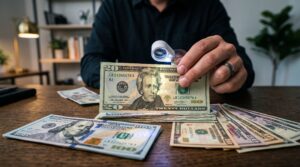
Counterfeit money can create serious problems for businesses, cashiers, banks, and everyday people. A fake bill may look real at first glance, but accepting it can lead to direct financial loss. If you run a small shop, work at a cash register, sell items locally, or simply receive cash during daily transactions, knowing how to check money is an important skill.
Many people ask the same question: how do you know if a bill is fake? The answer is not always based on one single sign. A fake bill may pass one simple check but fail another. That is why it is better to inspect several security features together before deciding whether a bill is suspicious.
Real currency usually includes special design details, security marks, paper quality, raised printing, watermarks, security threads, serial numbers, and other features that are difficult to copy. Counterfeit bills often miss some of these features or copy them poorly. By learning what to look for, you can reduce the risk of accepting fake money.
This guide explains the most common ways to identify a suspicious bill in simple language. It is designed for beginners, cash handlers, store workers, and anyone who wants to feel more confident when checking money.
What Is a Fake Bill?
A fake bill is also called counterfeit money. It is a currency note made to look like real money, but it is not issued by the official government authority. In simple words, it is a false copy of real money.
Real bills are printed under strict control by the official authority responsible for producing currency. They are made with special paper, ink, designs, and security features. These features help people, banks, and businesses confirm that the money is genuine.
Fake bills are usually made by people trying to copy the appearance of real currency. Some counterfeit bills are very poor quality and easy to notice. Others may look more convincing, especially if someone checks them quickly or in poor lighting.
A fake bill can create a problem because it has no real value. If you accept it, you may not be able to deposit it, exchange it, or use it later. For a business, this means losing money. For an individual, it can also be frustrating and costly.
It is important to remember that a person who gives you a fake bill may not always know it is fake. Someone may have received it from another transaction without realizing it. That is why you should handle suspicious bills calmly and carefully.
How Do You Know If a Bill Is Fake?
You can often know if a bill is fake by checking several features, including the feel of the paper, watermark, security thread, color-shifting ink, serial numbers, printing quality, and overall design. The more features you check, the better your chances of spotting a counterfeit bill.
No single method is perfect. A counterfeit money pen may help, but it should not be the only test. A watermark may be present, but it could be poorly copied. A bill may feel close to real currency, but the printing may still look wrong. For this reason, the safest approach is to inspect the bill from different angles.
A good method is to follow three basic steps: feel the bill, look at the bill, and tilt the bill. Feeling the bill helps you notice the texture and raised printing. Looking at it carefully helps you check the watermark, serial numbers, and printed details. Tilting it helps you see whether special ink or reflective features change properly.
When checking a bill, use good lighting whenever possible. A quick check in a dark place can cause you to miss important signs. If you handle cash regularly, take a few seconds to inspect bills that feel unusual, look damaged, or come from a transaction that seems suspicious.
The goal is not to accuse anyone immediately. The goal is to identify warning signs and take proper steps if something does not look right.
Check the Feel of the Bill
One of the first ways to check a bill is by touch. Genuine currency often has a distinct feel because it is made from special paper or material. It usually does not feel like normal printer paper. Many real bills also include raised printing that you can feel with your fingers.
When you touch a bill, pay attention to the texture. A real bill may feel firm, slightly rough, and durable. A fake bill may feel too smooth, too soft, too glossy, too thick, or too thin. If the paper feels like ordinary paper, that can be a warning sign.
Raised printing is another important detail. On many genuine bills, certain areas such as the portrait, numbers, or text may feel slightly raised. You can gently run your finger over the surface to feel these areas. Counterfeit bills may look printed, but they often lack the same raised texture.
Paper quality is also important. Real currency is designed to survive regular handling. It usually feels stronger than common paper. A fake bill may tear more easily, feel limp, or have an unusual surface.
However, touch alone is not enough. Old or heavily used bills may feel different from new bills. A genuine bill that has been folded, washed, or damaged may feel unusual. That is why you should combine the touch test with other checks.
Look for these warning signs when feeling a bill:
- The bill feels too smooth.
- The paper feels like normal printer paper.
- The bill feels too thick or too thin.
- The surface feels glossy.
- There is no raised printing.
- The bill feels weak or unusually soft.
If the bill feels wrong, do not make a final decision immediately. Continue checking the watermark, security thread, ink, and printing quality.
Look for the Watermark
A watermark is one of the most common security features on genuine currency. It is usually visible when you hold the bill up to the light. The watermark may show a portrait, number, or special design depending on the currency and denomination.
To check the watermark, hold the bill up to a light source. Look carefully at the empty or lighter area of the bill. A genuine watermark should usually appear as part of the paper itself, not as a printed image on the surface.
A missing watermark can be a strong warning sign. If the bill should have a watermark but you cannot see one, the bill may be suspicious. A blurry or incorrect watermark can also suggest a problem. Sometimes counterfeiters try to print a fake watermark, but it may look flat, dark, or unnatural.
A real watermark should not look like a normal printed picture. It should appear naturally when light passes through the bill. It may be visible from both sides, depending on the type of currency.
When checking the watermark, compare it with the expected design for that bill. A fake bill may have a watermark that does not match the portrait or denomination. For example, the watermark may show the wrong face, wrong number, or unclear shape.
Here are signs of a suspicious watermark:
- The watermark is missing.
- The watermark is printed on the surface.
- The image looks blurry or too dark.
- The watermark does not match the bill.
- The watermark appears only on one side when it should be visible from both sides.
- The design looks copied or unnatural.
The watermark test is useful because it is simple and does not require special equipment. Still, it should be used with other methods for a more reliable check.
Check the Security Thread
Many genuine bills include a security thread. This is a thin strip embedded inside the paper. It is not simply printed on top of the bill. The security thread may include small text, numbers, or other details. On some currencies, it may glow under ultraviolet light.
To check the security thread, hold the bill up to the light. Look for a thin line running vertically or in a specific location depending on the bill. The thread should appear to be inside the paper. If it looks like it was drawn or printed on the surface, the bill may be fake.
Counterfeit bills often fail this test because printing a line on paper is much easier than embedding a real thread inside the bill. Some fake bills may show a dark line that looks similar from a distance, but close inspection can reveal that it is only surface printing.
The position of the security thread can also matter. On genuine bills, the thread is placed in a specific area. If the thread is in the wrong place, missing, or poorly copied, that is a warning sign.
Some security threads include tiny writing. If your bill has this feature, check whether the writing is clear and correct. Fake bills may have unreadable text or lines that do not match the real design.
Watch for these problems:
- No security thread is visible.
- The thread looks printed instead of embedded.
- The thread is in the wrong location.
- The text on the thread is missing or unclear.
- The thread does not match the denomination.
- The line looks uneven or artificial.
A security thread is a strong feature to check because it is difficult to copy properly. If the bill fails this check, inspect the rest of the bill carefully and consider it suspicious.
Examine the Color-Shifting Ink
Some genuine bills use color-shifting ink. This means that certain numbers, symbols, or design elements change color when you tilt the bill. This feature is used to make copying more difficult.
To check color-shifting ink, hold the bill and tilt it back and forth under light. Watch the number or marked area that is supposed to change color. On a genuine bill, the color should shift clearly as the angle changes.
A fake bill may have ink that stays the same color. It may also have a dull or flat appearance. Some counterfeiters try to imitate color-shifting ink by using shiny or metallic-looking ink, but it may not change correctly when tilted.
The exact color change depends on the type of currency and denomination. The important point is to know whether that bill should have color-shifting ink and what part of the bill should show the change.
This test is quick and useful, especially for cashiers. You do not need special tools. You only need light and a few seconds to tilt the bill.
Signs of suspicious color-shifting ink include:
- The ink does not change color.
- The color change is very weak or unclear.
- The printed area looks flat.
- The ink looks like normal ink.
- The color is wrong for that bill.
- The feature appears in the wrong place.
Color-shifting ink is one of the easiest features to check during a transaction. If the bill has this feature and it does not work properly, you should inspect the bill further.
Inspect the Serial Numbers
Serial numbers are another important detail. On real bills, serial numbers are usually printed clearly, evenly, and consistently. They should match the style, spacing, and color used on genuine currency.
When checking serial numbers, look at the sharpness of the printing. The numbers should not be blurry, faded, or uneven. They should be properly aligned and spaced. If the numbers look crooked or poorly printed, the bill may be suspicious.
Also check whether the serial numbers match where required. Some bills have more than one serial number printed on them. If the numbers do not match, that is a major warning sign.
Repeated serial numbers can also be suspicious. If you receive several bills with the exact same serial number, they may be counterfeit. Genuine bills should have unique serial numbers.
Counterfeiters may overlook small details in serial numbers because they focus on copying the main design. That is why careful inspection can help reveal problems.
Look for these warning signs:
- Blurry serial numbers.
- Uneven spacing.
- Crooked numbers.
- Wrong color.
- Serial numbers that do not match.
- Repeated numbers on different bills.
- Numbers that look too thick or too thin.
- Poor alignment with the rest of the design.
A serial number problem does not always prove a bill is fake, especially if the bill is damaged. However, it is a strong reason to check the bill more carefully.
Look Closely at the Printing Quality
Real bills are printed with high-quality methods that produce sharp details and clean lines. Counterfeit bills often have lower-quality printing. This can show in the portrait, borders, numbers, seals, background patterns, and small text.
Start by looking at the portrait or main image on the bill. On a genuine bill, the portrait usually looks clear and detailed. On a fake bill, it may look blurry, flat, dark, or washed out.
Next, check the borders and fine lines. Real currency often has detailed line work that is hard to copy. Fake bills may have broken lines, uneven patterns, or smudged areas.
Color is another clue. A fake bill may look too bright, too dull, faded, or slightly different from a real bill. The difference may be small, but comparison with a genuine bill can make it easier to notice.
Also check for spelling mistakes or design errors. Genuine currency goes through strict quality control. A spelling error, wrong word, strange symbol, or incorrect design detail is a serious warning sign.
Common printing problems on fake bills include:
- Blurry portraits.
- Uneven lines.
- Faded colors.
- Poor alignment.
- Spelling mistakes.
- Smudged ink.
- Dull images.
- Incorrect borders.
- Missing details.
- Designs that look flat or copied.
Printing quality is especially important because counterfeiters may copy the overall appearance of a bill but fail to reproduce the fine details. A quick glance may not reveal the problem, but a closer look often does.
Use a Counterfeit Money Pen
A counterfeit money pen is a simple tool used to test whether a bill is printed on real currency paper or common paper. The pen contains special ink that reacts with starch, which is often found in regular paper.
To use the pen, make a small mark on a clean area of the bill. Wait a few seconds and check the color of the mark. In many cases, a light yellow or clear mark suggests that the bill may be genuine. A dark brown, black, or gray mark may suggest that the bill is suspicious.
However, a counterfeit money pen should not be the only method used. It can help detect some fake bills, but it is not perfect. Some counterfeit bills may be made with paper that does not react strongly to the pen. Some genuine bills may also give confusing results if they are dirty, damaged, old, or treated with chemicals.
The pen is best used as one part of a larger checking process. After using the pen, you should still inspect the watermark, security thread, color-shifting ink, serial numbers, and printing quality.
Benefits of using a counterfeit money pen include:
- It is quick.
- It is easy to use.
- It is inexpensive.
- It can help cashiers check bills during busy hours.
- It can detect some common fake bills.
Limitations include:
- It may not detect all counterfeit bills.
- Results can vary by pen brand.
- Dirty or damaged bills may cause confusion.
- It does not verify security features.
- It should not replace careful inspection.
A counterfeit pen can be helpful, but it should support your judgment, not replace it.
Compare the Bill With a Real One
One of the easiest ways to check a suspicious bill is to compare it with a known genuine bill of the same denomination. This method is simple and useful, especially if you are not familiar with all the security features.
Place the suspicious bill next to a real bill. Compare the size, color, paper feel, design, portrait, numbers, borders, and overall appearance. Differences may become easier to see when the bills are side by side.
Check whether both bills have the same layout. The portrait should be the same size and in the same position. The numbers and text should match. The colors should look similar. The security features should appear in the correct places.
Also compare the feel of the bills. A fake bill may feel smoother, thicker, thinner, or softer than the real one. It may also lack raised printing.
This method is useful because many people do not remember every detail of a real bill from memory. A side-by-side comparison gives you a clear reference point.
When comparing bills, look for differences in:
- Size.
- Color.
- Texture.
- Portrait quality.
- Border lines.
- Watermark.
- Security thread.
- Serial number style.
- Ink quality.
- Raised printing.
- Overall sharpness.
Be careful when comparing old and new bills. A worn genuine bill may look faded compared with a newer one. Try to compare bills that are in similar condition if possible.
What Should You Do If You Think a Bill Is Fake?
If you think a bill is fake, stay calm. Do not panic, accuse the person, or create a confrontation. A person may not know that the bill is suspicious. Your goal should be to handle the situation safely and responsibly.
If you work in a business, follow your company policy. Many businesses have clear steps for handling suspected counterfeit money. This may include calling a manager, checking the bill with another method, documenting the transaction, or contacting the proper authority.
If possible, do not return the suspicious bill to the person. Returning it may allow the bill to continue circulating. However, your personal safety is more important than the bill. If the situation feels unsafe, do not argue.
Keep the bill separate from other cash. This prevents it from getting mixed with genuine money. You may place it in an envelope or mark it according to your workplace procedure.
If you are an individual and receive a suspicious bill, contact your bank or local authority for guidance. Do not try to spend the bill somewhere else. Passing a fake bill, even after you suspect it is fake, can create legal problems.
Safe steps include:
- Do not accuse the person directly.
- Do not return the bill if it is safe not to.
- Keep the bill separate.
- Contact a manager if you are at work.
- Follow your business policy.
- Contact a bank or local authority.
- Write down details if required by your workplace.
- Do not try to use the bill again.
A calm response protects you, your business, and other people.
Common Mistakes When Checking Fake Bills
Many people make simple mistakes when checking money. These mistakes can make it easier for fake bills to pass unnoticed.
One common mistake is relying only on a counterfeit money pen. A pen can be useful, but it does not check the watermark, security thread, color-shifting ink, or printing quality. A bill may pass the pen test and still be fake.
Another mistake is checking only one feature. For example, someone may look for a watermark and stop there. But counterfeiters may copy one feature while missing others. It is always better to check several features together.
Some people ignore the feel of the bill. Touch is important because real currency often has a special texture. If a bill feels like ordinary paper, it deserves closer inspection.
Poor lighting is another issue. Checking money quickly in dim light can cause you to miss details. When possible, use bright light to inspect suspicious bills.
People also sometimes ignore damaged bills. A torn, dirty, or faded bill may still be genuine, but damage can also hide problems. If a damaged bill looks suspicious, inspect it carefully.
Common mistakes include:
- Relying only on a pen.
- Checking only one security feature.
- Ignoring paper texture.
- Not checking the watermark.
- Not tilting the bill.
- Ignoring poor printing.
- Accepting damaged bills without inspection.
- Checking bills too quickly.
- Comparing bills of different denominations.
- Assuming a bill is real because it came from a customer who seems trustworthy.
Avoiding these mistakes can help you identify suspicious money more effectively.
Final Thoughts
So, how do you know if a bill is fake? The best way is to check multiple security features together. Start with the feel of the bill. Look for raised printing and proper paper quality. Hold the bill up to the light to check the watermark and security thread. Tilt it to examine color-shifting ink. Inspect the serial numbers and printing quality. Use a counterfeit money pen when available, but do not rely on it alone.
A fake bill may look convincing at first, but small details often reveal the truth. Missing watermarks, printed security threads, blurry portraits, uneven serial numbers, poor alignment, flat ink, and unusual paper texture are all warning signs.
If you think a bill is fake, handle the situation carefully. Do not accuse anyone immediately. Keep the bill separate, follow your business policy, and contact the proper authority or bank for guidance.
Learning how to identify counterfeit money is useful for everyone. Whether you are a cashier, business owner, seller, or everyday consumer, a few simple checks can help you avoid financial loss and make safer cash transactions.

