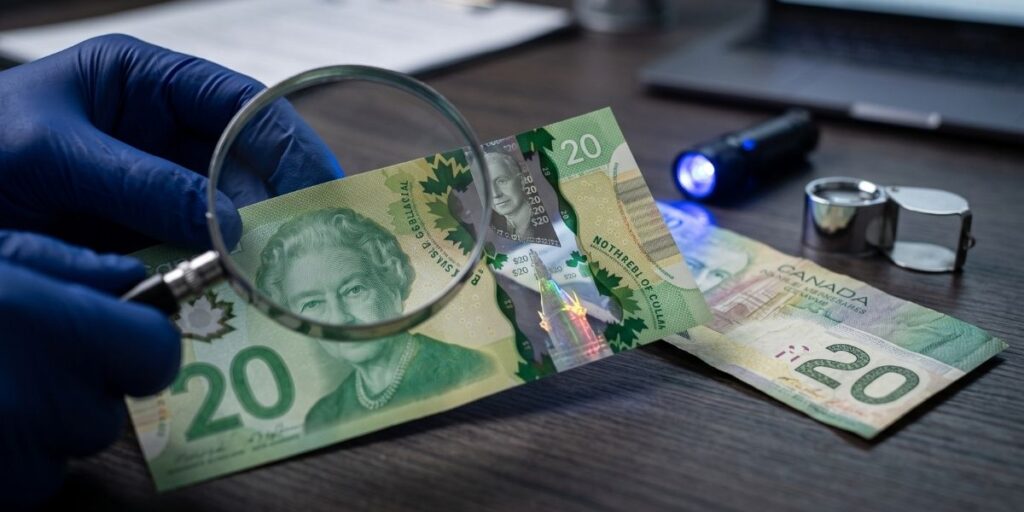
Counterfeit Print Lab

Counterfeit Money

>counterfeit money, counterfeit currency, what to do if you have counterfeit money, fake money detection, counterfeit money detection, how to report counterfeit money, suspected counterfeit bill, counterfeit bill, currency security features, money authentication
Counterfeit Money

what to do if you have counterfeit money

If you believe you have received counterfeit money, the safest thing to do is not to spend it, give it to someone else, exchange it, or attempt to alter it. Keep the suspected note or coin separate from your genuine money, write down where and when you received it, and follow the appropriate reporting process for your location. For suspected counterfeit U.S. currency, individuals should follow current official reporting guidance from the U.S. Currency Education Program and the appropriate U.S. Secret Service process. Reporting procedures can vary depending on the situation, so it is important to check the latest official instructions. The simple rule is this: If you think a banknote may be counterfeit, do not put it back into circulation. Preserve it, document how you received it, and follow official guidance. What Is Counterfeit Money? Counterfeit money is an unauthorized imitation of genuine currency. It is designed to resemble legitimate money but was not lawfully issued by the authorized government or monetary authority. Counterfeit currency can enter circulation in many different ways. A person may unknowingly receive a suspicious banknote as change, during a private sale, at a retail store, from an ATM-related transaction, or through another cash payment. In many cases, the person who first receives a counterfeit note does not immediately realize that anything is wrong. That is why knowing what to do if you have counterfeit money is important. The safest response is not to panic and not to try to recover your loss by passing the suspected note to someone else. There is also an important difference between accidentally receiving suspicious currency and knowingly attempting to use or distribute counterfeit money. Laws vary by country and jurisdiction, but knowingly passing counterfeit currency can have serious legal consequences. In the United States, federal law addresses certain conduct involving counterfeit obligations when there is an intent to defraud. Anyone concerned about a specific legal situation should consult a qualified attorney familiar with the laws that apply to their location. How to Tell If Money May Be Counterfeit Not every unusual-looking banknote is counterfeit. Genuine currency can become worn, dirty, faded, torn, or damaged. Older currency designs can also look different from newer notes. For that reason, a single unusual feature does not automatically prove that a banknote is fake. A better approach is to compare the note with official information about genuine currency and look for multiple inconsistencies. Common warning signs of a suspicious banknote The material feels noticeably different from a genuine note of the same denomination. The printing looks unusually blurry, flat, or low quality. Portraits, borders, text, or numbers appear poorly aligned. Important security features appear to be missing or incorrect. The design appears to combine features from different denominations. The size or overall appearance is noticeably different from legitimate currency. The note contains unusual wording such as “Replica” or “For Motion Picture Use Only.” The colors, printing quality, or details appear inconsistent with a genuine note. These signs should be treated as reasons to examine the currency carefully, not as a substitute for official authentication. Use more than one method when checking currency One of the most common mistakes people make is relying on a single quick test. A counterfeit detection marker, a visual inspection, or a comparison with a photograph may provide useful information, but no single method should automatically be treated as absolute proof in every situation. For U.S. currency, official educational resources commonly encourage people to learn the security features of genuine notes and use a combination of appropriate checks. Feel, tilt, and check Method What to Examine Purpose Feel Paper or material and raised printing Genuine currency has distinctive physical characteristics. Tilt Relevant visual security features Some features change appearance when viewed from different angles. Check Denomination-specific security features Different denominations may use different security features. Always use official information for the specific currency and denomination you are examining. What to Do If You Have Counterfeit Money: Step-by-Step Step 1: Stop using the suspected money The first step is simple: do not spend the suspected counterfeit currency. Do not use it to make a small purchase. Do not give it to a friend. Do not exchange it privately. Do not use it to pay a debt or include it in another cash transaction. Once you suspect that money may be counterfeit, attempting to pass it to someone else can create unnecessary legal and financial problems. Step 2: Keep the suspected note separate Place the suspected counterfeit note or coin somewhere safe and separate from your genuine money. This helps prevent accidental use. It also helps you preserve the item in the condition in which you received it. Avoid marking, cutting, altering, washing, modifying, or attempting to improve the appearance of the suspected currency. Step 3: Record where and when you received it Write down as many details as you can remember while the transaction is still fresh in your mind. Date of the transaction Approximate time Location or business Type of transaction Amount of money involved Whether the note was received as change Relevant details about how the money came into your possession If you have a receipt, transaction record, or other documentation, keep it in a safe place. Step 4: Avoid making accusations If you believe that a specific person gave you the suspicious money, avoid immediately confronting or publicly accusing that person based only on your initial suspicion. A banknote may look unusual because it is old, damaged, or from a different currency series. The appropriate authority should determine whether it is counterfeit. Step 5: Follow the correct official reporting process The appropriate reporting process depends on your country and circumstances. For suspected counterfeit U.S. currency, current reporting guidance is available through the U.S. Currency Education Program. Individuals should follow the current instructions for reporting suspected counterfeit notes and contact the appropriate official agency as directed. Businesses, financial institutions, and other organizations may have different procedures. Always check the current official instructions rather than relying on

what color does counterfeit money turn with marker
Counterfeit Money

what color does counterfeit money turn with marker

what color does counterfeit money turn with marker money counter with counterfeit detection detector marker is used on many genuine paper banknotes, the mark is typically light yellow or amber and may fade. If the mark turns dark brown, black, or another dark color, the bill may contain ordinary paper or materials that react differently to the marker. However, the exact result depends on the currency, the type of banknote, the marker, and the condition of the note. A marker test is only one screening method and should never be treated as absolute proof that a banknote is genuine or counterfeit.Many people ask, color does counterfeit money turn with a marker? because counterfeit detector pens are inexpensive, quick, and commonly used by retailers, cashiers, event staff, and individuals handling cash. The basic idea is simple: the marker uses a chemical solution designed to react differently with certain types of paper.But there is an important catch. Modern banknotes can use different materials, including cotton-based paper, polymer substrates, special coatings, and sophisticated security features. That means a single pen stroke cannot replace a proper authenticity check. In this guide, we explain what the different marker colors may mean, how counterfeit detector pens work, why the test can produce misleading results, and how to combine the marker test with other simple checks. A counterfeit detector marker is a screening tool, not a complete authentication system. If a banknote seems suspicious, compare it with a known genuine note and follow the guidance of the relevant bank, central bank, or law-enforcement authority. What Color Does Counterfeit Money Turn With a Marker? In general, a counterfeit detector marker is designed to produce a light yellow, pale amber, or similar light-colored mark on suitable genuine banknote paper. If the marker reacts with ordinary paper or another material, the mark may become dark brown, brown, black, or noticeably darker. Typical Marker Result What It May Suggest Important Note Light yellow or pale amber The paper may be compatible with the marker’s expected reaction This does not prove the bill is genuine Dark brown or black The paper may contain starch or react differently to the test solution The note deserves additional examination Very faint or unclear mark The result may be affected by the paper, ink, coating, or marker condition Do not rely on the color alone Unexpected color The note or test may not be compatible with the marker Check the currency and use other authentication features The exact color is not universal. Different currencies and banknote materials can produce different results. A marker designed for one type of currency may not be reliable on another. How Does a Counterfeit Money Detector Marker Work? Most traditional counterfeit detector pens are based on a chemical reaction involving the paper. The marker solution is commonly designed to react differently depending on the materials present in the paper. Many ordinary commercial papers contain starch-based materials. A detector pen may react with those materials and create a darker mark. Banknote paper, however, can have a different composition and may produce a much lighter result. This is why people often describe the basic test as: Light mark: potentially consistent with the expected banknote paper reaction. Dark mark: potentially suspicious and worth checking further. However, this explanation is simplified. Real banknotes are not all made from the same material. Some are printed on specialized paper, while others are made from polymer or include unusual coatings and substrates. Why Does Ordinary Paper Sometimes Turn Dark? The chemical solution in a detector pen can react with certain paper components. When the reaction occurs, the mark may become darker. This is why a dark mark can be a warning sign. But a dark mark is not automatically definitive proof of a counterfeit. The result can be influenced by: The type of banknote being tested The currency and denomination The composition of the note The condition and age of the marker Ink, coatings, or contamination on the note Where the marker was applied Whether the note is made from paper or polymer What Does a Yellow, Amber, Brown, or Dark Mark Mean? Light Yellow or Pale Amber A light yellow or pale amber mark is commonly considered the expected result when the marker is used on certain genuine banknote papers. In some cases, the mark may fade over time. Still, a light mark does not guarantee authenticity. A counterfeit note may be printed on a material that reacts similarly to the detector pen. This is one of the biggest limitations of the marker test. Dark Brown or Black A dark brown or black mark may indicate that the paper is reacting differently from the expected banknote material. This can be a reason to pause the transaction and perform additional checks. Do not immediately assume that every dark mark means the bill is definitely fake. Instead, compare the note with a known genuine banknote of the same denomination and inspect the security features. Faint or Unclear Results Sometimes the marker does not produce an obvious result. The pen may be old, dried out, contaminated, or unsuitable for the currency being tested. A weak result should not be interpreted as proof that the bill is genuine. If the banknote looks unusual, use other authentication methods. Can a Counterfeit Bill Pass the Marker Test? Yes, a counterfeit bill can potentially pass a detector marker test. This is why professional cash-handling guidance does not treat a detector pen as a complete authentication method. A detector pen generally tests one characteristic: how the test solution reacts with the material where the mark is applied. It does not automatically verify every security feature on a banknote. A banknote may include several different features designed to help people identify it, such as: Raised or tactile printing Watermarks Security threads Color-shifting elements Microprinting See-through features Holographic or foil elements UV-reactive features Special textures and paper characteristics The exact features vary by currency and denomination. The safest approach is to learn the security features of the

How to Buy Counterfeit Money? Why It’s Illegal, Risky, and a Fast Way to Get Scammed
Counterfeit Money

How to Buy Counterfeit Money? Why It’s Illegal, Risky, and a Fast Way to Get Scammed

If you searched for “how to buy counterfeit money,” the most important thing to know is this: buying counterfeit currency is not a shortcut, a trick, or a harmless experiment. It is a crime in many jurisdictions, and in the United States, federal law treats passing, possessing with fraudulent intent, and dealing in counterfeit obligations as serious offenses. The U.S. Secret Service also lists counterfeit currency as one of its core investigative areas, and official federal guidance says suspected counterfeit notes should be reported rather than spent. Many people who search this keyword are not hardened criminals. Some are simply curious. Some want to understand how counterfeit scams work. Some are in financial trouble and start looking at dangerous shortcuts online. Others are lured by social posts, dark-web claims, or fake seller ads that promise “high-quality notes” and “safe delivery.” In real life, those offers often end in theft, blackmail, surveillance risk, or a criminal record. That is why the safer and smarter goal is not learning how to buy counterfeit money, but learning why it is illegal, how scams around it work, how genuine currency is authenticated, and what to do if counterfeit notes ever land in your hands. This article is written for awareness and prevention. It does not give instructions for buying, making, hiding, or using fake currency. Instead, it explains the legal danger, the practical risk, and the financial harm tied to counterfeit money, using plain language and official source-backed information. Laws differ by country, so this is general educational information, not personal legal advice. What Is Counterfeit Money? Counterfeit money is fake currency made to look real so that someone will accept it as genuine. The entire point of counterfeit cash is deception. A counterfeit bill may copy the appearance, size, color, symbols, layout, or security features of real banknotes closely enough to fool a person, a cashier, or sometimes a machine. That deceptive purpose is what makes it so serious. The U.S. Secret Service investigates counterfeit currency because it threatens trust in the financial system, and the Federal Reserve explains that U.S. notes are regularly redesigned to be easy to authenticate and harder to counterfeit. It also helps to separate a few terms that people often mix together. Counterfeit currency is fake money meant to pass as real. Replica banknotes are reproductions of real notes. Novelty money is fake-looking money made as a toy or novelty item. Prop money is made for film, photography, theater, or training. These categories can sound harmless, but the legal line gets Canadian Dollar dangerous when an item is designed, marketed, or used in a way that could deceive people into treating it as genuine money. The Central Bank Counterfeit Deterrence Group notes that countries place legal restrictions on reproducing banknote images, and in some countries even artistic or advertising uses are tightly controlled. That is why the phrase “fake money” is too casual for a serious topic. Once a note is created, sold, bought, or passed to mislead another person, it stops being a joke and becomes a fraud problem. Even when someone tells themselves it is “just for fun,” authorities may look at the surrounding facts, such as messages, payments, shipments, or how the item was used. Is It Illegal to Buy Counterfeit Money? In short, yes, buying counterfeit money for use as real currency is illegal in many places, and U.S. law gives a clear example of how seriously governments treat it. Under U.S. federal law, passing or selling counterfeit obligations with intent to defraud is criminalized, and dealing in counterfeit obligations includes buying, selling, exchanging, receiving, or delivering them with intent that they be used as true and genuine. Those offenses can carry fines and imprisonment. Buying Fake Money With Intent to Use It This is the clearest legal problem. If a person buys fake notes intending to spend them or circulate them as real, that moves beyond curiosity and into fraud. In the U.S., the law specifically reaches conduct involving counterfeit obligations when there is intent that they be passed or used as genuine. In plain English, the law is not only concerned with the maker of the fake note. It also reaches the person who buys into the scheme and plans to use the notes like real cash. Possessing Counterfeit Currency Knowingly Possession can also become a legal problem when paired with knowledge and fraudulent intent. U.S. federal law covers keeping or concealing counterfeit how to check for counterfeit money obligations with intent to defraud, which means a person does not have to complete a purchase at a store for legal risk to begin. If investigators believe someone knowingly held fake bills and intended to pass them as real, that can still be part of a criminal case. Trying to Resell or Distribute Counterfeit Notes The risk becomes even greater when a person tries to move counterfeit money to someone else. Selling, exchanging, transferring, receiving, or delivering counterfeit obligations with intent that they be used as true and genuine is directly addressed in U.S. law. In practical terms, distribution expands the harm. One person is no longer just making a bad decision; they are spreading financial risk to businesses, consumers, and the wider payment system. Why “Just for Curiosity” Can Still Become a Problem People often assume that saying “I was only curious” protects them. It usually does not. Investigators do not only look at what a person says after the fact. They may examine the full picture: chats, emails, payment records, shipping details, search history, and what happened to the notes afterward. The Secret Service’s role in counterfeit investigations shows that governments treat this as a real financial crime issue, not a harmless internet search topic. Why People Search “How to Buy Counterfeit Money” Not everyone who types this keyword into a search engine has the same motive. Some people are simply curious after hearing a news story or seeing a movie. Others want to understand how counterfeit operations trick buyers

how to make counterfeit money look real
Counterfeit Money

How to Make Counterfeit Money Look Real? Why It Is Illegal, Risky, and Easy to Detect

Many people search for how to make counterfeit money look real, but this is not a harmless topic. Trying to make fake money look genuine is illegal, dangerous, and can lead to very serious problems. It is not just a bad idea. It can become a criminal matter that affects your finances, your reputation, your future, and even your freedom. Counterfeiting is more than printing a fake bill. It includes changing, copying, passing, selling, or helping distribute fake currency that is meant to fool someone. Even talking about ways to improve fake money so it appears more real can cross into risky territory. A person may think it is a shortcut, a prank, or just a curiosity. In reality, it can lead to lasting consequences. The risks are wide. There are legal risks, because law enforcement treats counterfeiting as a serious offense. There are financial risks, because businesses and individuals lose real money when fake notes enter circulation. There are personal risks too. A person tied to counterfeit money can lose trust, damage relationships, face an investigation, and struggle with long-term problems related to employment, travel, and reputation. This article does not explain how to make counterfeit money look real. Instead, it explains why that idea is illegal and unsafe. It also shows how counterfeit money is usually detected, the common myths people believe about fake bills, the warning signs to watch for, and the safe steps to take if you receive suspicious currency. The goal is simple: help readers understand the issue clearly, avoid harmful mistakes, and respond responsibly. What Is Counterfeit Money? Counterfeit money is fake currency made to look like real money so that another person accepts it as genuine. The key issue is deception. If a bill is created or changed to trick someone into thinking it is real legal tender, it falls into dangerous territory. It helps to separate counterfeit money from other types of currency-like items. A counterfeit bill is made or altered to imitate real currency and fool others. A replica bill may be created for display, training, theater, or collecting, but it must follow strict rules and should not be usable as real money. A novelty note is usually made for entertainment, gifts, or jokes and is often marked clearly so people do not confuse it with real currency. Damaged genuine currency is real money that has been torn, stained, worn out, or partly destroyed, but it is still genuine money, not fake money. This difference matters. Some people assume that if a note is poor quality, small in size, missing features, or used as a joke, it is not a real issue. That is not a safe assumption. Even low-quality fake notes can create serious problems. A rushed cashier, a busy market, low lighting, or a quick exchange can allow poor counterfeit bills to slip through. Once that happens, someone loses money. That person could be a small business owner, a customer, an employee, or the next person who receives the bill. Poor-quality counterfeit money can also trigger the same chain of trouble as high-quality fake notes. It may cause a police report, a financial loss, and an investigation into where the note came from. The fact that a fake bill looks weak or obvious does not make it harmless. In many cases, even a badly made fake note is enough to create legal exposure if it was made, kept, or passed with the wrong intent. That is why understanding counterfeit money is important. It is not only about spotting fake cash. It is about recognizing that anything designed to imitate real money can become a serious issue very quickly. Why People Search “How to Make Counterfeit Money Look Real” Not every person who searches this phrase has the same motive. Some people are simply curious. They may have seen a video, heard a rumor, or found a strange note and started searching online. Others may be confused about replica money, novelty notes, or props used in films and photo shoots. Some may even be looking for illegal ways to improve fake currency. Curiosity does not remove the danger. A person may start with a casual question and move into harmful territory without realizing it. Once someone begins looking for ways to make fake money more convincing, the issue becomes more serious. Searches, downloads, messages, design files, printer records, and purchases can all become part of a broader pattern. What feels like “just looking” can appear very different if authorities examine it later. Misinformation is another reason people search this topic. Online forums, short videos, and misleading posts often suggest that counterfeiting is easy, low risk, or hard to trace. That is false. Real currency includes multiple features meant to protect against copying. Businesses also use better tools, staff training, and safer reporting methods than many people realize. What looks clever online is often obvious in real life. There is also the issue of harmful intent. Some people do search for ways to deceive stores, banks, or other individuals. This is exactly why the topic is treated seriously. Publishing, sharing, or following advice on how to make counterfeit money look real can contribute to fraud and criminal activity. It does not only put the user at risk. It can also expose others to loss and harm. Searchers should understand the risks before going any further. Counterfeiting is not a creative trick. It is a crime that can affect innocent people. A fake note may seem small, but the damage spreads. A business may lose inventory and revenue. A worker may be how to check for counterfeit money blamed for accepting it. A customer may later be questioned. A person who thought they were only experimenting may find themselves facing consequences they never expected. That is why responsible content on this subject should focus on awareness, detection, and prevention instead of instruction. The safest path is to understand the law, know the warning signs, and avoid any activity that makes fake

How to Recognise Counterfeit Money: Simple Signs to Check
Counterfeit Money

How to Recognise Counterfeit Money: Simple Signs to Check

Counterfeit money is a real problem for shoppers, shop owners, cashiers, delivery workers, market sellers, and anyone who handles cash. A fake note can look close enough to pass in a busy moment. That is why it is important to know what to check before you accept cash and before you pass it on to someone else. The good news is that counterfeit money can often be recognised by checking a few basic things. Start with the feel of the paper. Then look at the print quality, security features, and small details that seem unusual. Most fake notes fail in one or more of these areas. They may feel wrong in your hand. They may have blurry printing. They may miss important security features. Or they may show design mistakes that real money does not have. In this guide, you will learn what counterfeit money is, why spotting it matters, and how to recognise counterfeit money using simple checks that anyone can follow. You will also learn the warning signs people often miss, what businesses can do to reduce risk, what to do if you suspect a note is fake, and the most common mistakes to avoid when checking cash. What Is Counterfeit Money? Counterfeit money is fake currency made to look like real money. It is created to fool people into accepting it as genuine. A counterfeit note may copy the color, design, size, and symbols of a real banknote, but it is not issued by the official authority that produces legal currency. In simple terms, counterfeit money is fake money pretending to be real money. It is important to understand that fake notes are not the same as old notes or damaged notes. Real notes can become worn over time. They may look Real Counterfeit Money For Sale​ faded, have folds, small tears, stains, or soft edges. That does not make them counterfeit. A genuine note can be old and still be real. A counterfeit note is different. It usually shows signs of poor copying, missing security features, wrong materials, or incorrect design details. Even when a fake note looks convincing at first glance, a closer check often reveals problems. Spotting fake currency quickly matters for several reasons. First, if you accept a counterfeit note, you may lose the value of that cash. Second, if you do not notice it and use it later, you may create trouble for yourself or someone else. Third, quick detection helps stop fake notes from spreading further through shops, markets, and communities. The earlier a fake note is found, the less harm it can do. Why It’s Important to Know How to Recognise Counterfeit Money Knowing how to recognise counterfeit money is not just useful for banks or trained cash handlers. It helps ordinary people too. Anyone who accepts cash can benefit from learning a few clear checks. The first reason is simple: it protects you from financial loss. If someone gives you a fake note and you accept it, that money usually cannot be recovered like real cash. In many cases, the person or business holding it takes the loss. It also helps you avoid passing fake money to others by How to Detect Counterfeit 100 Dollar Bills mistake. Most people do not want to harm someone else or create suspicion around themselves. If you can spot a fake note early, you reduce the chance of putting it back into circulation. For businesses, the value is even greater. Small shops, food stalls, transport services, and busy retail counters often work fast. In that kind of environment, counterfeit notes can slip through easily. Staff who know what to check can reduce fraud and prevent repeat losses. There is also a wider public benefit. When suspicious notes are identified and reported, it becomes easier for banks and law enforcement to track patterns, warn others, and limit further spread. That supports prevention and public safety. In short, learning how to recognise counterfeit money helps you: protect your cash, protect your business, avoid accidental problems, and support proper reporting. It is a practical skill, and it matters more than many people think. How to Recognise Counterfeit Money: Key Signs to Check When you want to know how to recognise counterfeit money, the best method is not to rely on one test alone. Use a few simple checks together. Touch the note. Look closely. Compare it with a real one if possible. Check the details that counterfeiters often get wrong. Feel the Paper One of the fastest ways to begin is to feel the note. Real banknotes usually have a distinct texture. Depending on the country and the type of note, they may feel firm, crisp, slightly rough, or specially textured. They do not usually feel like normal office paper. Many genuine notes also have raised printing in certain areas, which gives them a slightly textured surface. Counterfeit notes often feel wrong. They may feel: too smooth, too soft, waxy, limp, slippery, or thicker than normal. Some fake notes feel flat because they were printed using basic methods that cannot copy the texture of real currency. Others feel too stiff because the counterfeit material is poor quality. In many cases, the note simply does not feel right when compared with genuine money. That said, worn real notes can feel softer than new ones. So the feel test is useful, but it should not be the only test. It is a strong first signal, not the final answer. Inspect the Print Quality The next step is to inspect how the note is printed. Real money is printed with great precision. The text is usually sharp. The lines are clean. Fine details in portraits, patterns, symbols, borders, and seals are clear and well aligned. Even very small design elements are usually crisp when viewed closely. Fake notes often fail here. Common print problems include: blurry text, smudged ink, uneven color, weak contrast, fuzzy borders, poor detail in portraits, and lines that look broken or messy. Look closely

How Can You Tell If Money Is Fake? A Simple Guide to Spotting Counterfeit Bills
Counterfeit Money

How Can You Tell If Money Is Fake? A Simple Guide to Spotting Counterfeit Bills

Imagine this. You are selling an old phone at a garage sale. A buyer hands you cash, you glance at it, and it looks fine at first. Or maybe you work at a busy store, and during a rush, someone pays with a large bill. You do not have much time to think, so you accept it and move on. Later, you start to wonder whether the bill was real. That is exactly why this topic matters. Fake bills can look very convincing at first glance. Many people expect counterfeit money to look cheap or obvious, but that is not always true. Some fake bills are easy to spot, while others only show warning signs when you slow down and check the details. In a fast transaction, it is easy to miss those clues. The good news is that you do not need special training to catch many fake bills. In most cases, a careful look, a quick touch test, and a few simple comparisons can tell you a lot. The key is knowing what to check and not relying on only one sign. In this guide, you will learn how can you tell if money is fake by looking at visual signs, feeling the texture, checking built-in security features, and understanding what to do if a bill seems suspicious. You will also learn common mistakes people make, which bills are often targeted, and how businesses can lower their risk. This article is meant for everyday use. It is not a forensic test or a legal ruling. Currency features can vary by country and by bill design, but the basic checking process stays very similar. If you handle cash often, these habits can help you spot problems faster and protect yourself with more confidence. What Does Fake Money Mean? Fake money is also called counterfeit money. In simple terms, it means cash that is made to look like real currency even though it is not genuine. The goal is to trick a person or business into accepting it as real money. A counterfeit bill may copy the size, color, portrait, and layout of a real bill. At first glance, it may seem normal. But when you look closer, the differences often start to show. The paper may feel wrong. The print may look blurry. The security features may be missing or poorly copied. It is also important to know that not every US Dollar suspicious bill is obviously fake. Some counterfeit bills are crude and easy to catch. Others are made to pass a quick visual check. That is why people often ask, how can you tell if money is fake, especially when they are handling cash during a busy moment. Another point to remember is that an unusual bill is not always counterfeit. Real currency can become worn, faded, torn, stained, or damaged over time. Older notes may also look different from newer ones. So the goal is not to reject every bill that looks imperfect. The goal is to check several signs together before deciding that something is wrong. A smart approach is to stay calm and use a process. Do not judge a bill based on one detail alone. Instead, check how it feels, how it looks, what security features it has, and how it compares with a bill you know is real. When several things seem off at the same time, that is when concern becomes more justified. How Can You Tell If Money Is Fake? Top Signs to Check If you want the most practical answer to how can you tell if money is fake, start with a simple rule: check more than one feature. The best results come from combining touch, sight, and comparison. 1. Feel the Texture of the Paper One of the fastest ways to check a bill is to feel it. Real bills usually have a distinct texture that feels different from normal printer paper or notebook paper. Genuine currency often feels firmer and slightly rough because of the materials used and the way the bill is printed. It does not usually feel soft like copy paper, overly slick, or strangely waxy. People who handle cash often notice this first. Even how to check for counterfeit money before they study the design, they notice that the bill does not “feel right.” That reaction matters. Texture is one of the most useful early clues. A counterfeit bill may feel too smooth, too flat, too thin, or too stiff. Sometimes it feels like regular paper. In other cases, it may feel unusually thick because the fake material is poor quality. Any of those can be warning signs. Still, use caution. A real bill that has been in circulation for a long time can feel worn down. It may be softer than a newer bill. That is why texture should be your first check, not your only check. A good habit is to handle real cash carefully and pay attention to how genuine notes feel. The more familiar you are with real money, the easier it becomes to notice when something is off. 2. Look at the Printing Quality Real money is printed with very sharp detail. Fine lines are clean. Small text is clear. The portrait, borders, and patterns are usually crisp and well defined. Even tiny design elements tend to look precise. Fake bills often fail here. If the printing looks blurry, smudged, washed out, or uneven, that is a major warning sign. Watch for faded colors, thick lines, fuzzy edges, or areas where the How to check if money is real ink seems to bleed. The design on a fake bill may look “close enough” from a distance, but poor quality often shows up when you look closer. Pay extra attention to small features. Tiny letters, thin lines around the portrait, and detailed border patterns are often hard for counterfeiters to copy well. These areas may look muddy or broken on a fake bill. Lighting also matters. If possible, check

How to Detect Counterfeit 100 Dollar Bills: A Practical Guide to Spotting Fake $100 Notes
Counterfeit Money

How to Detect Counterfeit 100 Dollar Bills: A Practical Guide to Spotting Fake $100 Notes

If you handle cash, a $100 bill can feel routine. But it is also one of the notes people worry about most. That is because high-value bills attract more scrutiny, more hesitation, and more counterfeit attempts than smaller denominations. For a shopper, a cashier, a resale seller, or a small business owner, one fake bill can turn into a real loss. That is why learning how to detect counterfeit 100 dollar bills matters. It is not just a banking topic. It is a practical skill for everyday transactions. The good news is that you do not need expert training to do a solid first check. Official U.S. currency guidance teaches people to use a simple method: feel the paper, tilt the note, and check it with light. The current $100 note includes several security features that are designed to be checked quickly and discreetly. These include the blue 3-D Security Ribbon, the Bell in the Inkwell, the portrait watermark, the security thread, and the note’s raised printing and microprinting. When you know what these features should look and feel like, it becomes much easier to spot red flags before you accept a suspicious bill. This guide explains how to detect counterfeit 100 dollar bills in plain language. It is written for people who want clear, useful steps, not technical jargon. You will learn what to check first, which mistakes counterfeiters often make, why you should never rely on a single test, and what to do if a bill does not look right. By the end, you should be able to inspect a $100 bill with more confidence and less guesswork. Why Fake $100 Bills Are So Common A fake $100 bill can do more damage than a fake $5 or $10 bill. That is the simplest reason these notes get so much attention. The higher face value gives counterfeiters more incentive, while the person receiving the bill may only get a few seconds to decide whether it is real. In a busy store, at a flea market, during a peer-to-peer sale, or at a late-night transaction, that short decision window creates risk. A counterfeit does not need to fool a trained examiner forever. It only needs to pass one rushed exchange. Another reason fake $100 bills are common is that many people are not fully familiar with the modern note’s security features. The redesigned $100 note includes two distinctive advanced features: the blue 3-D Security Ribbon and the color-shifting Bell in the Canadian Dollar Inkwell. It also includes features retained from earlier designs, such as a portrait watermark and a security thread. If someone only checks the portrait and the color of the bill, but ignores these built-in features, they are more likely to miss a fake. There is also confusion because older $100 notes are still legal tender. That matters. A genuine older note may not have the same features as a newer one, so people sometimes reject real bills or accept fake ones because they do not know which design series they are holding. The safest approach is to learn the current note well, understand that older notes have different feature sets, and avoid judging authenticity by appearance alone. How to Detect Counterfeit 100 Dollar Bills at a Glance When you first receive a $100 bill, do not jump straight to one test. Use a short sequence. Start with your fingers, then your eyes, then the light. This is the core logic behind many official education materials for cash handlers because it is fast, low-tech, and practical in real-world settings. First, feel the bill. Genuine U.S. currency does not feel like standard office paper. It has a distinct texture because of its cotton-linen blend and raised intaglio how to check for counterfeit money printing. Next, tilt the bill. On a real modern $100 note, the blue ribbon should show movement, the Bell in the Inkwell should shift color, and the large numeral 100 also changes color. Then hold the note to light. You should be able to see the portrait watermark and the embedded security thread. Finally, look closely at the print quality, layout, and serial numbers. If something feels flat, blurry, crooked, or wrong, treat the note with caution. This sequence matters because counterfeiters may imitate one or two features, but they often fail to reproduce the full combination. A bill that passes one check can still fail the next. That is why the best habit is to slow down just enough to use multiple checks every time you handle larger bills. Check the Texture and Paper Quality One of the easiest first checks is also one of the most overlooked. Real U.S. currency paper is not made like normal printer paper. Official currency facts state that Federal Reserve notes are a blend of 75 percent cotton and 25 percent linen. That composition, combined with the intaglio printing process, gives genuine notes a distinctive feel. In simple terms, a real $100 bill should not feel slick, soft like copy paper, or waxy like a coated printout. It should feel slightly rough and firm. The current $100 note also has raised printing that you can feel. Official materials specifically point people to Benjamin Franklin’s shoulder on the left side of the note. When you move your finger over that area, it should feel rough to the touch. That tactile detail is useful because it does not depend on perfect lighting or magnification. Even in a quick transaction, your fingers can tell you a lot. A counterfeit bill often fails this first test. It may feel too smooth, too limp, too thick, or strangely stiff. Some fake notes feel like home-printed paper. Others feel more like a prop than real currency. A low-quality counterfeit may also have a flat surface with no real sense of raised ink. That does not mean every suspicious-feeling bill is fake, but it does mean the note deserves a closer check. Texture alone should not decide the outcome, yet it is one of

Where Is US Currency Printed? A Clear Guide to How and Where American Money Is Made
Counterfeit Money

Where Is US Currency Printed? A Clear Guide to How and Where American Money Is Made

If you are searching where is us currency printed, the short answer is simple: U.S. paper currency is printed by the Bureau of Engraving and Printing, usually called the BEP, at two official facilities. Those facilities are in Washington, D.C., and Fort Worth, Texas. The BEP itself says that all U.S. currency is printed at those two locations. That direct answer helps with search intent, but most readers want more than a one-line reply. They want to know who runs these sites, why the United States uses two printing locations instead of one, how bills are designed, and what security steps make real money hard to fake. They also want to know whether coins are made in the same places and whether the public can visit these facilities. Official BEP materials answer all of those questions in useful detail. This guide is built around those official sources. That matters because money is one of those topics where half-true facts spread fast online. A lot of people mix up the BEP with the U.S. Mint. Others assume all bills come from Washington alone. Some even think modern U.S. currency is made from regular paper. None of those ideas is fully correct. The official record is clearer, and it gives a much better picture of how American paper money is really made. Where Is U.S. Currency Printed? U.S. paper currency is printed in two places only: Washington, D.C., and Fort Worth, Texas. These are the BEP’s official currency production facilities. The agency states plainly that all U.S. currency is printed at its Washington facility and at its Fort Worth facility. That is the most direct answer to the main question, and it comes straight from the government office that produces the notes. The Washington location is the older and better-known site. It sits near the National Mall, close to major federal landmarks, and it remains one of the BEP’s core production and visitor locations. The Fort Worth site is the BEP’s Western Currency Facility, created to expand printing capacity and support national distribution. Together, these two sites handle the production of U.S. paper money for circulation. Fort Worth plays a very large role in the system today. The BEP says the Western Currency Facility in Fort Worth produces more than half of the nation’s currency order. That detail is important because it corrects a common assumption that Washington prints Counterfeit Money nearly everything. In reality, the work is shared, and Texas is not a secondary side operation. It is a major printing center in its own right. Both facilities are tied to the production of Federal Reserve notes, which are the bills Americans use every day. These include the standard circulating denominations people know best, from the $1 bill up through the $100 bill. The BEP’s circulating currency information confirms that today’s printed notes include $1, $2, $5, $10, $20, $50, and $100 denominations. So, when someone asks where U.S. currency is printed, the accurate and complete answer is not “at the Treasury” in a vague sense, and not “only in Washington.” It is this: America’s paper money is printed by the Bureau of Engraving and Printing in Washington, D.C., and Fort Worth, Texas. Who Prints U.S. Currency? The agency that prints U.S. paper money is the Bureau of Engraving and Printing. It is part of the U.S. Department of the Treasury. The BEP has deep roots in American financial history. According to the agency’s own history page, its foundations date to 1862, and by 1877 it had become the sole producer of all United States currency. That long history is one reason the BEP remains central to the country’s money system today. The BEP does more than simply run printing presses. It designs, engraves, tests, inspects, numbers, cuts, and packages notes using specialized processes built for security and consistency. Its public materials describe a system that combines traditional How Much Is $100 US in Haitian Dollar craftsmanship with modern printing technology. That mix is important. U.S. currency still relies on engraving skills that give notes their distinctive look and feel, but it also uses high-speed presses, computer inspection, and controlled packaging systems to maintain quality at large scale. A lot of readers confuse the BEP with the United States Mint, but they are not the same thing. The BEP says it is the nation’s sole producer of U.S. paper currency, while the United States Mint is the nation’s sole manufacturer of circulating coins. That is the cleanest way to remember the difference: the BEP makes bills; the Mint makes coins. The BEP also does not focus only on cash. Its FAQ page says the bureau advises other federal agencies on document security and produces items such as military commissions, award certificates, and other special security documents. Its history page also shows that the bureau has produced many other government security products over time. That broader role helps explain why the BEP is not just a money printer. It is a national security printer. This distinction matters for SEO and for trust. A helpful article should not just answer where U.S. currency is printed. It should also explain who is responsible, because that gives readers the right institutional context. When people understand that the BEP is the agency behind paper currency, the rest of the production story becomes much easier to follow. Why Is U.S. Currency Printed in Two Locations? Printing money at two sites is not an accident. It is a practical system built around capacity, distribution, and risk reduction. The BEP’s history states that the Fort Worth facility was created to better serve the currency needs of the western half of the nation and to act as a contingency operation in case of emergencies at the Washington facility. That is a very clear statement of purpose. The capacity reason is easy to understand. The United States needs a steady flow of paper currency for banks, businesses, ATMs, and normal replacement of worn notes. One site alone would make that

how to spot a fake hundred dollar bill
Counterfeit Money

How to Spot a Fake Hundred Dollar Bill: 10 Easy Ways to Check if It’s Real

Counterfeit cash is still a real problem, and $100 bills are one of the most common targets. Because they carry a high value, fake hundred-dollar bills often show up in retail stores, gas stations, private sales, and other cash-based transactions. That is why it is important to learn how to spot a fake hundred dollar bill before it causes a loss. For small business owners, cashiers, delivery drivers, market sellers, and everyday consumers, one fake bill can create an expensive mistake. In many cases, if you accept counterfeit money, you may not get that money back. Banks and law enforcement can take the bill, but the financial loss often stays with the person or business that received it. That makes early detection very important. The good news is that you do not need advanced training to notice many common warning signs. A careful look, a quick touch, and a few simple checks can help you tell whether a bill seems real or suspicious. Knowing what to inspect can reduce risk and help you act with more confidence when handling cash. This guide explains the key signs to look for, what a real bill should feel like, and what steps to take if something seems off. Whether you handle money every day or only once in a while, these simple tips can help you avoid counterfeit cash and protect yourself from fraud. Why It’s Important to Know How to Spot a Fake Hundred Dollar Bill Learning how to check a $100 bill is not just useful for banks or retailers. It matters for anyone who accepts cash. Counterfeit money can appear in many situations, including sales at flea markets, online marketplace meetups, food service counters, convenience stores, and person-to-person payments. Many fake bills are designed to fool people who are busy, distracted, or unfamiliar with the security features of real U.S. currency. The biggest risk is financial loss. If you accept a fake $100 bill, you may lose the full amount. In most cases, you cannot legally spend it once you realize it is counterfeit. That means the loss becomes yours unless the person who gave it to you can be identified and held responsible. For a small business, repeated counterfeit bills can affect profit. For an individual, even one fake bill can be a painful loss. There is also a safety and trust issue. Staff members who know what to look for are more likely to respond calmly and correctly. Customers also benefit when businesses have clear procedures. A trained cashier is less likely to make a rushed mistake. A seller meeting a buyer for a private sale is more likely to pause and inspect cash before completing the deal. Knowing what to check helps prevent fraud before it spreads. Counterfeiters often depend on speed and confusion. They want the bill accepted quickly, before anyone studies it. When you know the basic security features and warning signs, you are far less likely to be caught off guard. In simple terms, learning how to spot a fake hundred dollar bill is a practical skill. It protects your money, supports safer transactions, and helps you make better decisions when handling cash. What a Real $100 Bill Should Look and Feel Like Before you can identify a fake bill, it helps to understand what a genuine one should look and feel like. A real U.S. $100 bill has a distinct appearance, texture, and print quality that most counterfeit bills struggle to copy well. One of the first things to know is that genuine U.S. currency is not made from ordinary paper. It uses a special cotton-linen blend that feels different from printer paper, notebook paper, or glossy paper. Real bills have a firm but slightly flexible feel. They are not slick, waxy, or soft like many counterfeit copies. The print quality is another major clue. Real $100 bills are printed with crisp detail. The lines look sharp. The fine text and borders are clear. The portrait of Benjamin Franklin should look clean and detailed, not muddy or pixelated. On a counterfeit bill, small details often look blurred, washed out, or uneven. A genuine bill should also show multiple how to check for counterfeit money built-in security features. Depending on the series, these may include a blue 3D security ribbon, a watermark, a security thread, color-shifting ink, and microprinting. Older and newer $100 bills look different, but both can still be real. The main point is that real bills include features that are hard to duplicate with standard printing methods. When you know what normal looks like, spotting problems becomes easier. If the bill feels wrong, looks dull, or lacks the expected details, that is a sign to inspect it more closely. 10 Ways to Spot a Fake Hundred Dollar Bill There is no single test that catches every counterfeit bill. The safest method is to use several quick checks together. The more features you inspect, the easier it becomes to tell whether a bill is genuine or suspicious. 1. Feel the Texture of the Paper Start with the simplest test: touch the bill. Real U.S. currency has a texture that feels different from regular paper. Because it is made with a cotton-linen blend, it has a distinctive feel that is hard to copy with home printers or cheap materials. A genuine $100 bill should not feel overly smooth, overly thick, or flimsy. It should feel durable and slightly rough in a way that seems familiar if you have handled real cash before. Fake bills often feel too soft, too stiff, too slick, or too thin. This check is especially useful in fast transactions. Even before you examine the details, your fingers may tell you that something is off. While texture alone is not enough to confirm a fake, it is often the first clue that the bill deserves closer inspection. 2. Check the Raised Printing Real $100 bills have slightly raised printing in certain areas, especially around the portrait and some of

how to check for counterfeit money
Counterfeit Money

how to check for counterfeit money

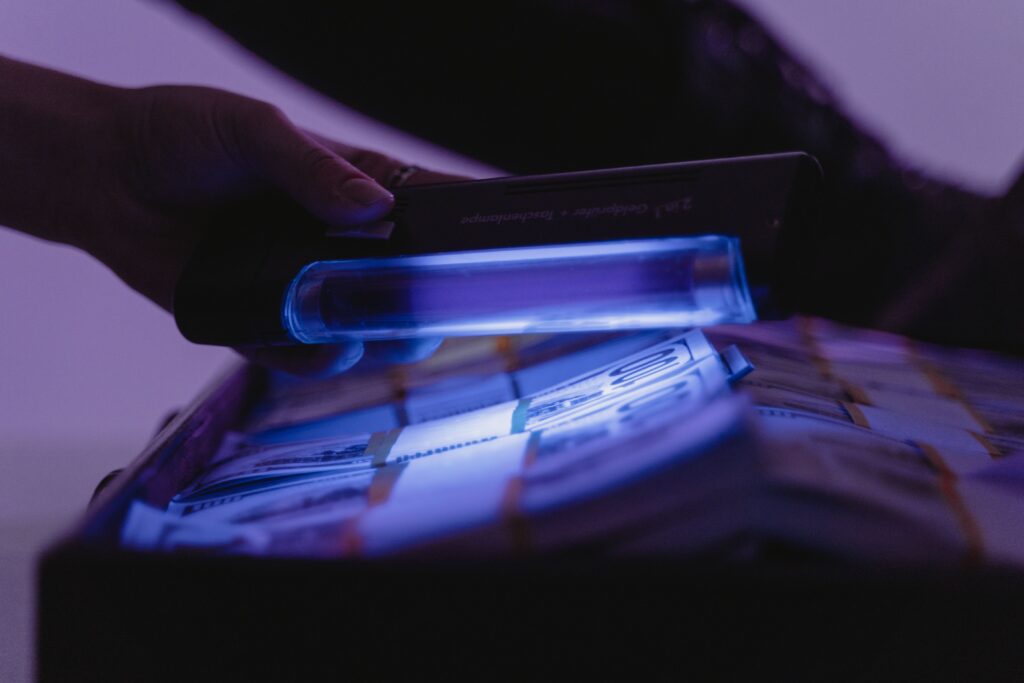
Receiving a suspicious banknote can happen to anyone. Whether you run a small business, sell products online, work in retail, or simply handle cash occasionally, knowing how to check for counterfeit money can protect you from unnecessary financial loss. Counterfeit currency has become increasingly difficult to recognize because modern fake bills can look surprisingly realistic. However, genuine currency contains advanced security features designed to help people identify authentic notes quickly. The good news is that you do not need expensive equipment to perform basic currency checks. By learning simple techniques such as feeling the paper texture, checking watermarks, examining security threads, and looking for color-changing features, you can identify many counterfeit bills within seconds. In this complete guide, we will explain exactly how to check if money is fake, what security features to look for, which detection tools work best, and what steps you should take if you receive suspicious cash. What Is Counterfeit Money? Counterfeit money refers to illegally produced currency designed to look like genuine government-issued banknotes. These fake bills are created to imitate real money and are usually produced with the intention of deceiving individuals, businesses, or financial institutions. Unlike authentic currency created by authorized government agencies, counterfeit bills are unauthorized copies that attempt to reproduce important features such as colors, portraits, symbols, and security elements. Learning how to identify counterfeit bills is important because fake currency can enter everyday transactions through stores, online marketplaces, events, restaurants, and personal exchanges. Definition of Counterfeit Currency Counterfeit currency is fake money that has been manufactured or altered to imitate legitimate currency. It may involve digitally printed copies, modified genuine bills, or professionally created replicas designed to appear authentic. Modern banknotes include multiple security layers specifically designed to prevent duplication. These features help both consumers and businesses verify whether a bill is genuine. Why Counterfeit Money Exists Counterfeiters create fake money primarily for financial gain. They attempt to pass imitation currency into circulation by making it appear legitimate during normal transactions. Common situations where counterfeit bills may appear include: Retail purchases Cash-based businesses Private sales Marketplaces and events Currency exchanges Why Learning How to Check for Counterfeit Money Matters Understanding how to check for counterfeit money is an important skill for anyone who handles cash. Although digital payments are becoming more common, cash transactions remain widely used by individuals, retailers, restaurants, local businesses, and independent sellers. A single counterfeit bill can create a direct financial loss because banks and businesses generally do not replace fake currency after it has been accepted. This makes prevention and early detection extremely important. Financial Loss Prevention The biggest reason to learn fake money detection methods is to protect yourself financially. Counterfeit bills may appear during everyday transactions, especially when people are distracted or handling large amounts of cash. Simple verification steps can help you avoid accepting suspicious currency. Taking a few seconds to examine a bill can save significant money later. Check large denomination bills carefully Compare suspicious notes with a genuine bill Pay attention to unusual texture or printing Do not ignore missing security features Protecting Businesses From Fraud Businesses that accept cash regularly face a higher risk of receiving counterfeit currency. Retail stores, restaurants, clothing brands, streetwear businesses, and event sellers should train employees on basic currency verification. A simple cash-checking process can reduce mistakes and improve customer trust. How to Check for Counterfeit Money Quickly The easiest way to check suspicious money is by using the “Feel, Look, and Tilt” method. This approach allows you to examine important security features without special equipment. Method What To Check Feel Paper texture and raised printing Look Watermarks, security threads, and printing details Tilt Color-changing ink and special design features The Feel Test: Check the Texture Authentic currency paper has a unique texture that counterfeiters often struggle to reproduce. Real banknotes are usually printed on specialized paper with a distinct feel. When checking a bill, gently rub your fingers across the surface and compare it with a known genuine note. Signs that may indicate counterfeit money include: Paper feels too smooth Material feels like normal printer paper No raised printing texture Unusual thickness or softness The Look Test: Examine Security Features Many currencies contain visible security features that can be checked with your eyes. Look carefully at the bill under normal lighting. Pay attention to: Portrait details Serial numbers Fine lines Watermarks Security strips Color accuracy The Tilt Test: Check Color-Shifting Features Some modern banknotes include special ink that changes color when viewed from different angles. This feature is difficult for counterfeiters to duplicate accurately. Tilt the bill slowly and observe whether certain areas change appearance.  How to Identify Fake Bills  Check the Paper Quality The first step in identifying counterfeit money is examining the material. Genuine currency is manufactured using specialized materials rather than ordinary paper. Counterfeit bills often feel different because they are commonly produced using standard printing materials. Examine Printing Quality Real currency contains highly detailed printing. The lines, borders, and images are usually sharp and precise. Look for: Blurry images Uneven ink distribution Missing fine details Poor alignment  Look for Watermarks Watermarks are one of the most common security features used in banknotes. They usually become visible when the bill is held against light. A genuine watermark should appear naturally within the paper rather than looking printed on the surface. Find the Security Thread Many modern currencies include embedded security threads. These thin strips are placed inside the banknote material and may contain text or denomination information. A missing or incorrectly positioned security thread can be a warning sign.  Check Color-Shifting Ink Certain denominations use special ink that changes color when tilted. This technology helps people quickly verify authenticity. Use UV Light Detection Ultraviolet counterfeit detectors can reveal hidden security elements that are invisible under normal lighting. Many businesses use UV lights as an additional verification method, especially when handling large amounts of cash. Understanding Real Money Security Features Knowing the security features found on genuine banknotes is one

EnglishenEnglishEnglish
Scroll to Top