
Knowing how to tell if a two dollar bill is real can help you avoid accepting a counterfeit note and can give you greater confidence when handling unusual or older U.S. currency. Although the $2 bill is a legitimate denomination issued by the Federal Reserve, it is less commonly seen in everyday transactions than $1, $5, $10, $20, or higher-denomination notes.
The good news is that you do not need specialized equipment to perform an initial inspection. You can start by examining the note’s overall appearance, paper feel, printing quality, seals, serial numbers, and other identifiable features. The official U.S. Currency Education Program recommends learning the security and design characteristics of genuine U.S. currency and using simple authentication techniques such as feeling the paper and checking the note carefully.
However, it is important to understand that not every security feature found on modern U.S. currency appears on a $2 bill. For example, the current $2 note does not have the watermark, embedded security thread, or color-shifting ink commonly associated with higher denominations. The official $2 note guide identifies features such as raised printing, cotton-and-linen paper, red and blue security fibers, Federal Reserve and Treasury seals, the Thomas Jefferson portrait, and matching serial numbers.
This guide explains how to tell if a two dollar bill is real using publicly available information while avoiding methods that could help someone reproduce, alter, or circulate counterfeit currency.
Quick Answer: How to Tell If a Two Dollar Bill Is Real
If you are looking for a quick answer to how to tell if a two dollar bill is real, begin with the note’s texture, printing quality, seals, serial numbers, and overall design. A genuine $2 Federal Reserve note should have the distinctive feel of U.S. currency paper, raised printing, clear and precise artwork, appropriate Treasury and Federal Reserve seals, and matching serial numbers on the front. Genuine $2 notes also contain red and blue security fibers within the paper.
Do not assume that every $2 bill should contain a watermark or security thread. Those features are associated with denominations of $5 and higher, while the $2 note has its own authentication characteristics.
If several characteristics look suspicious, do not try to spend the note. Instead, have it examined by an appropriate financial institution or authority.
Why Learning How to Tell If a Two Dollar Bill Is Real Matters
Counterfeit currency can appear convincing at first glance, especially when a person is unfamiliar with the denomination. Because $2 bills are relatively uncommon in everyday transactions, someone may immediately assume that an unusual-looking note is fake simply because it looks different from the money they normally handle.
That assumption can be misleading. The Federal Reserve currently issues $1, $2, $5, $10, $20, $50, and $100 notes, and U.S. currency designs can vary depending on when a note was issued. The U.S. government states that all designs of U.S. currency remain legal tender regardless of when they were issued.
This means that age, design differences, or unfamiliarity alone do not prove that a $2 bill is counterfeit.
Understanding how to tell if a two dollar bill is real is therefore more useful than relying on appearance alone. Instead of asking whether a note simply “looks normal,” compare several genuine characteristics together.
Understanding the U.S. $2 Bill
The modern $2 Federal Reserve note was reintroduced in 1976 and features a portrait of Thomas Jefferson on the front. The reverse features an engraving based on John Trumbull’s painting of the signing of the Declaration of Independence.
The $2 note issued from 1976 to the present has retained a relatively consistent design. According to the U.S. Currency Education Program, the $2 note has not been redesigned in the same way as several higher denominations because it is infrequently counterfeited.
This is important when learning how to tell if a two dollar bill is real because a genuine $2 bill may not have some of the highly recognizable security features found on modern $20, $50, or $100 notes.
How to Tell If a Two Dollar Bill Is Real by Checking the Paper
One of the simplest ways to begin learning how to tell if a two dollar bill is real is to feel the paper.
Genuine U.S. Federal Reserve notes are printed on a distinctive paper made from a blend of cotton and linen. The official $2 note information states that Federal Reserve note paper is one-fourth linen and three-fourths cotton and contains red and blue security fibers.
A genuine note should not feel exactly like ordinary printer paper. It generally has a distinctive texture that experienced cash handlers can recognize.
Feel the Surface
Run your fingers lightly across the printed areas of the bill. Genuine Federal Reserve notes use raised printing, which contributes to their characteristic texture. The official $2 note guide specifically identifies raised printing as an important feature.
A note that feels unusually smooth, excessively thin, glossy, or similar to ordinary office paper deserves closer inspection.
However, remember that circulation can affect the physical condition of genuine currency. A heavily worn $2 bill may feel different from a crisp, newly issued note. Therefore, texture should be considered together with other characteristics rather than treated as a single definitive test.
Examine the Printing Quality
Printing quality is another useful part of understanding how to tell if a two dollar bill is real.
Look closely at the portrait, borders, lettering, numbers, seals, and detailed artwork. Genuine U.S. currency contains highly detailed engraved printing. Lines and details should generally appear clean and well-defined rather than looking like a low-quality photocopy.
Pay attention to:
- Blurry lettering
- Uneven borders
- Poorly defined portrait details
- Smudged seals
- Misaligned elements
- Unusually weak or overly dark printing
- Strange fonts or spacing
- Obvious differences in image quality
One suspicious feature by itself does not automatically prove that a note is counterfeit. A genuine bill can become dirty, faded, creased, or damaged through circulation.
The goal is to identify several inconsistencies rather than relying on one visual clue.
Check the Thomas Jefferson Portrait
The front of a genuine $2 bill features Thomas Jefferson. The portrait is an important design element and should have clear, detailed printing.
When determining how to tell if a two dollar bill is real, compare the portrait with a trusted reference image of the same $2 note type. Look for overall consistency in the portrait, surrounding text, borders, and denomination markings.
Do not judge authenticity simply because a portrait looks old or slightly faded. Currency can remain in circulation for years, and normal wear can affect its appearance.
Instead, look for signs that the entire design has been reproduced poorly or inconsistently.
Inspect the Treasury Seal
The green Treasury seal is another important feature of the $2 bill.
The official U.S. Currency Education Program identifies the green seal to the right of Jefferson’s portrait as representing the U.S. Department of the Treasury.
When learning how to tell if a two dollar bill is real, inspect the seal for clarity, positioning, and overall consistency with a genuine reference note.
A suspicious seal may appear poorly printed, unusually blurry, incorrectly shaped, or inconsistent with the rest of the note.
Again, the condition of the bill matters. Dirt, wear, folding, and fading can affect how a genuine seal appears.
Check the Federal Reserve Bank Seal
A genuine $2 Federal Reserve note also has a black Federal Reserve Bank seal located to the left of the portrait. The seal identifies the Federal Reserve Bank associated with the note’s distribution.
Examine the seal carefully and compare its appearance with an official reference.
The Federal Reserve Bank identification is part of the note’s design and should not simply look like generic text or a poorly reproduced symbol.
When asking how to tell if a two dollar bill is real, checking both the Federal Reserve seal and Treasury seal gives you another opportunity to identify inconsistencies.
Examine the Serial Numbers
Serial numbers are another useful feature when learning how to tell if a two dollar bill is real.
The official $2 note guide states that a combination of eleven numbers and letters appears twice on the front of the note.
Look at both serial numbers and make sure they correspond correctly.
Pay attention to:
- Missing characters
- Obvious printing defects
- Unusual fonts
- Inconsistent spacing
- Numbers that appear altered
- Serial numbers that do not match each other
A mismatch can be a strong reason to seek professional verification.
However, a serial number that looks unusual is not automatically proof of counterfeiting. Genuine currency can have uncommon serial-number combinations, and collectors may value certain serial-number patterns.
The key question is whether the serial numbers appear consistent with the rest of the note and with the expected design.
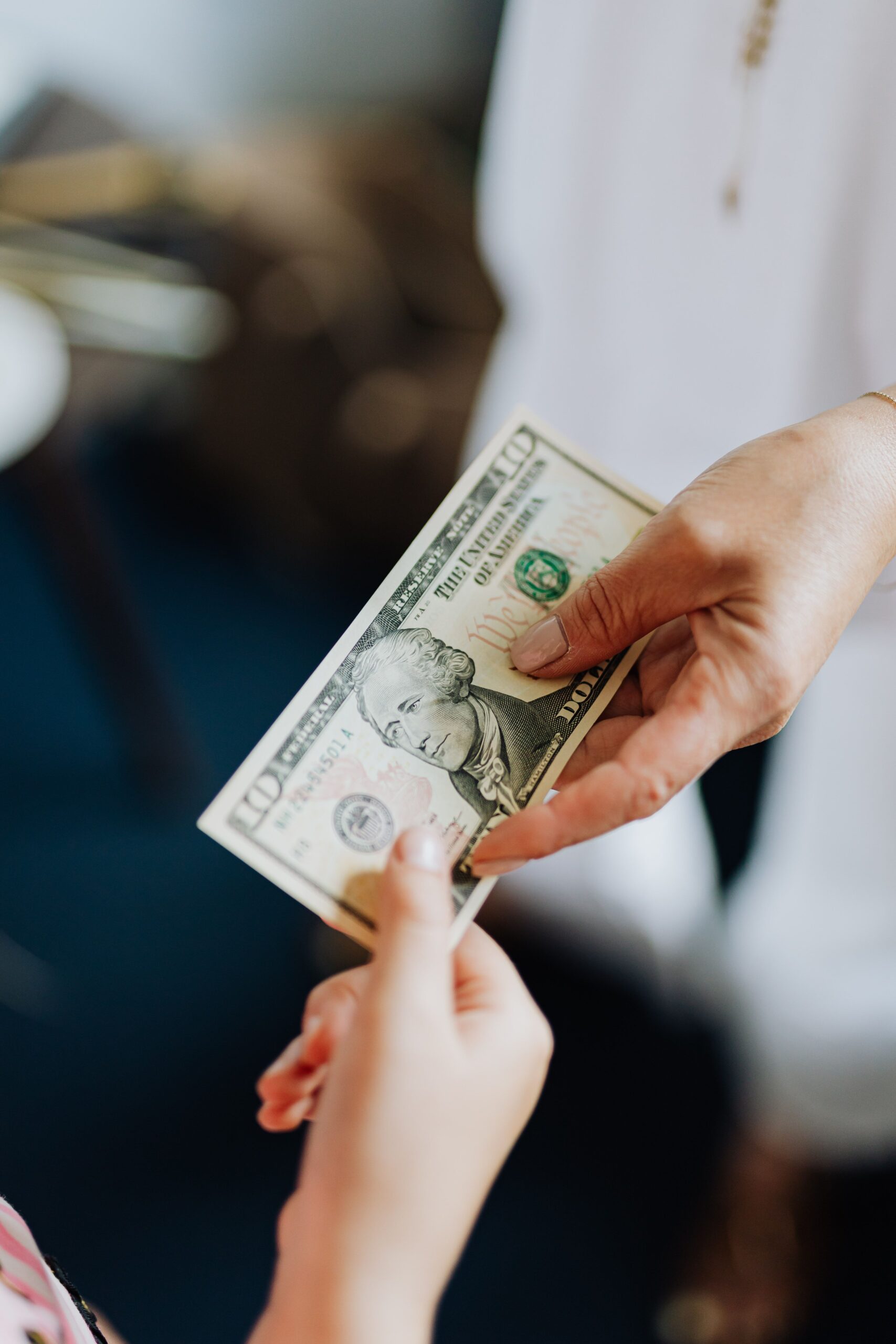
Look for Red and Blue Security Fibers
An important part of understanding how to tell if a two dollar bill is real is knowing that genuine U.S. currency paper contains small red and blue security fibers.
The official $2 note information confirms that these fibers are incorporated into the currency paper.
These fibers are different from colored printing placed on top of ordinary paper.
When inspecting a suspicious note, look at the paper itself rather than focusing only on the printed artwork.
Do not attempt to damage, cut, or otherwise alter a banknote to inspect its construction. A normal visual examination is safer and more appropriate.
Does a $2 Bill Have a Watermark?
This is one of the most important questions related to how to tell if a two dollar bill is real.
The answer is no—not every genuine U.S. banknote has a watermark, and the $2 note does not have the portrait watermark found on denominations of $5 and higher.
The U.S. Currency Education Program explains that watermarks are features used on $5 and higher denominations.
Therefore, someone should not reject a genuine $2 bill simply because they cannot see a watermark.
This is a good example of why authenticating a banknote requires denomination-specific knowledge. Security features are not identical across all U.S. currency.
Does a $2 Bill Have a Security Thread?
Another common question is whether a two dollar bill should contain a security thread.
The answer is also no for the standard $2 note.
The official U.S. currency guide explains that security threads are found on denominations of $5 and higher.
This means the absence of a security thread is not, by itself, evidence that a $2 bill is counterfeit.
This distinction is particularly important for anyone researching how to tell if a two dollar bill is real because many online counterfeit-detection articles discuss security threads without explaining that the feature does not apply to every denomination.
Does a $2 Bill Have Color-Shifting Ink?
Color-shifting ink is another feature that is frequently misunderstood.
The official U.S. Currency Education Program states that color-shifting ink is found on denominations of $10 and higher.
Therefore, you should not expect the large denomination markings on a standard $2 bill to behave like the color-shifting numerals found on certain higher-value U.S. notes.
If someone tells you that every genuine U.S. bill must have color-changing ink, that information is incorrect.
When learning how to tell if a two dollar bill is real, always match the security feature to the specific denomination.
Inspect the Back of the $2 Bill
The back of the $2 note is another valuable comparison point.
It features an engraving based on John Trumbull’s “Declaration of Independence.” The official U.S. Currency Education Program notes that the original painting included 47 men, while space limitations on the note resulted in 42 being represented.
Look at the overall detail, borders, lettering, and arrangement.
A poor-quality reproduction may show obvious visual inconsistencies. For example, the image may appear excessively blurred or lack the detailed engraved appearance associated with genuine currency.
When checking how to tell if a two dollar bill is real, examining both sides is important because counterfeiters may focus more heavily on reproducing the most recognizable front-side elements.
Compare the Note With a Known Genuine $2 Bill
One of the most practical ways to understand how to tell if a two dollar bill is real is to compare the suspicious note with a known genuine example.
Ideally, compare notes of the same general design and condition.
Look at:
- Paper texture
- Portrait detail
- Borders
- Treasury seal
- Federal Reserve seal
- Serial numbers
- Typography
- Back design
- Overall print quality
Side-by-side comparison can reveal differences that are difficult to notice when looking at only one note.
However, avoid making assumptions based solely on minor differences caused by wear, printing variation, or differences between genuine issues.
Use Magnification Carefully
Magnification can be useful when inspecting printing quality, particularly for trained cash handlers or professionals.
The official U.S. Currency Education Program notes that microprinting is used on several U.S. denominations, particularly $5 and higher.
Because the $2 note has its own security and design characteristics, do not assume that every microprinting or magnification feature described for a $20 or $100 bill applies to a $2 bill.
A magnifying glass can help you inspect suspicious printing, but it does not replace professional authentication.
What About UV Light?
UV light is often associated with currency authentication. However, it is important not to assume that every U.S. denomination will display the same UV features.
The U.S. Currency Education Program includes UV inspection among general authentication techniques, but denomination-specific features must be considered.
For a standard $2 bill, the more relevant initial checks are its paper, raised printing, security fibers, seals, serial numbers, portrait, and overall design.
If a note is suspicious, UV inspection should be treated as an additional observation rather than a stand-alone verdict.
Common Signs That a $2 Bill May Be Suspicious
When learning how to tell if a two dollar bill is real, look for multiple warning signs rather than one isolated characteristic.
Potential red flags can include:
Unusual Paper
If the note feels substantially different from genuine U.S. currency, investigate further.
Poor Printing
Blurry images, weak details, strange fonts, or obvious reproduction artifacts can indicate a problem.
Incorrect Seals
The Treasury and Federal Reserve seals should be consistent with the denomination and design.
Mismatched Serial Numbers
The two serial numbers should correspond correctly.
Strange Text
Foreign writing, unusual wording, or phrases such as “Replica” or “For Motion Picture Use Only” can be warning signs. The U.S. Currency Education Program specifically advises cash handlers to be cautious of such markings.
Incorrect Security Expectations
A note should not automatically be considered fake because it lacks a watermark, security thread, or color-shifting ink. Those features are not standard features of the $2 denomination.
Common Mistakes People Make When Checking a $2 Bill
There are several misconceptions about how to tell if a two dollar bill is real.
One common mistake is assuming that all U.S. bills have identical security features. They do not. Each denomination has security and design characteristics suited to that denomination.
Another mistake is believing that an old-looking $2 bill must be fake. Genuine U.S. currency can remain legal tender regardless of when it was issued.
A third mistake is relying entirely on counterfeit-detection pens or a single test. A single tool may provide limited information and should not replace examination of the note’s overall security and design characteristics.
Finally, some people assume that a rare-looking serial number proves that the bill is counterfeit. Serial-number patterns can be unusual on genuine currency, so rarity alone is not authentication.
Are Old $2 Bills Still Legal Tender?
Yes. The U.S. government states that all designs of U.S. currency remain legal tender regardless of when they were issued. This includes Federal Reserve notes from older periods.
Therefore, an older $2 bill should not automatically be treated as counterfeit.
Collectors may also be interested in older notes for historical or numismatic reasons. Value can depend on factors such as condition, rarity, issue, and collector demand, rather than simply the face value.
If you are unsure whether an old $2 bill is genuine, professional examination is preferable to making a decision based solely on its age or appearance.
Can a Bank Verify a Suspicious $2 Bill?
If you remain uncertain after performing a visual inspection, the safest approach is to consult an appropriate financial institution or relevant authority.
A bank or trained financial professional may have access to authentication resources and procedures that are not available to ordinary consumers.
The U.S. Currency Education Program provides training resources for cash handlers and explains that people who suspect a counterfeit note should follow appropriate counterfeit-reporting procedures.
Do not attempt to pass a suspicious note to another person as genuine.
What Should You Do If You Think a $2 Bill Is Counterfeit?
If you believe you have received a counterfeit $2 bill, understanding how to tell if a two dollar bill is real can help you recognize suspicious characteristics, but do not knowingly use the note as genuine currency.
Instead, separate the suspicious note from your legitimate cash and contact an appropriate financial institution or authority for guidance. Learning how to tell if a two dollar bill is real is useful for initial inspection, but professional verification is recommended when you are uncertain.
If the note came from a transaction, remember as much as you reasonably can about where and when you received it. Do not confront or accuse another person based solely on your suspicion. Knowing how to tell if a two dollar bill is real does not by itself establish where a suspicious note came from or who may have handled it previously.
Most importantly, do not attempt to alter, reproduce, repair, or circulate the suspicious note. The purpose of learning how to tell if a two dollar bill is real is to identify potentially problematic currency and handle it responsibly—not to find ways to make questionable notes appear genuine.
Can a Counterfeit Detection Machine Identify a Fake $2 Bill?
Some currency-authentication equipment is designed to help cash handlers identify suspicious notes. However, equipment capabilities vary, and not every device is designed specifically for every denomination. Understanding how to tell if a two dollar bill is real can help you use authentication equipment more effectively.
The U.S. Currency Education Program provides educational tools for cash handlers, including resources explaining how to authenticate U.S. currency. These resources can also help people understand how to tell if a two dollar bill is real by becoming familiar with genuine currency characteristics.
If you operate a business that regularly handles cash, choose authentication equipment appropriate for the denominations and currency you actually process. Knowing how to tell if a two dollar bill is real can provide useful background knowledge when selecting or using currency-authentication equipment.
Different devices may use different detection methods, so learning how to tell if a two dollar bill is real should not depend on a single machine or testing method. Equipment should be used according to the manufacturer’s instructions and for the currencies and denominations it is designed to examine.
For occasional personal checking, however, understanding the note’s genuine design and security characteristics is an important first step. Learning how to tell if a two dollar bill is real through careful observation can help you recognize suspicious characteristics before seeking professional verification when necessary.
A Simple $2 Bill Authentication Checklist
If you want a practical summary of how to tell if a two dollar bill is real, use this checklist:
1. Feel the Paper
Check whether the paper has the distinctive texture associated with genuine U.S. currency.
2. Check the Raised Printing
Genuine $2 notes feature raised printing that contributes to their characteristic feel.
3. Inspect the Portrait
Look closely at the Thomas Jefferson portrait and its printing quality.
4. Check the Treasury Seal
Look at the green Treasury seal for consistency and clarity.
5. Check the Federal Reserve Seal
Inspect the black Federal Reserve Bank seal on the front.
6. Compare Serial Numbers
The serial numbers on the front should correspond correctly.
7. Look at the Security Fibers
Genuine currency paper contains red and blue security fibers.
8. Examine Both Sides
Compare the front and back design with a trusted reference.
9. Do Not Expect Every Security Feature
A $2 bill does not have the same watermark, security thread, and color-shifting features associated with higher denominations.
10. Seek Professional Verification
If multiple characteristics appear suspicious, have the note checked by an appropriate financial institution or authority.
Why You Should Not Rely on One Test
Understanding how to tell if a two dollar bill is real requires looking at the whole note rather than relying on a single feature. A genuine bill can be dirty, wrinkled, faded, torn, or heavily circulated, while a counterfeit bill may imitate one or more visual characteristics convincingly.
When learning how to tell if a two dollar bill is real, it is important to examine several independent characteristics. Checking the paper texture, printing quality, seals, serial numbers, security fibers, and overall design can provide a more reliable initial assessment.
The official U.S. Currency Education Program promotes a broader “feel, tilt, check” approach for U.S. currency authentication and provides denomination-specific information. This makes it easier to understand how to tell if a two dollar bill is real without relying on assumptions about security features used on other denominations.
For the $2 bill specifically, the most useful observations include paper composition, raised printing, security fibers, seals, serial numbers, and design details. These characteristics can help you understand how to tell if a two dollar bill is real when examining a suspicious note.
If several features appear inconsistent, knowing how to tell if a two dollar bill is real is only the first step. A suspicious note should not be used as genuine currency; instead, it should be verified through an appropriate financial institution or relevant authority.
FAQs
How can you tell if a two dollar bill is real?
To understand how to tell if a two dollar bill is real, examine its paper texture, raised printing, red and blue security fibers, seals, serial numbers, portrait, and overall printing quality. Compare several features with a trusted genuine reference instead of relying on one test.
Does a real $2 bill have a watermark?
A standard $2 Federal Reserve note does not have the watermark feature used on denominations of $5 and higher. Therefore, the absence of a watermark does not automatically mean that a $2 bill is counterfeit.
Does a $2 bill have a security thread?
The standard $2 bill does not have the embedded security thread found on denominations of $5 and higher.
Does a $2 bill have color-changing ink?
Color-shifting ink is used on denominations of $10 and higher, so you should not expect a standard $2 bill to have the same color-shifting numeral feature found on higher denominations.
What should a real $2 bill feel like?
A genuine $2 Federal Reserve note has distinctive currency paper made from cotton and linen, and its raised printing contributes to a recognizable texture.
Are old two dollar bills still legal?
Yes. U.S. currency remains legal tender regardless of when the note was issued, subject to applicable laws and regulations.
Can a $2 bill be counterfeit?
Yes. Like other forms of currency, a $2 bill can potentially be counterfeited. That is why learning how to tell if a two dollar bill is real is useful when accepting unfamiliar currency.
What if I think my $2 bill is fake?
Do not knowingly use or pass the suspicious note as genuine. Instead, contact an appropriate bank, financial institution, or relevant authority for guidance and verification.
Is a counterfeit detection pen enough to verify a $2 bill?
No single test should be treated as a complete authentication method. A more reliable approach is to compare multiple security and design characteristics and seek professional verification when necessary.
Is every unusual $2 bill fake?
No. Genuine $2 bills can vary in age, condition, and appearance. An unusual serial number, older design, or worn condition does not automatically mean the note is counterfeit.
Final Thoughts on How to Tell If a Two Dollar Bill Is Real
Learning how to tell if a two dollar bill is real does not require trying to reproduce or manipulate currency. Instead, the safest approach is to understand the genuine note’s publicly documented characteristics and compare several features at the same time.
Start with the paper and texture. Check the raised printing. Examine the Thomas Jefferson portrait, Treasury seal, Federal Reserve seal, serial numbers, and overall printing quality. Look for the red and blue security fibers incorporated into genuine U.S. currency paper.
Just as importantly, understand what not to expect. A standard $2 bill does not have the watermark, security thread, or color-shifting ink features commonly associated with higher denominations.
If multiple characteristics seem inconsistent, do not attempt to spend the note or pass it to someone else. Have it examined by an appropriate financial institution or authority.
Ultimately, the best way to answer how to tell if a two dollar bill is real is to combine knowledge, careful observation, trusted references, and professional verification when uncertainty remains. That approach is safer, more responsible, and more reliable than depending on a single visual trick or detection method.

