
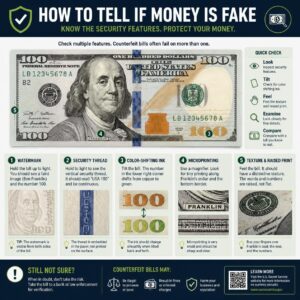
Receiving a suspicious bill can be stressful. Whether you run a small business, sell custom apparel, operate a streetwear brand, or simply handle cash regularly, knowing how to tell if money is fake can help protect you from financial loss.
Counterfeit currency continues to be a concern worldwide because fake bills are designed to look similar to genuine money. However, modern currency includes multiple security features that make it possible for ordinary people to identify suspicious notes with careful observation.
In this complete guide, you will learn how to spot counterfeit money using simple methods, understand important security features, avoid common mistakes, and know what steps to take if you receive a fake bill.
What Does Fake Money Mean?
Fake money, also known as counterfeit currency, refers to illegally produced copies of official government-issued currency. Counterfeiters attempt to reproduce real banknotes by copying designs, colors, symbols, and security features.
Although counterfeit bills may appear convincing at first glance, they often lack important security elements found in authentic currency. These features are intentionally created by governments to make duplication difficult.
Understanding Counterfeit Currency
Authentic money is produced using specialized printing techniques, unique paper materials, security threads, watermarks, and other technologies. Fake bills usually fail in one or more of these areas.
- Poor-quality printing
- Incorrect colors
- Missing security features
- Different paper texture
- Incorrect serial numbers
Why Learning How to Tell If Money Is Fake Matters
Counterfeit money affects individuals, retailers, and businesses of all sizes. A person who unknowingly accepts a fake bill may lose the full value of that money because banks and businesses generally cannot exchange counterfeit currency for real money.
For businesses that sell products such as custom clothing, printed merchandise, or streetwear collections, cash handling is an important part of daily operations. Employees who know how to recognize suspicious bills can reduce financial risks.
Benefits of Knowing How to Identify Fake Money
- Protects your personal finances
- Helps prevent business losses
- Improves customer transaction safety
- Reduces the spread of counterfeit currency
- Builds confidence when handling cash payments
How to Tell If Money Is Fake: Quick Answer
The easiest way to tell if money is fake is to check its texture, security features, printing quality, watermark, security thread, and color-changing elements.
| Check | What To Look For |
|---|---|
| Texture | Real currency usually feels different from normal paper. |
| Printing | Authentic bills have sharp and detailed printing. |
| Watermark | Many genuine notes include visible watermark images. |
| Security Thread | Embedded strips or threads should appear correctly. |
| Ink Features | Some currencies use color-changing ink. |
| Serial Numbers | Numbers should match official patterns. |
Check the Paper Quality and Texture
One of the fastest ways to identify suspicious money is by touching the bill. Genuine currency is not usually made from ordinary paper. Many countries use specialized materials that create a unique feel.
Counterfeit bills often feel smoother, thinner, thicker, or more like regular printer paper compared with authentic currency.
What Genuine Money Usually Feels Like
- Firm and durable texture
- Slightly raised printing in some areas
- Unique paper composition
- Clear and crisp surface details
Signs a Bill May Be Fake
- The paper feels too soft or too slippery
- The bill feels unusually thick
- The printing appears flat
- The texture does not match other authentic bills
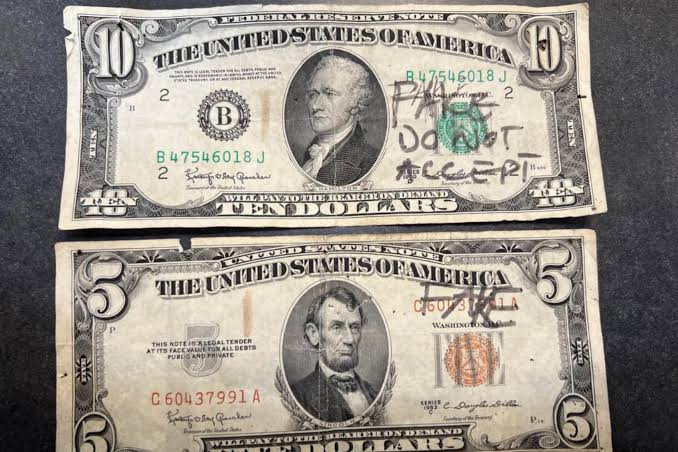
Look for Security Features on Modern Currency
Modern banknotes are designed with advanced security features that help people identify authentic money. These features are difficult for counterfeiters to reproduce accurately, making them one of the best ways to determine whether a bill is genuine.
When learning how to tell if money is fake, you should never rely on only one test. Professional cash handlers usually use multiple checks together, including touch, visual inspection, and movement-based techniques.
Common Security Features Found in Real Money
- Watermarks: Images or patterns visible when the bill is held toward light.
- Security Threads: Embedded strips inside the currency paper.
- Microprinting: Extremely small text that is difficult to reproduce.
- Color-Shifting Ink: Ink that changes appearance when viewed from different angles.
- Raised Printing: Textured ink that can often be felt by touch.
- Special Paper Material: Unique materials used only for official currency.
Inspect Watermarks and Embedded Features
Watermarks are among the most recognizable security features used in many currencies. A watermark is usually a faint image or design that appears when a banknote is held up to light.
Counterfeiters often struggle to recreate genuine watermarks because authentic versions are created during the manufacturing process of the currency paper.
How to Check a Watermark
- Hold the bill near a light source.
- Look for a faint image or pattern.
- Compare the watermark position with a known genuine bill.
- Check whether the watermark matches the printed design.
A missing, unclear, or incorrectly positioned watermark can be a warning sign that the currency may not be genuine.
Examine Color-Shifting Ink
Some modern banknotes include special ink that changes color when the bill is tilted. This feature is used because it is difficult to reproduce using normal printing methods.
Steps to Test Color-Shifting Ink
- Hold the bill under good lighting.
- Tilt it slowly from different angles.
- Observe whether specific areas change color.
- Compare the effect with a verified authentic bill.
If a bill that should have color-changing features remains completely unchanged, it may require additional inspection.
Check Serial Numbers Carefully
Serial numbers are another important part of currency authentication. Every genuine bill has carefully printed identification numbers following official formatting rules.
Things To Check About Serial Numbers
- Numbers should be evenly spaced.
- Characters should have consistent printing quality.
- Serial numbers should not look blurry or uneven.
- The format should match official currency standards.
Counterfeit bills may contain duplicated, incorrectly aligned, or poorly printed serial numbers.
Use the Feel, Look, and Tilt Method
A simple way to remember counterfeit detection methods is the three-step approach:
| Method | What You Check |
|---|---|
| Feel | Texture, thickness, and raised printing. |
| Look | Printing quality, images, watermarks, and details. |
| Tilt | Color changes and security features that appear from different angles. |
Why This Method Works
Most counterfeit bills fail because they cannot perfectly copy every security feature. Checking multiple elements increases the chance of detecting fake currency.
Common Signs of Fake Money
Although counterfeiters continue improving their techniques, many fake bills still show noticeable differences when examined carefully.
Warning Signs That Money May Be Fake
- Blurry images or unclear printing
- Missing security features
- Incorrect colors
- Paper quality feels unusual
- Uneven borders or alignment problems
- Spelling mistakes or incorrect text
- Different appearance compared with another bill
How Businesses Can Prevent Counterfeit Money Problems
Businesses that regularly accept cash payments should create simple procedures for checking suspicious bills. This is especially important for retail stores, clothing brands, restaurants, markets, and small businesses.
Cash Handling Best Practices
- Train employees on basic counterfeit detection.
- Keep good lighting near checkout areas.
- Use counterfeit detection tools when necessary.
- Avoid rushing during large cash transactions.
- Compare suspicious bills with verified currency.
- Maintain clear policies for handling questionable money.
Tips for Clothing Brands and Streetwear Businesses
Custom apparel businesses often handle payments at pop-up events, markets, fashion shows, and local sales. Because transactions can happen quickly, counterfeit awareness is important.
- Inspect larger bills more carefully.
- Train every team member handling payments.
- Use payment tracking systems.
- Offer digital payment options when possible.
- Keep counterfeit detection tools available at events.
Tools Used to Detect Fake Currency
Technology can provide additional support when checking suspicious money. However, tools should not replace basic knowledge of security features.
| Tool | Purpose | Limitations |
|---|---|---|
| UV Light Detector | Checks special security features visible under ultraviolet light. | Not every feature can be detected. |
| Counterfeit Detection Pen | Tests certain paper characteristics. | May not identify all sophisticated fakes. |
| Magnifying Glass | Helps inspect microprinting and fine details. | Requires knowledge of authentic designs. |
| Currency Scanner | Automatically checks multiple security elements. | Quality varies between devices. |
What To Do If You Receive Fake Money
If you believe you have received counterfeit currency, avoid using it again. Passing suspected counterfeit money to another person may create legal problems.
Recommended Steps
- Keep the suspicious bill separate from other money.
- Do not attempt to spend it.
- Record details about where you received it.
- Contact the appropriate financial institution or authorities.
- Follow official instructions for reporting counterfeit currency.
Never try to verify suspicious money by giving it to someone else. Proper reporting helps reduce counterfeit activity.
Real Money vs Fake Money: Comparison Table
Understanding the difference between authentic currency and counterfeit bills becomes easier when you compare the most important features side by side.
| Feature | Real Money | Fake Money |
|---|---|---|
| Paper Quality | Uses specialized currency material with a unique texture. | Often feels like regular paper or has an unusual texture. |
| Printing Quality | Sharp, detailed, and professionally printed. | May appear blurry, uneven, or faded. |
| Security Features | Includes official features such as watermarks and security threads. | May have missing or poorly copied security elements. |
| Serial Numbers | Consistent spacing, alignment, and official format. | May appear incorrect, uneven, or duplicated. |
| Color Features | Special inks may change appearance when tilted. | Usually lacks accurate color-changing effects. |
| Overall Appearance | Clean, precise, and consistent. | May contain visible mistakes or inconsistencies. |
Pros and Cons of Learning How to Identify Fake Money
Pros
- Helps protect personal finances.
- Reduces business losses caused by counterfeit bills.
- Improves confidence when accepting cash payments.
- Helps employees recognize suspicious currency quickly.
- Encourages safer financial transactions.
- Reduces the circulation of counterfeit money.
Cons
- Requires time and practice to recognize security features.
- Some counterfeit bills can look highly convincing.
- Detection tools may require additional investment.
- People may become overly confident using only one checking method.
Featured Snippet Optimization: Quick Answers
What Is the Easiest Way to Tell If Money Is Fake?
The easiest way to tell if money is fake is to check the bill using the feel, look, and tilt method. Examine the texture, printing quality, watermark, security features, and color-changing elements.
How Can You Identify a Fake Bill Quickly?
To identify a fake bill quickly, compare its texture, appearance, serial numbers, and security features with a genuine bill of the same denomination.
What Are the Main Signs of Counterfeit Money?
- Poor printing quality
- Missing security features
- Incorrect colors
- Unusual paper texture
- Misaligned serial numbers
Can Fake Money Pass a Counterfeit Pen Test?
Some counterfeit bills may pass basic pen tests. A counterfeit detection pen should not be the only method used because advanced counterfeit money may require additional verification.
10. What should you do with suspected fake money?
Keep it separate, avoid spending it, and contact the appropriate authorities or financial institution for guidance.
Frequently Asked Questions
How do I know if money is fake?
Check the bill’s texture, printing quality, watermark, security features, serial numbers, and other official design elements. Comparing it with a genuine bill can help identify differences.
What is the fastest way to spot counterfeit money?
The fastest method is the feel, look, and tilt technique. Check the texture, visible security features, and color-changing elements.
Why do counterfeit bills look real?
Counterfeiters attempt to copy the appearance of real currency, but fake bills usually fail to reproduce all security features accurately.
Can smartphones detect fake money?
Some smartphone apps and accessories can assist with inspection, but official security checks and professional tools remain more reliable.
Should I use a counterfeit detection pen?
A detection pen can be useful as an additional tool, but it should not replace checking official security features.
Do all countries use the same counterfeit detection methods?
No. Security features differ between currencies, so always learn the authentication methods for the specific currency you handle.
Can old money be mistaken for fake money?
Yes. Older genuine currency designs may look different from modern bills. Always compare with official references before assuming a bill is counterfeit.
Why is counterfeit prevention important for businesses?
Counterfeit prevention helps businesses avoid financial losses and maintain secure transactions with customers.
Can fake money damage a small business?
Yes. Small businesses may experience direct financial losses when counterfeit bills are unknowingly accepted.
Where can I learn official currency security features?
The best source is your country’s official central bank or government financial authority.
Conclusion: How to Tell If Money Is Fake
Knowing how to tell if money is fake is an important skill for individuals and businesses that handle cash payments. While counterfeit bills may appear convincing, careful inspection of texture, security features, printing quality, and official details can help identify suspicious currency.
The best approach is to combine multiple checking methods instead of depending on a single test. Businesses, especially those selling products at events or retail locations, can protect themselves by training employees and creating simple cash-handling procedures.
At Counterfeit Print Lab, we believe knowledge and awareness help businesses operate more confidently. Whether you are building a streetwear brand, selling custom apparel, or managing daily transactions, staying informed is one of the best ways to protect your business.

